
When comparing an aluminum vs wood pergola, the decision is mainly about material characteristics. Both can create a permanent outdoor structure, but they differ in appearance, moisture response, maintenance needs and the way the material changes over time.
Wood offers natural grain and traditional character, while aluminum avoids the biological decay and insect concerns associated with wood. That does not mean one material is automatically better for every property.
HS Shade Solutions installs aluminum pergolas across Brevard County, Indian River County and Volusia County. This guide compares aluminum with wood so Florida homeowners can understand the practical material differences before choosing a pergola.
Aluminum vs. Wood Pergola: Key Differences
The most useful comparison is not which material “wins,” but which characteristics matter most for the property. Appearance, maintenance expectations, moisture exposure and long-term ownership priorities can all influence the decision.
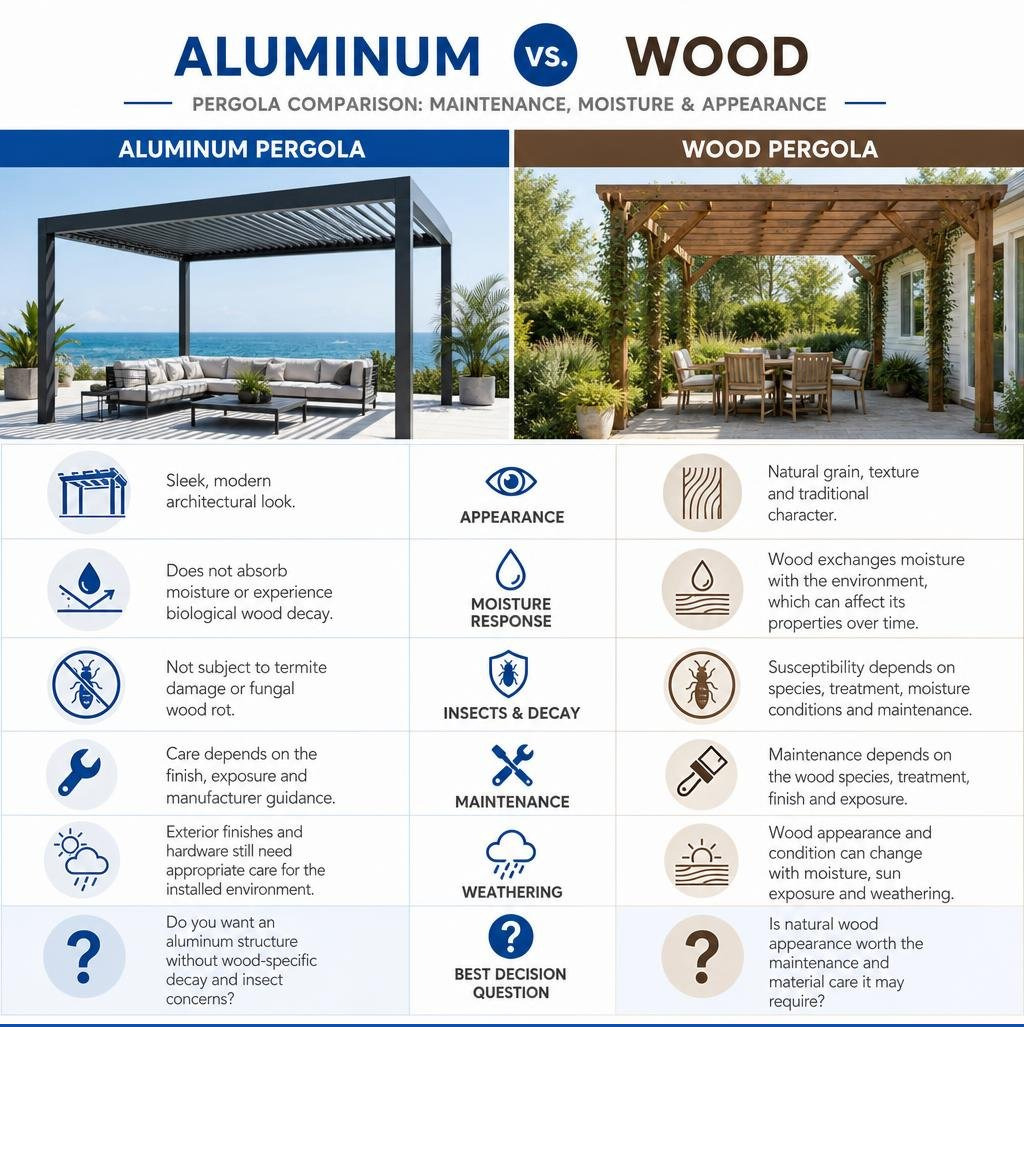
| Decision Factor | Aluminum Pergola | Wood Pergola |
|---|---|---|
| Appearance | Creates a finished architectural look associated with metal construction. | Provides natural grain, texture and traditional material character. |
| Moisture response | Does not absorb moisture or experience biological wood decay. | Wood exchanges moisture with the surrounding environment, which can affect its properties over time. |
| Insects and decay | Not subject to termite damage or fungal wood rot. | Susceptibility depends on species, treatment, moisture conditions and maintenance. |
| Maintenance | Care depends on the finish, exposure and manufacturer guidance. | Maintenance depends on the wood species, treatment, finish and exposure. |
| Weathering | Exterior finishes and hardware still need appropriate care for the installed environment. | Wood appearance and condition can change with moisture, sun exposure and weathering. |
| Best decision question | Do you want an aluminum structure without wood-specific decay and insect concerns? | Is natural wood appearance worth the maintenance and material care it may require? |

How Moisture Affects Aluminum and Wood Differently
One of the clearest material differences between wood and aluminum is how they respond to moisture.
The USDA Forest Products Laboratory Wood Handbook explains that wood is hygroscopic, meaning it exchanges moisture with the surrounding environment. Changes in moisture content can affect wood’s physical properties and dimensional behavior.
Wood can also be vulnerable to fungi and insects when environmental conditions support biological deterioration. The amount of risk depends on the wood species, treatment, design, exposure and maintenance rather than on the word “wood” alone.
Aluminum does not undergo biological wood rot or termite damage. The Aluminum Association identifies corrosion resistance as one reason aluminum is widely used in building applications. Exterior aluminum still has finishes and other components that should be cared for according to the selected product’s guidance.
Why Wood Pergola Performance Can Vary
It is important not to treat every wood pergola as though it will perform or age in exactly the same way. Wood species, treatment, exterior finish, design, exposure and maintenance can all influence how the material responds over time.
The USDA Forest Products Laboratory documents substantial differences among wood species and explains how moisture, preservatives, finishing and biological deterioration affect wood used in buildings. That makes broad claims such as “wood always rots quickly” or “wood always needs the same maintenance schedule” misleading.
For homeowners comparing wood or aluminum pergola options, the practical question is therefore not simply whether one structure is made of wood. It is what type of wood is being considered, how it is protected, what conditions it will face and what ongoing care the selected material requires.
Appearance and Architectural Style
Appearance is one area where the choice may be primarily personal.
Wood offers natural grain, texture and variation that many homeowners associate with traditional gardens, rustic architecture or warmer outdoor design. Those characteristics are part of the material itself and can be a legitimate reason to prefer wood.
Aluminum creates a different architectural character. It can provide a clean, finished appearance that works well when the homeowner prefers a more structured exterior look.
Rather than treating one aesthetic as universally better, compare how each material relates to the home’s architecture, exterior finishes and the overall outdoor-living design.
Maintenance: Aluminum vs. Wood Pergola
Maintenance expectations differ, but neither material should be described with one universal care schedule.
Wood maintenance depends on the species, treatment, finish and exposure. Exterior finishes may need renewed care over time, and moisture or biological deterioration should be addressed when present.
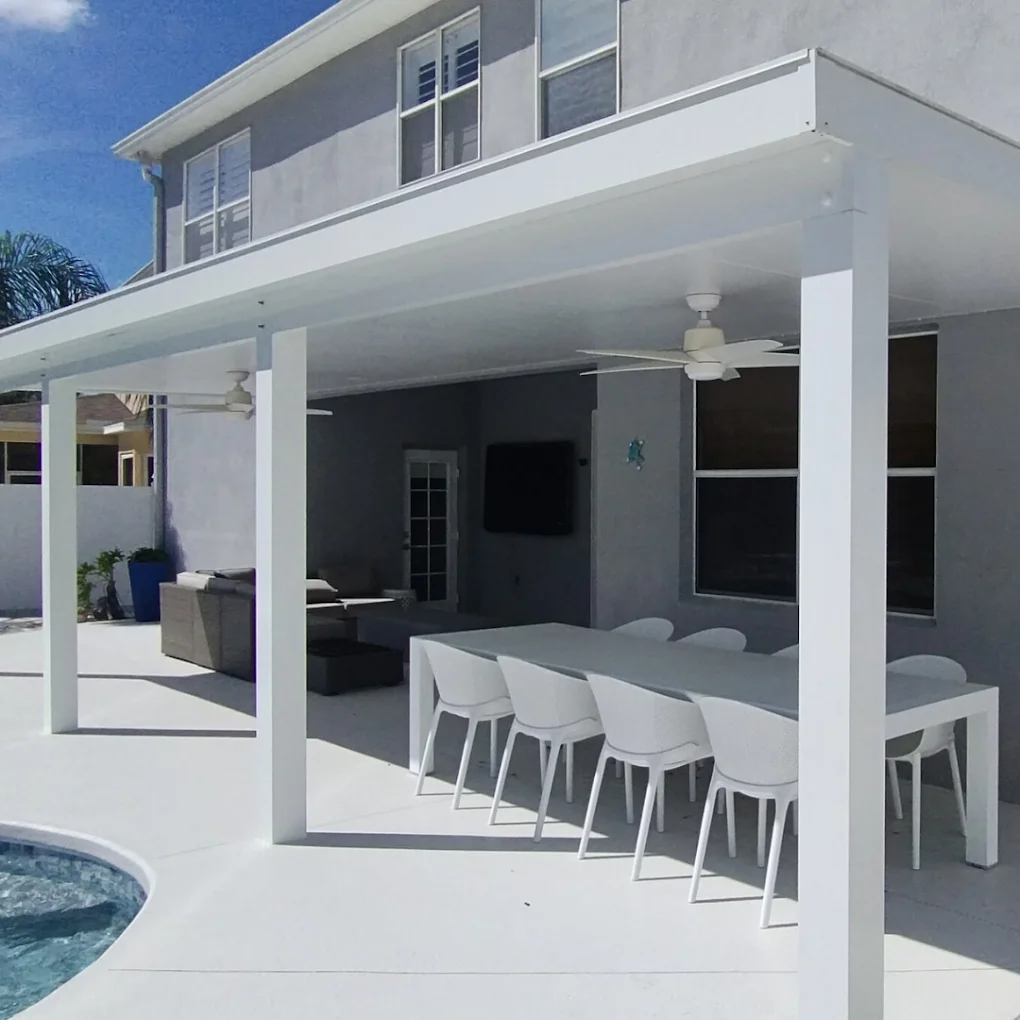
Aluminum avoids wood-specific concerns such as rot and termites, but exterior aluminum is not maintenance-free. Cleaning and care should follow the guidance for the installed finish and system.
When comparing wood vs aluminum pergola ownership, ask what care the specific material and finish require rather than relying on a generic maintenance interval.
Site-Specific Design Still Matters
Material is only one part of a pergola project. The property, patio layout, desired coverage, existing structures and installation conditions still affect what can be recommended for the space.
A material comparison can help narrow the homeowner’s preference, but the final pergola configuration should be evaluated for the individual property rather than inferred from the material alone.
For additional planning guidance, see our guide to choosing a pergola builder in Florida.
What to Compare Before Choosing a Pergola Material
Before deciding between aluminum and wood, compare the material based on the way the structure will actually be used and maintained.
- Desired appearance: Is natural wood grain important, or do you prefer the architectural character of aluminum?
- Maintenance expectations: How much ongoing material and finish care are you comfortable managing?
- Moisture exposure: How exposed will the structure be to rain, humidity and other outdoor conditions?
- Wood-specific concerns: If considering wood, what species, treatment and exterior finish are proposed?
- Aluminum finish care: What maintenance does the selected aluminum system or finish require?
- Property fit: Does the available pergola system work with the patio, desired coverage and installation conditions?
These questions make the comparison more useful than choosing solely from appearance or assuming one material has no maintenance requirements.
Which Pergola Material May Fit Better?
When Aluminum May Fit Better
An aluminum pergola may be worth considering when:
- You want to avoid wood-specific concerns such as rot and termite damage.
- You prefer a metal architectural appearance.
- You want maintenance expectations that do not include caring for natural wood.
- Aluminum aligns with the pergola system and design available for the property.
When Wood May Fit Better
A wood pergola may appeal more when:
- Natural grain and timber appearance are major design priorities.
- You prefer the character of real wood over a metal structure.
- You are comfortable with the maintenance required by the selected wood, treatment and finish.
- The wood system is otherwise appropriate for the property and project.
The best pergola material for Florida is not one universal answer. The better choice depends on appearance, maintenance expectations, environmental exposure and the specific project.
Frequently Asked Questions About Aluminum and Wood Pergolas
Which Requires More Maintenance: Aluminum or Wood?
Wood generally has additional material-specific care considerations because species, treatment, moisture exposure and exterior finishes affect its condition over time. Aluminum avoids wood rot and termite damage, but its finish and installed system should still be maintained according to product guidance.
Can Wood Pergolas Rot?
Wood can be affected by decay organisms when conditions such as moisture support their growth. Resistance varies by species, treatment, design and exposure.
Can Termites Damage a Wood Pergola?
Wood can be susceptible to insect damage depending on species, treatment and local conditions. Aluminum itself is not a food source for termites.
Is Aluminum Maintenance-Free?
No. Aluminum avoids wood-specific decay and insect concerns, but exterior surfaces, finishes and other system components can still require cleaning, inspection or care according to manufacturer guidance.
Which Looks Better: Aluminum or Wood?
That is primarily a design preference. Wood offers natural grain and timber character, while aluminum provides a different finished architectural appearance.
What Is the Best Pergola Material for Florida?
There is no universal best material for every Florida property. Compare appearance, maintenance expectations, moisture and insect considerations, site conditions and the specific pergola system being considered.
Choose the Pergola Material That Fits Your Priorities
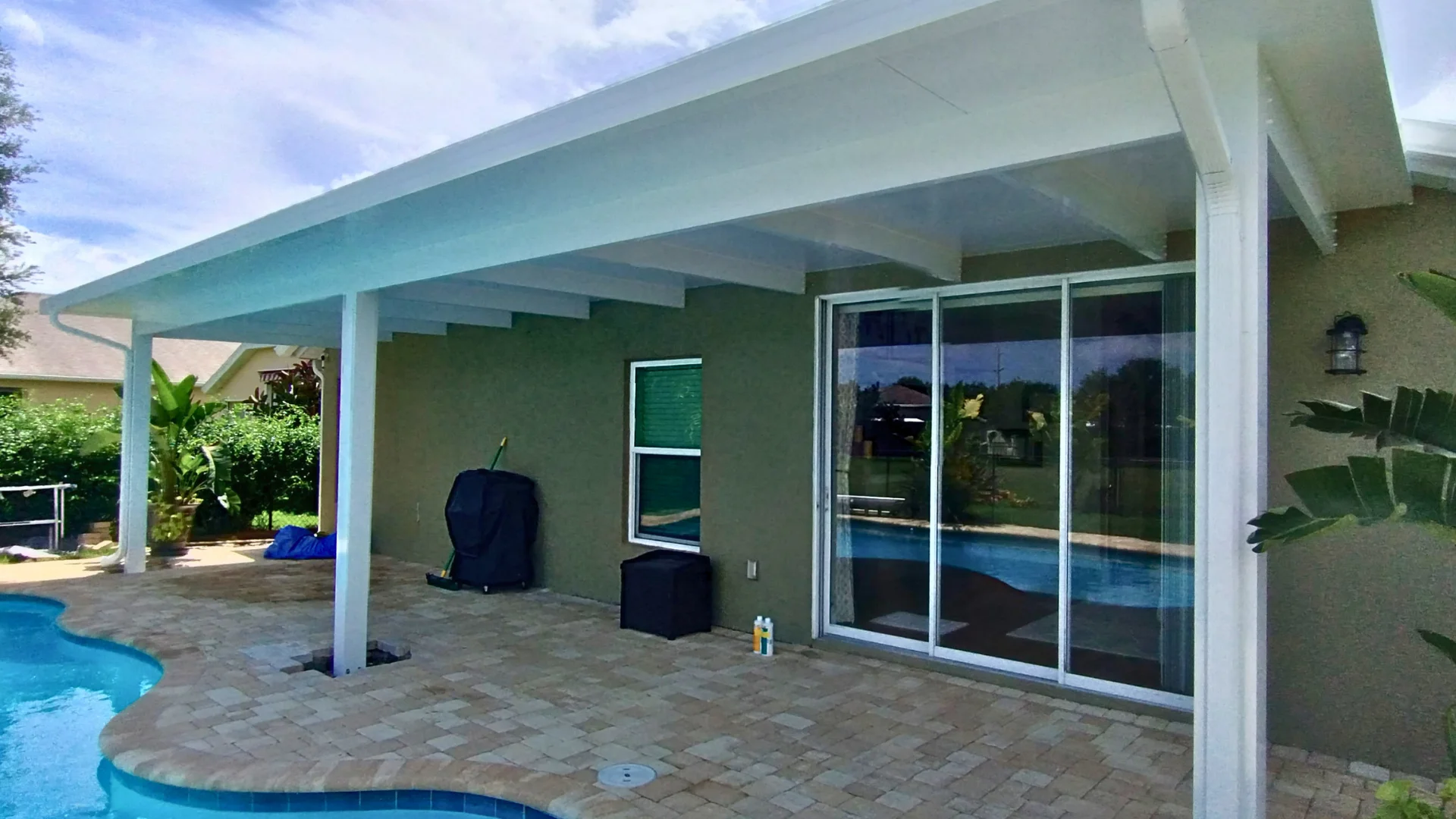
The aluminum vs wood pergola decision comes down to the characteristics that matter most for the property. Wood offers natural material character, while aluminum avoids wood-specific rot and insect concerns and creates a different architectural appearance.
HS Shade Solutions installs aluminum pergolas across Brevard County, Indian River County and Volusia County. Explore our shade solutions or request a site-specific consultation to discuss an aluminum pergola for your outdoor space.