
Quick Answer: What Should Florida Homeowners Choose?

Garage door mosquito netting can make a Florida garage more comfortable by helping keep mosquitoes, flies, and no-see-ums outside while still allowing fresh air to move through the space. For most homeowners, the right choice comes down to how often the garage is used, how clean the finished opening needs to look, and whether the screen should be a temporary bug barrier or a long-term exterior shade system.
If you need a quick, inexpensive seasonal fix, magnetic or Velcro-style garage netting can work as a temporary DIY option. These products are easy to hang, easy to remove, and useful for occasional weekend projects, short-term pest control, or renters who cannot modify the garage opening.
If you use the garage daily as a workshop, gym, hobby area, laundry entry, golf-cart space, or shaded hangout area, a custom motorized garage screen is usually the better long-term solution. Depending on the mesh selected, the system can also serve as a garage door shade that reduces glare while preserving airflow through the opening. HS Shade Solutions specializes in professionally installed motorized screens designed for Florida homes, with custom measurements, guided operation, suitable mesh options, and a cleaner everyday experience than a loose hanging curtain.
A simple decision framework:
- Choose temporary magnetic or Velcro garage door mosquito netting if you want a low-cost DIY product for occasional use.
- Choose a professionally installed motorized garage screen if you want daily convenience, a custom fit, better appearance, and long-term usability.
- Prioritize tighter mesh if mosquitoes and no-see-ums are the main concern, understanding that tighter mesh may reduce some airflow and visibility.
- Prioritize professional planning if your garage faces strong afternoon sun, coastal salt air, wind exposure, HOA review, or frequent daily traffic.
For Space Coast homeowners in Melbourne, Palm Bay, Titusville, Melbourne Beach, Indian Harbour Beach, Satellite Beach, Cocoa, and nearby areas, the goal is not just blocking bugs. The right screen can turn the garage into a more comfortable, usable extension of the home while accounting for Florida’s heat, humidity, salt air, and severe-weather realities.
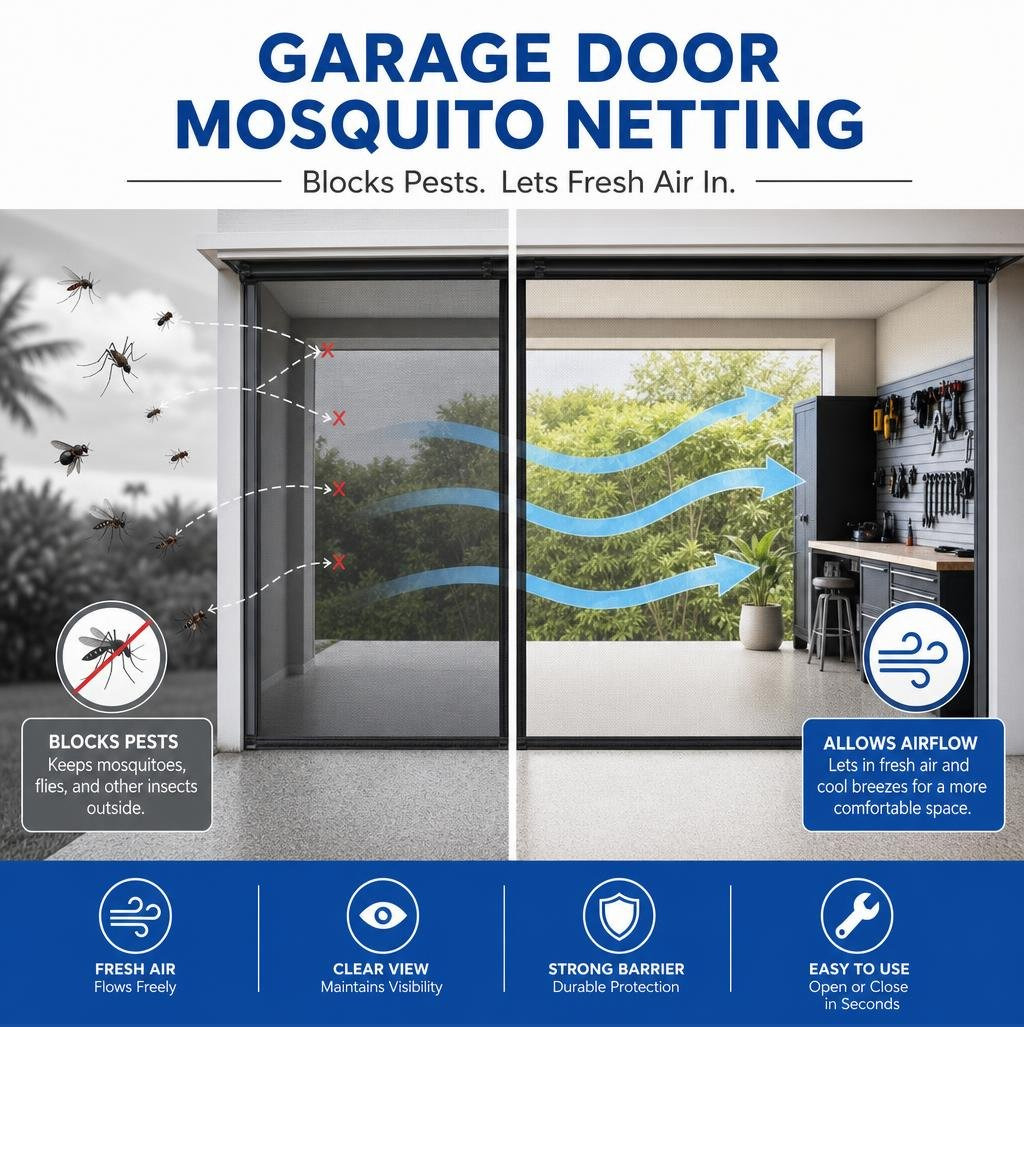
Temporary Netting vs. Custom Motorized Garage Screens
Garage door mosquito netting is a broad term. It can describe a simple mesh curtain that attaches around the garage opening, or it can describe a professionally installed retractable screen system that lowers when you want protection and retracts when you need full garage access.
Both categories have a place. The best option depends on budget, appearance, daily convenience, and how much wear the screen will see.
| Feature | Temporary magnetic or Velcro netting | Custom motorized garage screens |
|---|---|---|
| Best use | Occasional DIY use, seasonal pest control, renters, budget-conscious homeowners | Daily garage use, workshops, home gyms, shaded sitting areas, long-term comfort |
| Convenience | Manual walk-through opening; must be adjusted or removed as needed | Raises and lowers with motorized operation for easier everyday use |
| Fit | Usually standard sizes; may leave uneven edges on imperfect openings | Measured for the specific garage opening and installation conditions |
| Durability | Good for light use, but adhesive, seams, and mesh can wear faster in heat and humidity | Professionally installed for long-term exterior use |
| Appearance | Functional but often more temporary-looking | Cleaner integrated look with housing and side guidance |
| Contractor planning | Usually none beyond basic DIY placement | Installer reviews opening, jambs, clearance, power access, exposure, and use case |
| Professional installation | Typically DIY only | Installed by HS Shade Solutions for custom motorized screen projects |
When temporary garage door mosquito netting makes sense
Temporary netting is a practical choice when you want fast relief without a larger home improvement project. Many magnetic screens use a center split that opens as you walk through and closes behind you. Velcro-style systems attach around the frame and can usually be removed when the season changes.
These products are not a bad choice. They are simply designed for a different purpose. If you open the garage once in a while to work on a bicycle, sort storage bins, or let air move through during a weekend project, a temporary screen may be enough.
The tradeoff is that Florida conditions can be hard on lightweight products. Heat can weaken adhesives, humidity can affect fabric and fasteners, and coastal breezes can make loose mesh move around. Standard-size panels may also struggle to seal neatly around uneven trim, sloped concrete, or older garage openings.
When a custom motorized garage screen is the better fit
A custom motorized screen is better suited for homeowners who want the garage to function like an extension of the home. If the garage is used every day, the screen needs to be easy to operate, properly measured, and installed with the garage door, jambs, and opening conditions in mind.
HS Shade Solutions installs custom motorized screens and garage door screens for Florida homes for homeowners who want a more permanent shade and insect-control solution. The screen can be lowered when you want airflow and protection, then retracted when you need to park, move equipment, or fully open the garage.
This type of system is especially useful when the garage faces afternoon sun or when homeowners want shade at the garage opening without closing off the entire space. During consultations, an installer will also ask practical questions: Will a vehicle still use the bay? Is the opening visible from the street? Does an HOA need to approve exterior changes? Those answers affect the recommended layout and finished look.
Mesh Choices for Garage Door Mosquito Netting
Mesh selection matters because Florida garages often need to solve several problems at once: mosquitoes, no-see-ums, heat, glare, privacy, and airflow. There is no single mesh that is right for every garage, so the best choice depends on how the space will be used.
A more open mesh generally allows better airflow and outward visibility. That can be useful for homeowners who primarily want ventilation and protection from mosquitoes, flies, and other common insects.
For homes near the Indian River Lagoon, canals, wooded lots, or marshy areas, small-insect protection may deserve extra attention. The Florida Department of Health mosquito bite prevention guidance encourages residents to protect themselves from mosquito bites, and screening is one practical part of reducing exposure around the home.
Sun exposure is another factor. A west-facing garage in Brevard County or Indian River County may get intense afternoon heat and glare. In that situation, a garage shade solution needs to balance insect control with solar comfort. Denser shade-oriented mesh may make the garage feel more comfortable during bright parts of the day, but it should still be selected with airflow and visibility expectations in mind.
A professional installer can help compare mesh options based on:
- The main pest concern: mosquitoes, no-see-ums, flies, or general insects
- Desired airflow through the garage
- Afternoon sun and glare exposure
- Privacy preferences from the street or neighboring homes
- Salt-air exposure near beachside communities
- HOA appearance expectations for visible garage openings
- Whether pets, children, tools, or equipment will frequently contact the screen
The right mesh choice is less about choosing the “strongest” or “finest” material in isolation and more about matching the screen to the way the garage is actually used. In our experience, the best recommendation often changes when a homeowner explains whether the garage is mostly for parking, projects, workouts, laundry access, or evening sitting.
What a Contractor Looks at Before Installing a Motorized Garage Screen
A successful motorized garage screen starts with the opening itself. Before recommending a system, an experienced contractor looks at several details that are easy to miss during a quick DIY measurement.
Opening measurements
The width and height of the garage opening need to be measured accurately, but the installer also checks whether the opening is square and consistent. Older homes, remodeled garages, and coastal properties can have small variations that affect fit.
Jamb and mounting condition
The side jambs and header must be suitable for the screen housing and guides. Cracked stucco, uneven trim, damaged wood, or unusual framing may need to be addressed before installation.
Garage-door clearance
A motorized screen must work around the existing garage door, tracks, opener, weatherstripping, and hardware. Clearance matters so the screen can operate without interfering with the door system.
Electrical access
Motorized screens require appropriate power access. During the estimate, the installer can evaluate where power is available and how the finished installation can remain neat and practical.
Wind, weather, and HOA exposure
A garage that faces open water, a wide street, or an exposed corner lot may experience more wind than a protected interior lot. Severe weather is also part of life on the Space Coast. Motorized screens are useful for everyday shade and insect control, but they should be used according to the manufacturer’s recommendations and retracted when conditions call for it.
If the garage opening is highly visible from the street or located in a deed-restricted community, the contractor may also discuss color, housing placement, and whether the homeowner should check HOA requirements before approving the project.
For code-related projects and exterior improvements, homeowners can also review the Florida Building Code or speak with a qualified local contractor about requirements that may apply to their property.
How the garage will be used
A garage used for woodworking has different needs than a garage used as a workout space, sitting area, laundry entry, or golf-cart parking area. Usage affects the recommended mesh, controls, placement, and maintenance expectations.
Common Mistakes to Avoid
Choosing garage door mosquito netting is easier when you know the most common mistakes ahead of time.
Buying only by size
A product that matches the rough width and height of the garage opening may still fit poorly if the opening is out of square, the trim is uneven, or the concrete slopes. Custom measurement is one reason professionally installed systems feel more integrated.
Expecting temporary netting to perform like a permanent system
Magnetic and Velcro screens are useful, but they are not designed to operate like a professionally installed motorized screen. They may need more adjustment, may look more temporary, and may wear faster with daily use.
Choosing the tightest mesh without considering airflow
Tighter mesh can help with smaller insects, but it can also reduce airflow and visibility. The best mesh choice balances pest protection with comfort.
Ignoring garage-door hardware and clearance
The garage door, opener, tracks, and weatherstripping all affect installation. A screen system should be planned so it does not interfere with normal garage-door operation.
Overlooking HOA and curb-appeal concerns
A garage screen may be visible from the street, especially on front-facing garages. Before choosing the most visible option, it is smart to consider the finished appearance, neighborhood guidelines, and whether the system should blend in with the home’s exterior.
Forgetting about weather
A screen that feels perfect on a calm morning may behave differently during a windy afternoon storm. Florida homeowners should follow product guidance and retract motorized screens when conditions are not appropriate for use.
Cost Factors Without Guesswork
Garage screen costs vary because every opening and use case is different. Instead of relying on a generic price range, it is better to understand what affects the estimate.
Key cost factors include:
- Garage opening size, including single-car, double-car, oversized, or custom openings
- Mesh type and shade level
- Motorized operation and control options
- Mounting conditions, including jamb material and header condition
- Electrical access and installation complexity
- Wind exposure and site conditions
- HOA or aesthetic requirements for highly visible openings
- Whether the project is part of a larger exterior shade plan
A temporary DIY netting product usually has a lower upfront cost. A custom motorized garage screen is a larger investment, but it is designed for long-term convenience, cleaner operation, and a more tailored fit. For homeowners comparing options, a free estimate is the most reliable way to understand what makes sense for the home.
Maintenance and Everyday Use
Garage screens do not need to be complicated, but they do benefit from sensible care. Keep the opening area clear, avoid forcing the screen if operation changes, and follow the manufacturer’s recommendations for cleaning and use.
In coastal Florida, salt air, pollen, dust, and humidity can build up over time. If the screen begins moving differently, makes unusual noise, or no longer sits as expected, schedule service rather than continuing to operate it. Addressing a small issue early can help protect the system.
For severe weather, use common sense and product guidance. Motorized screens are intended for shade, airflow, privacy, and insect control during appropriate conditions. They are not a substitute for hurricane protection. If storm protection is the goal, HS Shade Solutions also offers hurricane screens and hurricane shutters for homes in Florida.
Frequently Asked Questions About Garage Door Mosquito Netting
Is garage door mosquito netting worth it in Florida?
Yes, it can be very useful in Florida because garages often sit open for ventilation while mosquitoes, flies, and no-see-ums are active. The right choice depends on whether you need a temporary DIY screen or a custom motorized garage screen for daily use.
Does HS Shade Solutions install magnetic or Velcro garage netting?
No. HS Shade Solutions specializes in custom, professionally installed motorized garage screens and exterior shade systems. Magnetic and Velcro netting can be good DIY options, but they are not the systems HS Shade Solutions installs.
What is the best garage screen for no-see-ums?
A tighter mesh is generally better for smaller insects such as no-see-ums. The tradeoff is that tighter mesh may reduce some airflow and visibility, so it is best to compare options based on your location, comfort goals, and how you use the garage.
Can a motorized garage screen provide shade too?
Yes. Depending on the mesh selected, a motorized garage screen can function as both an insect barrier and a garage door shade, helping reduce glare and improve comfort while the garage door is open.
Is a garage shade useful for a west-facing garage?
Often, yes. A west-facing garage can collect strong afternoon heat and glare, so a garage shade can make the space more comfortable when the door is open. The right mesh depends on whether shade, airflow, insect protection, or privacy matters most.
Should I retract my garage screen during storms?
Follow the manufacturer’s recommendations and retract the screen when conditions are not appropriate for use. Florida thunderstorms and severe weather can develop quickly, so it is important to treat a garage screen as an everyday comfort feature, not storm protection.
How do I get an accurate cost for a custom garage screen?
The best way is to request an estimate. Opening size, mesh selection, mounting conditions, electrical access, HOA considerations, and wind exposure can all affect the project.
Conclusion: Choose the Garage Screen That Fits Your Home
Garage door mosquito netting can be a simple temporary fix or part of a long-term comfort upgrade. For occasional use, magnetic and Velcro netting can help Florida homeowners enjoy more airflow with fewer insects. For daily use, a custom motorized garage screen offers a more convenient, professionally installed solution for shade, ventilation, and pest control.
HS Shade Solutions helps homeowners across Brevard County, Indian River County, and the Space Coast choose exterior shade systems that fit Florida’s heat, humidity, salt air, insects, HOA concerns, and severe-weather realities. From motorized garage screens and custom screen solutions to retractable awnings, pergolas, patio and pool enclosures, commercial shade structures, Bahama and decorative exterior shutters, hurricane shutters, and hurricane screens, the team focuses on practical solutions for Florida properties.
Ready to compare options for your home? Request a free estimate from HS Shade Solutions and find the right garage screen for your space.
About the Author
Scott Stanchfield is the co-owner of HS Shade Solutions, a family-owned Florida company specializing in custom exterior shade, motorized screen, enclosure, shutter, and hurricane protection systems. Through hands-on work with homeowners across Central and East Florida, Scott helps clients select solutions based on sun exposure, insects, wind conditions, daily use, and long-term performance.
About HS Shade Solutions
HS Shade Solutions is a Florida contractor serving Melbourne, Melbourne Beach, Palm Bay, West Melbourne, Indialantic, Indian Harbour Beach, Satellite Beach, Cocoa, and surrounding Space Coast communities. The company specializes in exterior shade systems, retractable awnings, motorized screens, pergolas, patio and pool enclosures, commercial shade structures, Bahama and decorative exterior shutters, hurricane shutters, and hurricane screens.