
Hurricane shutters for sliding glass doors are designed to protect large glass openings during severe weather, but the right system depends on much more than the width of the door. The exact product approval, opening dimensions, surrounding construction, access needs and installation requirements all matter.
Florida homeowners may encounter both hurricane shutters and approved hurricane-screen systems when evaluating sliding glass door protection. Neither category should be assumed to fit every opening or carry the same performance characteristics.
HS Shade Solutions offers exterior hurricane-protection solutions across Brevard County, Indian River County and Volusia County. This guide explains what homeowners should compare when evaluating storm protection for patio doors and sliding-glass openings.
Why Sliding Glass Doors Need Opening-Specific Hurricane Protection
Sliding glass doors create a large exterior opening, so storm protection needs to be evaluated for the complete opening rather than treated like a small window accessory.
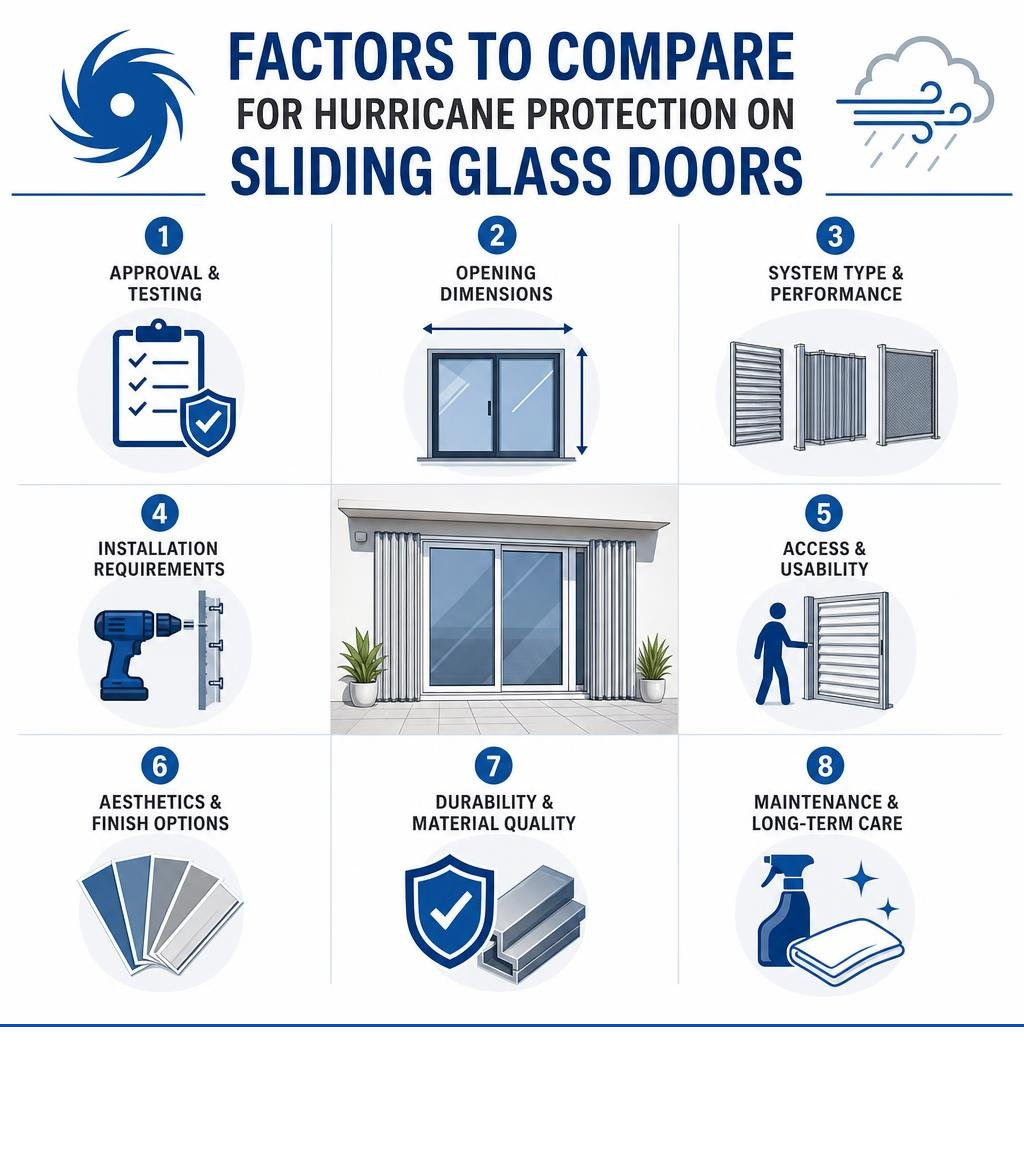
Florida hurricane guidance recommends using tested and approved impact-resistant protection for vulnerable windows and glass doors in hurricane-prone areas. The exact system selected for a sliding door should be verified for the property’s conditions and installed according to its approved documentation.
Hurricane Shutters vs. Hurricane Screens for Sliding Glass Doors
Both shutters and flexible hurricane-screen systems may be used for storm protection on large openings when the specific product is approved for the application. The practical differences homeowners notice often involve how the system is stored, deployed and used around the door.
| Decision Factor | Hurricane Shutters | Hurricane Screens |
|---|---|---|
| Protection type | Exterior shutter system designed for storm protection, depending on the selected product. | Flexible protective screen system designed for storm use, depending on the selected product. |
| Suitability for the opening | Must be verified for the actual sliding-door opening and installation conditions. | Must be verified for the actual opening and installation conditions. |
| Normal-day appearance | Depends on how the selected shutter system stores or remains mounted. | Depends on how the selected screen system stores or deploys. |
| Door access | Normal access and deployment should be reviewed for the specific layout. | Normal access and deployment should be reviewed for the specific layout. |
| Clearance | Required clearances depend on the approved system and installation documentation. | Required clearances depend on the approved system and installation documentation. |
| Performance | Controlled by the exact product approval and approved installation. | Controlled by the exact product approval and approved installation. |
The table is a planning framework rather than a performance ranking. The final choice should be based on the exact approved shutter or screen system that fits the sliding-door opening, along with everyday access, deployment and the way the patio area is used.
Hurricane Shutters for Sliding Glass Doors
A hurricane shutter system may be an option for sliding glass doors when the specific product is approved for the opening and compatible with the surrounding installation conditions.
The practical questions are not limited to storm performance. Homeowners should also consider how the system affects everyday access to the patio, where the shutter components remain when the system is not deployed and how the system is operated when storm preparation is needed.
Because shutter products and approvals vary, dimensions, anchors, design pressures, required clearances and installation details should always come from the documentation for the exact approved system.
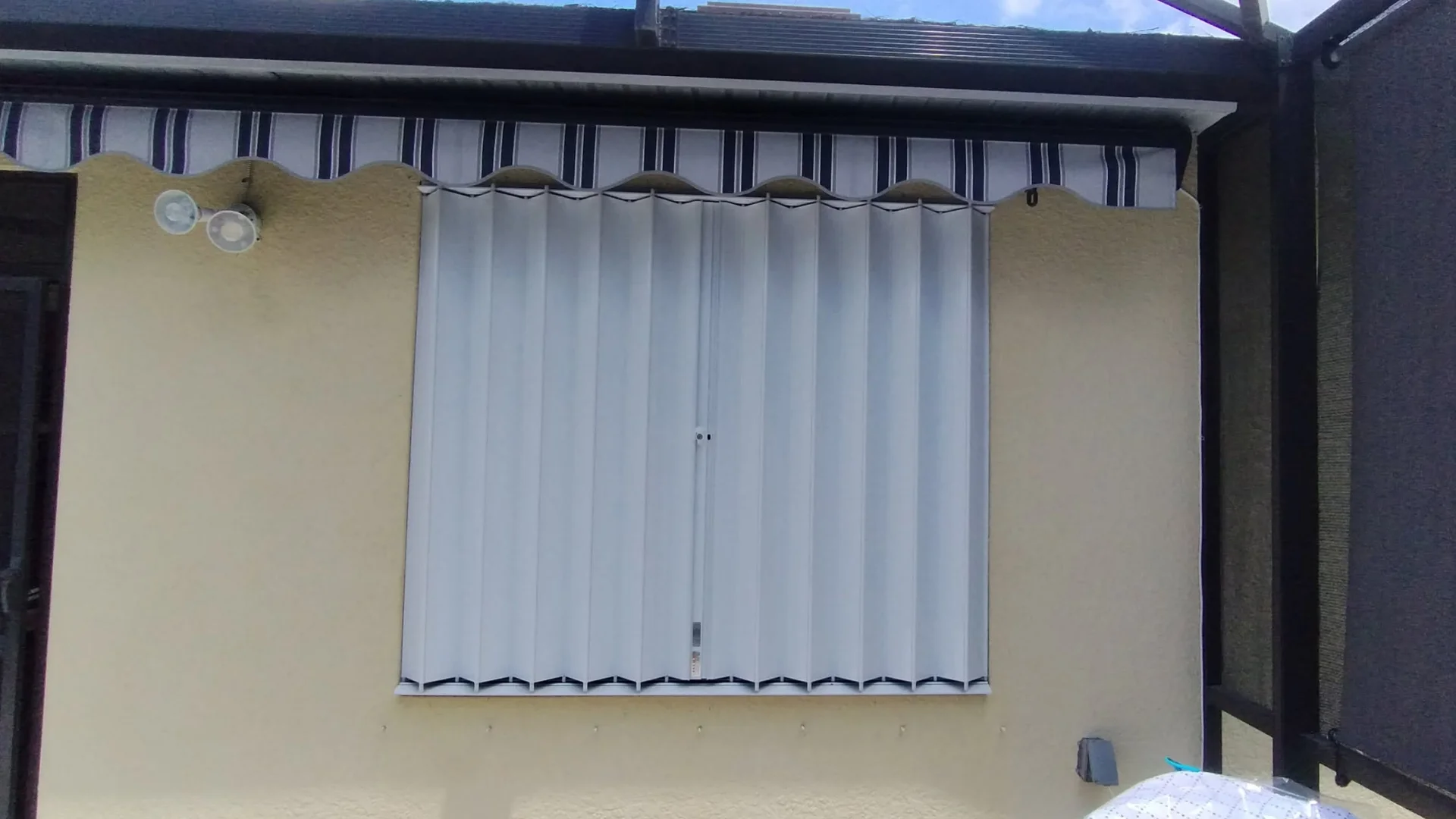
For a broader explanation of storm-shutter categories, see what are storm shutters.
Hurricane Screens for Sliding Glass Doors
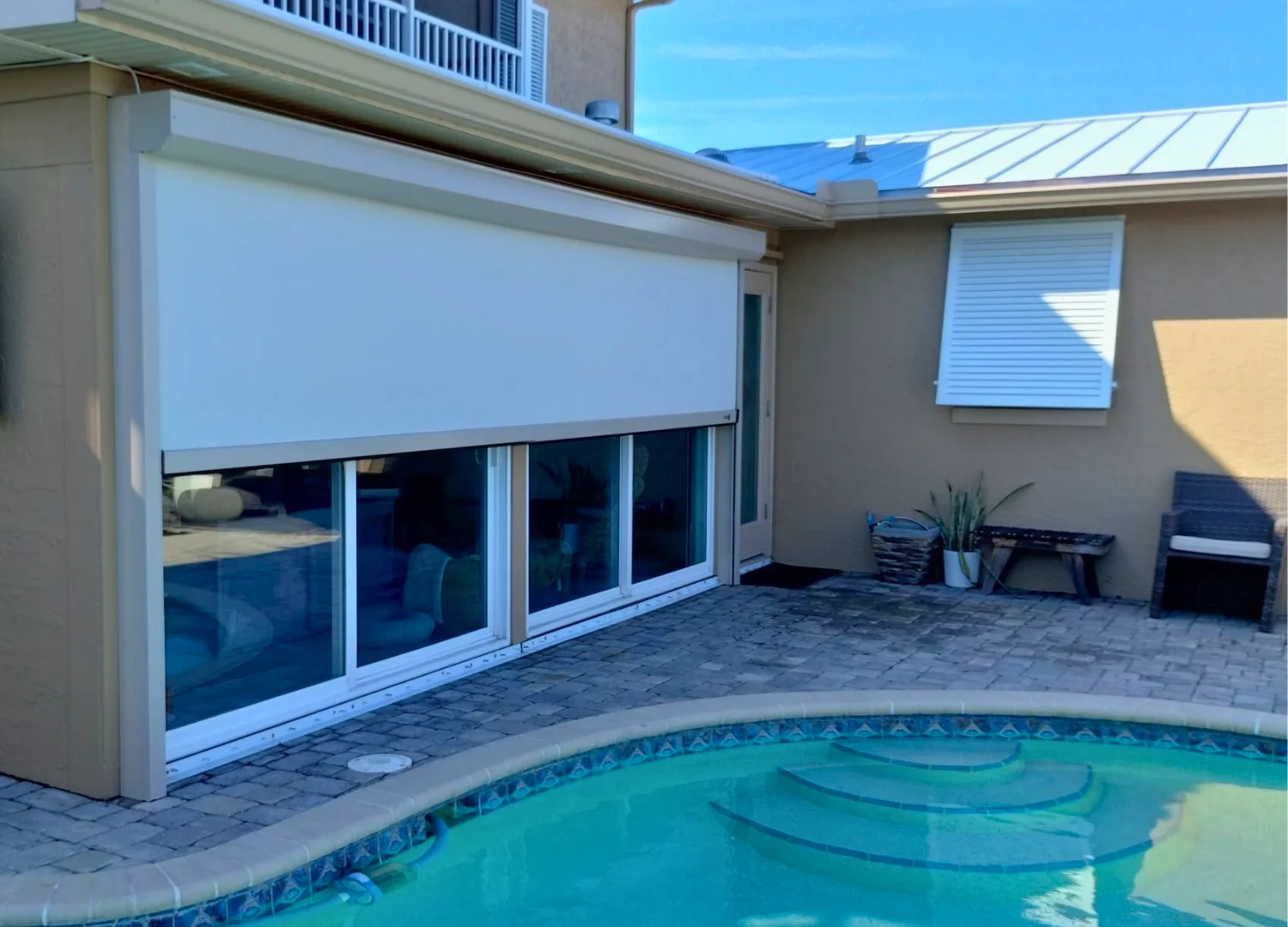
Approved hurricane-screen systems may also be considered for some large sliding-door and patio-door openings. These systems use a flexible protective barrier rather than a rigid shutter, but suitability still depends on the exact approved product and the property.
Homeowners comparing hurricane screens for sliding glass doors should review how the screen deploys, where it stores when not in use, how the doorway is accessed and what clearances the approved installation requires.
A flexible hurricane screen should not be confused with an ordinary insect, solar or privacy screen. Storm-protection performance must be supported by the specific system’s approval and installation documentation.
Learn more about HS Shade Solutions’ hurricane screens.
How Everyday Door Use Affects the Choice
Sliding glass doors are often used differently from ordinary windows, so everyday access should be part of the hurricane-protection decision. A patio door may be a primary route to an outdoor living area, pool deck or lanai, which makes the way the protection system stores and deploys especially important.
When comparing hurricane shutters and hurricane screens for sliding glass doors, consider what remains around the opening during normal use, whether the doorway stays clear when the system is not deployed and how the protection is moved into place when a storm approaches.
The exact operating method varies by product. Rather than assuming one category is more convenient, homeowners should review the actual approved systems available for the opening and consider how each fits the way the door is used throughout the year.
What to Review for Sliding Glass Door Hurricane Protection
A site-specific evaluation is important because the door opening and surrounding property conditions affect which approved systems may be appropriate.
Useful factors to review include:
- Opening size and configuration: The complete sliding-door opening needs to fall within the approved limits of the selected system.
- Surrounding installation conditions: The approved installation must be compatible with the actual property and mounting area.
- Normal door access: Consider how family members will use the sliding door when the protection system is not deployed.
- Storm deployment: Review how the system is put into its protective position and what preparation is required.
- Storage or permanent components: Understand what remains visible around the opening during everyday use.
- Required clearance: Flexible and rigid protection systems may require different clearances from the protected glass or surrounding features.
- Product approval: Confirm that the exact product and configuration are approved for the intended application.
Questions to Ask About Sliding Door Hurricane Protection
A site-specific consultation should help connect the product approval to the actual sliding-door opening. Useful questions include:
- Which approved systems are suitable for this opening? Product approval and the property’s installation conditions should control the available choices.
- How does the system affect normal patio-door access? Understand what remains visible or in place when storm protection is not deployed.
- How is the system deployed? Ask what steps are required to move the product into its protective position.
- What clearance does the approved installation require? The answer should come from the documentation for the exact system rather than a general rule.
- Where does the system store when it is not being used? Storage or permanent components can affect everyday appearance and use of the opening.
- What maintenance does the manufacturer require? Care instructions should be specific to the selected product.
- How can the product approval be verified? Ask for the exact approval information that applies to the proposed system.
HS Shade Solutions can review the opening and help homeowners compare appropriate hurricane-protection options based on the property and the approved systems available for the project.
Why Florida Product Approval Matters
Hurricane-protection products should not be evaluated from a marketing description alone. Florida maintains a product-approval system where homeowners and professionals can review approved products and supporting documentation.
Those documents can define important limits and installation requirements for the exact system, including allowable configurations and other technical conditions. That is why one shutter or screen system’s specifications should never be generalized to every hurricane-protection product.
You can search approved products through the Florida Product Approval database.
How HS Shade Solutions Helps Evaluate Sliding Door Protection
HS Shade Solutions offers hurricane shutters and hurricane-screen solutions for exterior openings across Brevard County, Indian River County and Volusia County. For sliding glass doors, the recommendation should begin with the actual opening and the approved systems that are appropriate for the property.
A site-specific evaluation can help compare the practical differences between available options, including everyday door access, deployment, visible or stored components and the requirements identified in the applicable product documentation.
The goal is not to choose a shutter or screen category based on a generic rule, but to identify an approved hurricane-protection solution that fits the opening and the way the property is used.
Maintenance and Storm Readiness
Maintenance requirements depend on the selected hurricane-protection system. Cleaning, inspection, lubrication and testing procedures should follow the manufacturer’s instructions for that exact product.
Homeowners should understand how to deploy the system before severe weather threatens rather than learning the process for the first time during storm preparation.
If components appear damaged, difficult to operate or different from their normal condition, the system should be evaluated before relying on it for storm protection.
Frequently Asked Questions About Hurricane Protection for Sliding Glass Doors
What Hurricane Protection Can Be Used for Sliding Glass Doors?
Depending on the opening and property, approved shutter systems or approved hurricane-screen systems may be options. The exact product must be verified for the intended application.
Are Hurricane Screens Suitable for Sliding Glass Doors?
Some approved hurricane-screen systems may be suitable for large sliding-door openings. Suitability depends on the specific product approval, opening and installation conditions.
Are Hurricane Shutters Required to Protect Sliding Glass Doors?
The protection required for a property depends on the applicable code, existing door system and jurisdiction. Homeowners should verify the requirements for their specific property rather than assume one rule applies everywhere.
Can an Ordinary Patio Screen Protect a Sliding Door From a Hurricane?
No. Ordinary insect, solar and privacy screens should not be assumed to provide hurricane protection. Storm protection requires a system specifically tested and approved for that purpose.
How Do I Know Whether a Hurricane Shutter Is Approved in Florida?
Florida’s Product Approval database can be used to research approved products and supporting documentation. The exact product, configuration and installation still need to match the property.
Which Is Better for Sliding Glass Doors: Hurricane Screens or Shutters?
Neither category is automatically better for every opening. Compare the approved systems available for the property, normal door access, deployment, storage or visible components, required clearances and the way the opening is used.
Choose Approved Storm Protection for the Opening
Hurricane protection for sliding glass doors should be selected around the actual opening and the approved systems that fit the property. Shutters and hurricane screens can offer different approaches, but the exact product approval and installation requirements should always control.
HS Shade Solutions serves Brevard County, Indian River County and Volusia County. Explore our hurricane screens, learn more about storm shutters, or request a site-specific consultation for your property.