
Choose a Lanai Privacy Screen That Fits How You Live Outside
The right lanai privacy screen depends on the sightline you need to manage, the outward view and airflow you want to keep, and how privacy changes as daylight fades and indoor lights come on. It also depends on whether coverage is useful all day or only at certain times, plus the existing opening and compatible screen configuration.
For some Florida homeowners, targeted coverage around a seating area is enough. Others benefit from a motorized exterior screen that can be lowered for afternoon glare, evening gatherings, or nearby activity and raised when they want the view and breeze back.
In our experience, homeowners are rarely asking only how to block a neighbor’s view. They also want to manage glare, insects, and outdoor comfort without losing the open-air feeling that makes a lanai worthwhile. One common mistake is choosing permanent coverage before considering its effect on light, breezes, and sightlines.
We install motorized, privacy, and shade screens within existing pool enclosures and around pool and patio areas; we do not build, repair, rescreen, or install the surrounding enclosure. For flexible privacy across a compatible patio or lanai opening, explore motorized screens.
Selecting the Right Lanai Privacy Screen
Start with the view into the lanai rather than a generic material list. During a consultation, we identify where the unwanted sightline originates—such as a neighboring window, sidewalk, golf course path, preserve lot, or nearby pool area—and how it changes when you are seated, standing, or moving through the space.
A lower treatment may be enough for a passerby or neighboring patio at seated height. An elevated window or second-story balcony can require a different coverage approach. Evening use matters too: a screen that feels private in daylight can behave differently once interior and patio lights create contrast after dark.
Privacy-Screen Decisions to Make Before Choosing a Solution
| Decision factor | What to consider |
|---|---|
| Sightline to manage | Identify where the view into the lanai begins and whether it is low, direct, elevated, or seasonal. |
| Seated or standing privacy | Decide whether coverage is mainly needed around chairs and dining areas or across the opening’s full height. |
| Daytime versus evening use | Consider how sun position and indoor or outdoor lighting affect privacy when you use the lanai most. |
| Outward visibility | Choose how much of the backyard, pool, lake, golf course, or preserve view you want to retain. |
| Airflow | Determine where breezes enter and how much ventilation should remain. |
| Retractability | Consider whether coverage is needed continuously or only for sun, activity, gatherings, or nighttime use. |
| Other comfort goals | Factor in insects, glare, shade, and daily use of the space. |
| Opening and mounting conditions | Evaluate the existing columns, headers, framing, span, and enclosure configuration for compatibility. |
Match the Coverage to the Way You Use the Lanai
Targeted lower coverage can improve privacy around seating while leaving more of an existing enclosure open to light and breeze. A larger patio or lanai opening may need coverage only when the afternoon sun is low, neighbors are outside, guests are over, or evening lighting makes the space feel exposed.
For appropriate openings, we install SunPro motorized-screen systems. Available screen materials may include Phifer or Twitchell, and controls depend on the selected configuration.
Screen performance varies with the selected fabric, lighting, sightline, and time of day.
Evaluating Key Performance Features and Trade-Offs
A lanai privacy screen changes privacy, outward visibility, daylight, and airflow at a specific opening. The right balance can vary around the same lanai: a west-facing patio beside a neighbor may need flexible coverage late in the day, while a preserve or golf-course view may call for a more open feel most of the time.
Privacy Depends on Openness and Lighting Conditions
Privacy is not identical in every condition. It depends on fabric openness, interior and exterior lighting direction, time of day, viewing direction, and the distance between the lanai and the person looking in. Phifer’s privacy guidance likewise explains that outward visibility depends on factors including openness, fabric color, and the contrast between interior and exterior light.
A screen that provides useful daytime privacy may behave differently after dark. When the lanai is illuminated and the exterior is darker, contrast can make the interior side of the opening more visible. Homeowners who use the space for evening dining, entertaining, or relaxing should discuss nighttime lighting and the exact sightline—not only how a screen looks during the day.
More coverage or a less-open material may create more visual separation for a particular view, but it can also change the breeze, daylight, and outward visibility that remain. We help homeowners weigh those trade-offs around the opening they use most instead of assuming one screen will perform the same way everywhere.
Depending on the selected fabric and configuration, a compatible motorized screen may help with privacy, shade, glare reduction, or insect control and can be raised when a more open view and airflow are preferred.
Professional Site Evaluation for an Existing Lanai
Rather than relying on DIY placement rules or generalized structural advice, an evaluation focuses on whether the existing opening is compatible with a configuration that fits the homeowner’s goals. We may consider:
- opening width and height;
- available mounting surfaces;
- columns, trim, and clearance around the opening;
- sun exposure and the sightline to be managed;
- the desired balance of privacy, outward view, airflow, shade, and insect control;
- electrical access where the selected configuration requires it;
- installation access; and
- compatibility between the existing opening and the selected screen system.
Plan Privacy Around Everyday Lanai Use
Privacy is most useful when it fits the way people actually move through and use the lanai. Before choosing which opening to cover, note exterior doors, regular walking paths, seating and dining areas, and the spans that stay open most often. The opening with the biggest privacy concern is not always the largest opening; it may be the one aligned with a neighboring window, sidewalk, or frequently used outdoor area.
For adjustable coverage, also consider when you would want the screen lowered and when the opening needs to stay clear. A screen used mainly during evening meals or afternoon glare can serve a different role from one lowered for longer periods. That helps prioritize the opening where retractable coverage adds the most value instead of treating every side of the lanai as the same privacy problem.
This use-pattern review can also help identify which opening deserves attention first when a lanai has several different exposures.
Keep Hurricane Protection Separate
A standard motorized privacy screen and a hurricane screen are separate product categories. A standard privacy screen should not be described as hurricane, impact, or storm protection. If storm protection is also a project goal, it should be evaluated separately using the appropriate hurricane screen system for a lanai.
Frequently Asked Questions About Lanai Privacy Screens
Do lanai privacy screens provide complete privacy?
Not in every condition. Fabric openness, the sightline, lighting direction, time of day, viewing angle, and distance all affect the result. A consultation can help identify the coverage and configuration that fit a particular opening.
Can you see through a privacy screen at night?
It can be different after dark. When the lanai is illuminated and the exterior is darker, contrast may make the inside more visible than it is during the day. If evening privacy matters, discuss nighttime lighting and the sightline during the evaluation.
Can a motorized privacy screen be raised when privacy is not needed?
For an appropriate opening, a SunPro motorized-screen system may be an option. Depending on the selected fabric and configuration, a compatible motorized screen may help with privacy, shade, glare reduction, or insect control and can be raised when a more open view and airflow are preferred. Controls depend on the selected configuration.
How do airflow and outward visibility affect privacy?
More visual coverage may change the breeze, daylight, and outward visibility that remain. The right balance depends on whether you want to screen a specific sightline, preserve a backyard or pool view, or adjust coverage as conditions change.
Can a motorized privacy screen be installed within an existing pool enclosure?
It may be possible when the opening has compatible mounting surfaces, dimensions, and clearances for the selected system. The screen system is installed within the existing enclosure; the surrounding fixed lanai or pool enclosure is not built, repaired, rescreened, or installed as part of that work.
Is a standard motorized privacy screen hurricane protection?
No. Standard motorized privacy screens and hurricane screens are separate product categories.
Conclusion
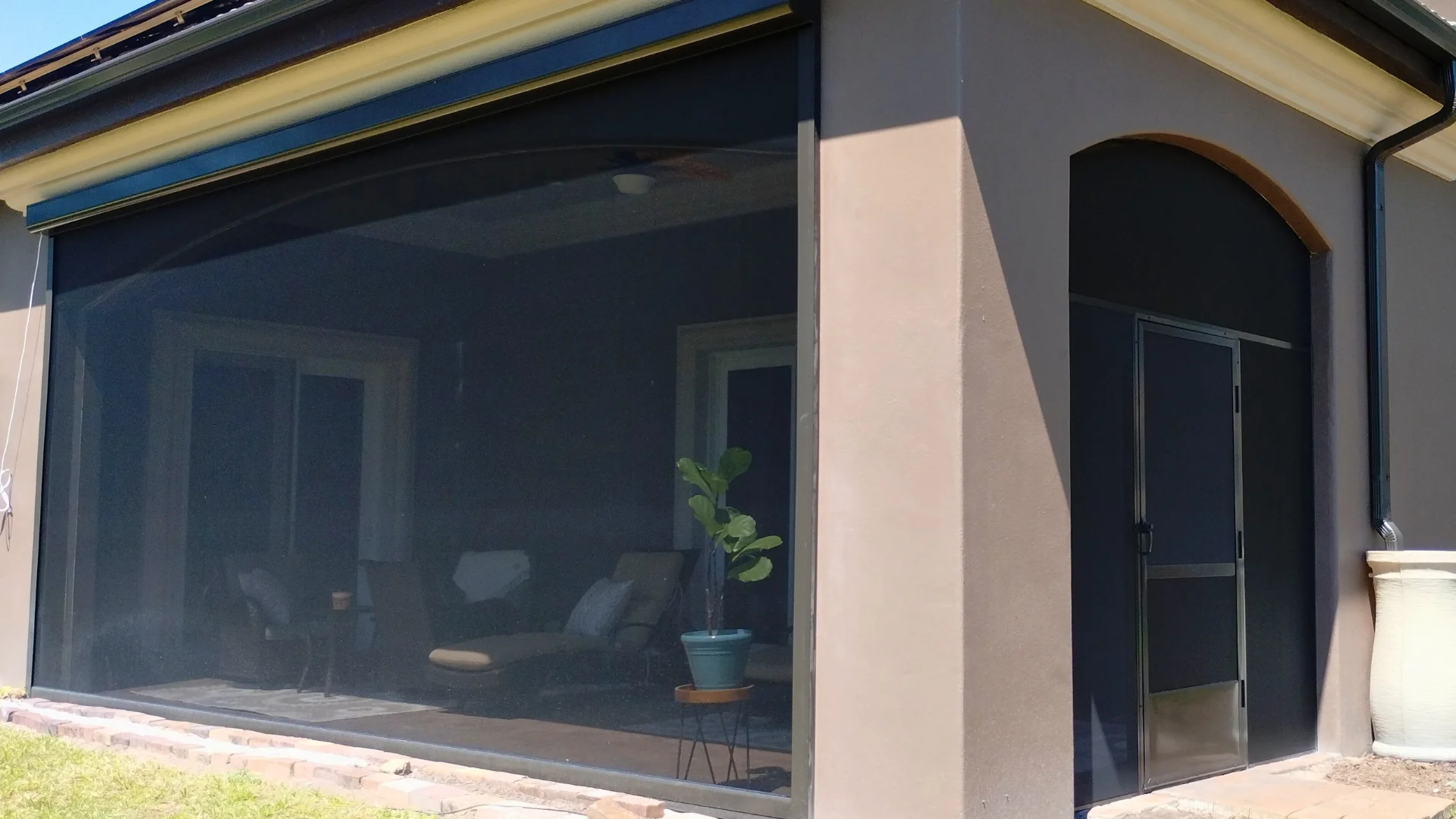
The right lanai privacy screen fits the sightline you want to manage while preserving the view, airflow, and flexibility that matter most to how you use the space. Lighting conditions—especially evening use—should be part of that decision. The best fit addresses the exposure you notice most without making the lanai feel closed off when you would rather enjoy it open.
Homeowners across Brevard County, Indian River County, and Volusia County can schedule an outdoor consultation to evaluate a lanai or patio opening. Ready to explore flexible motorized screen solutions for your property? Contact HS Shade Solutions.