

Lanai screens can help make a covered outdoor space more comfortable and usable by adding screening only when it is needed. This guide focuses on retractable and motorized screens installed across existing lanai openings and the factors homeowners should consider before choosing a configuration.
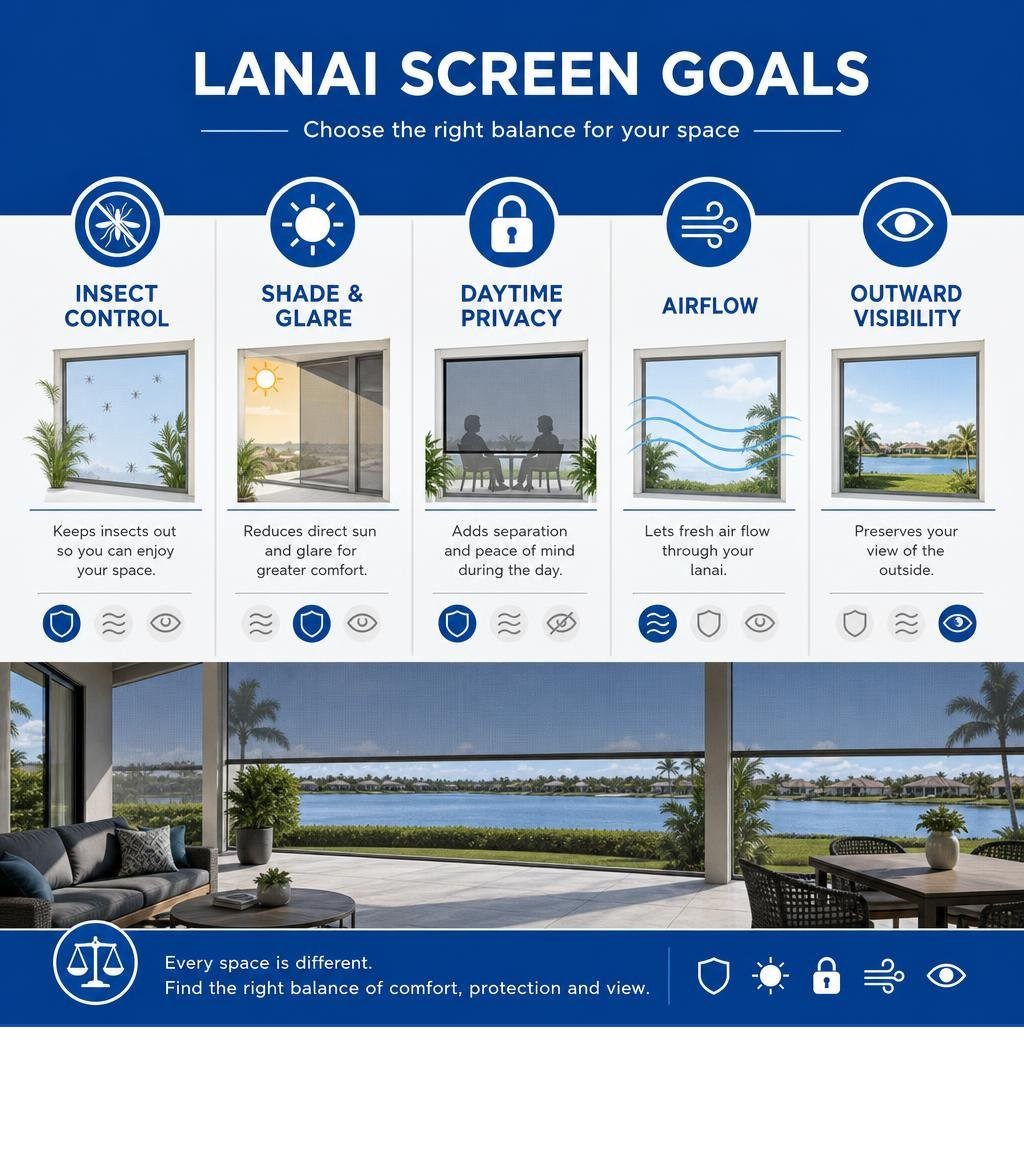
Depending on the selected screen material and application, a motorized screen can support insect control, shade and glare management, daytime privacy, airflow and outward visibility. The right balance depends on what the homeowner wants the screen to accomplish.
HS Shade Solutions installs motorized screens for lanais, patios, porches, garages and other outdoor living areas across Brevard, Indian River and Volusia counties. Choosing a screen for lanai openings starts with what you want the screen to accomplish, the conditions of the opening and the screen material that best supports those goals.
For a broader look at the screen categories HS offers, explore our screen solutions.
What to consider when choosing lanai screens
The first question is not which screen system has the longest feature list. It is what you want the screen to do when it is lowered across the lanai opening.
| Homeowner goal | What to consider | Tradeoff to confirm |
|---|---|---|
| Insect control | Select a screen material and application suited to managing insects across the opening. | Confirm how the selected material balances insect control with airflow and visibility. |
| Shade and glare | Consider screen materials designed to reduce direct sun and glare. | Confirm how much openness and outward visibility you want to maintain. |
| Daytime privacy | Privacy-focused materials can add separation across an outdoor opening. | Privacy varies with material, lighting, viewing direction and application. |
| Airflow | Screen openness affects how air moves through the screened opening. | Balance airflow with shade, insects and privacy goals. |
| Outward visibility | Some screen materials preserve more of the outward view than others. | The selected material still needs to support the other goals for the space. |
When a motorized screen fits an existing lanai opening
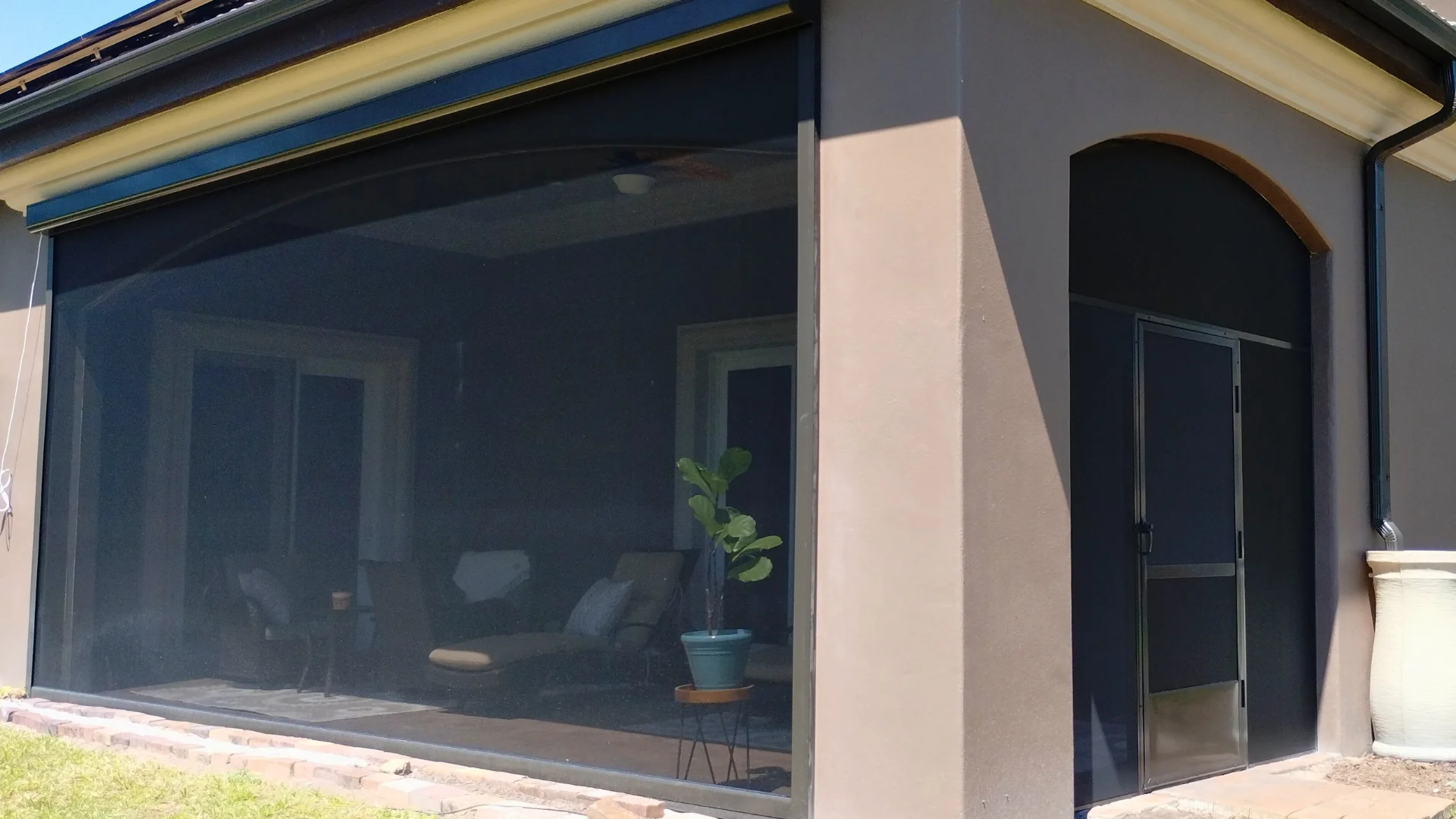
A standard motorized screen lowers vertically across an existing opening and retracts into its housing when the screen is not needed. That can make it useful for lanais where homeowners want screening at certain times without permanently closing the opening.
Motorized screening may be worth considering when the lanai is used frequently, the opening needs to remain open at other times, or the homeowner wants an adjustable way to manage insects, sun, glare or privacy.
Common examples include a lanai that stays open most mornings but needs screening at dusk, a west-facing opening where afternoon glare becomes the bigger concern, or a dining and seating area where insects matter most in the evening. A motorized screen can also make sense when homeowners want the opening completely clear when the screen is raised instead of leaving a fixed barrier in place.
The final fit depends on the opening dimensions, mounting surfaces, clearances, intended screen function, electrical access and installation access. HS Shade Solutions evaluates those conditions before recommending a configuration.
Learn more about motorized screens for lanais and other outdoor openings.
How retractability changes the way a lanai is used
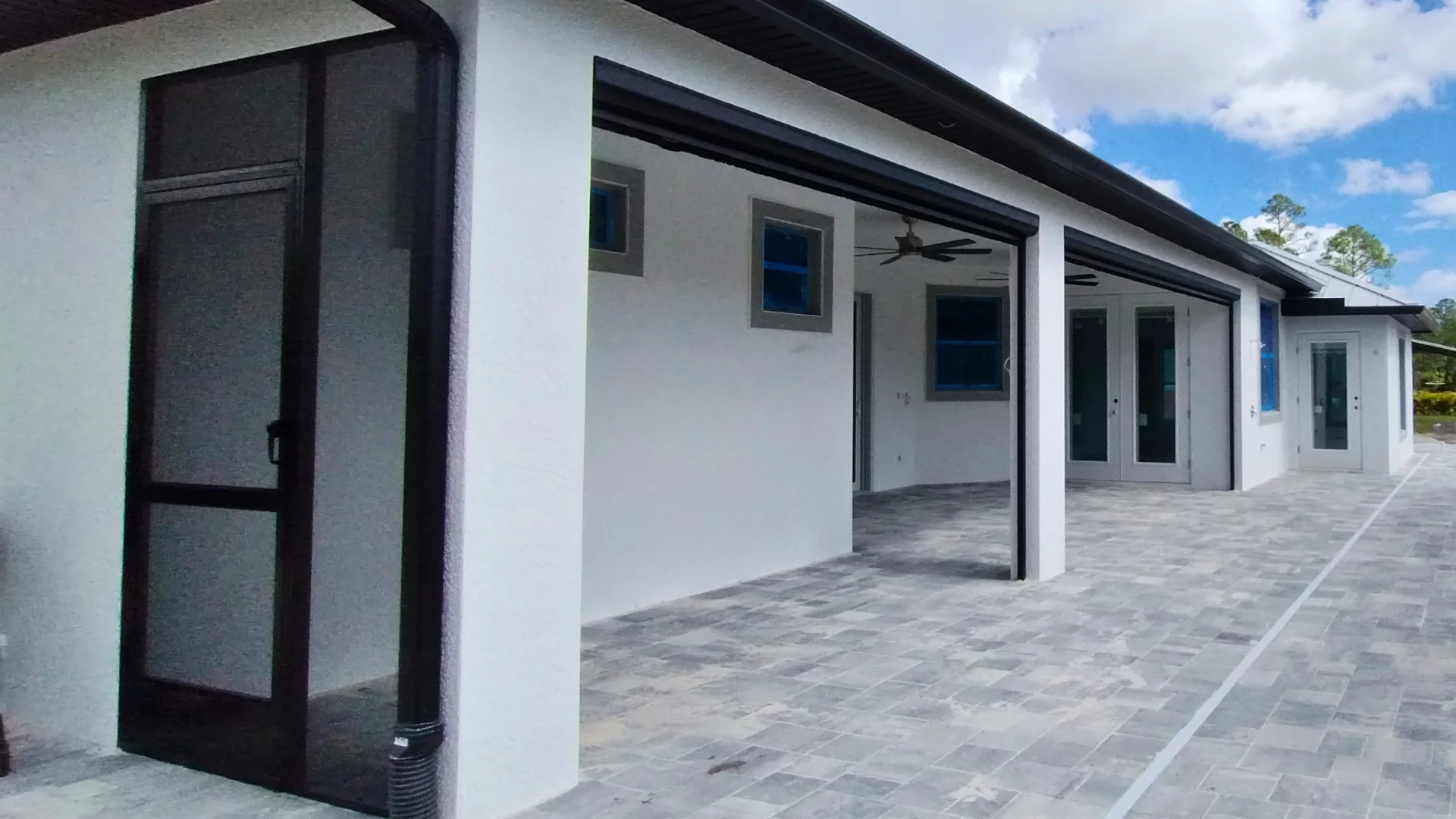
One advantage of a retractable screen is that the lanai does not have to stay screened all the time. When insects, glare or privacy are not concerns, the screen can be raised so the opening remains clear. When conditions change, the screen can be lowered again for the function the homeowner needs.
That flexibility can be especially useful in outdoor spaces that serve several purposes throughout the day. A lanai may be open for morning airflow, screened during an evening meal or adjusted when afternoon sun reaches a particular opening. The value of motorization is the ability to change the space as those needs change.
Screen materials shape privacy, airflow and visibility
HS Shade Solutions offers exterior screen fabrics from Phifer and Twitchell. The selected material helps determine how a lanai screen balances insect control, solar and glare management, airflow, outward visibility and daytime privacy.
Exterior screening can also play a role in managing solar exposure. The U.S. Department of Energy notes that exterior sunscreens and other exterior shading methods can help reduce unwanted solar heat gain. Florida Solar Energy Center research also identifies shading screens and other exterior shading devices as useful strategies for reducing heat gain in Florida homes.
Those goals can compete with one another, which is why there is no single screen material that is automatically right for every lanai. A homeowner who prioritizes outward visibility may make a different selection than someone whose main concern is daytime privacy or afternoon sun exposure.
A useful way to think about material selection is as a tradeoff continuum. A more open screen material can favor airflow and outward view, while a denser material may put more emphasis on shade, glare reduction or daytime privacy. Insect-control goals can also affect the material recommendation, because the selected screen still has to suit the opening and the homeowner’s comfort priorities. Privacy is especially dependent on conditions around the lanai. A screen that feels private during bright daytime conditions may perform differently at night when interior or patio lighting is stronger than the light outside.
For homeowners who want to explore sightlines, material openness and daytime-versus-nighttime privacy in more detail, see our patio privacy screen ideas.
What to review before choosing lanai screens
A screen has to fit both the lanai opening and the way the space will be used. A site-specific evaluation helps connect those two parts of the decision.
HS Shade Solutions reviews factors such as:
- Opening dimensions
- Mounting surfaces
- Available clearances
- Sun exposure
- Insect, privacy, shade, airflow and visibility goals
- Electrical access for a powered configuration
- Installation access
Together, these factors help determine which screen configuration and material make sense for the opening.
Standard motorized screens versus hurricane screens
Standard motorized screens and hurricane screens serve different purposes. Standard screens are used for everyday goals such as insect control, shade and glare management, airflow, outward visibility and privacy, depending on the selected material and application.
When storm protection is the goal, hurricane screens are a separately specified product category. The appropriate hurricane-screen system depends on the opening and project conditions.
Screens within an existing pool enclosure
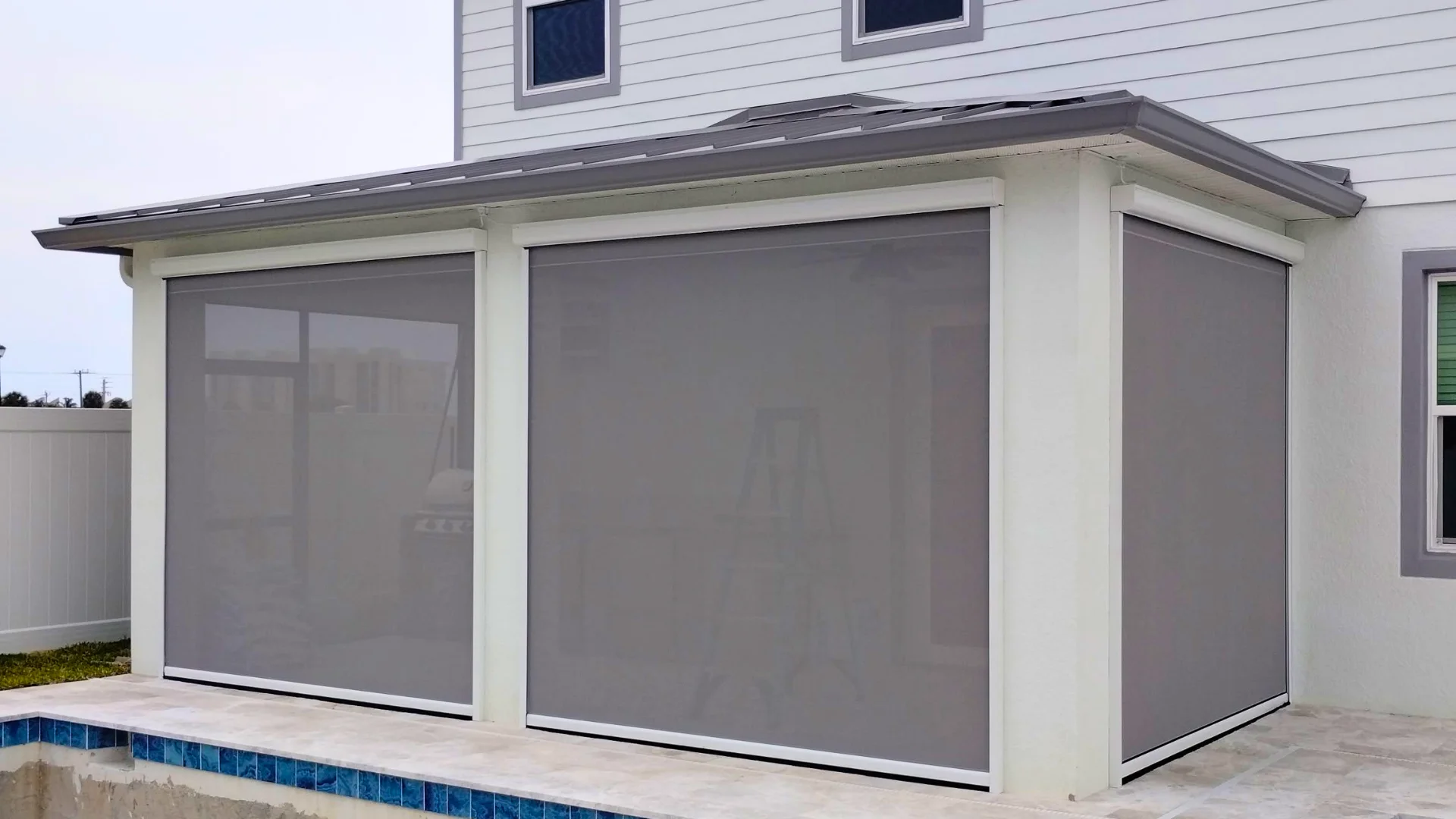
Motorized screens can also be added across appropriate openings within an existing pool enclosure or around pool and patio areas. This can provide adjustable screening within a space that already has an enclosure structure.
A homeowner might consider this type of retractable screen when one side of the pool area gets strong afternoon sun, when a seating zone needs more privacy, or when a particular opening would benefit from extra screening at certain times of day. It can also help preserve flexibility because the opening can remain clear when the screen is raised instead of being permanently closed off.
The right configuration depends on the available framing, mounting surfaces, clearances and the selected screen system. These conditions are evaluated as part of the site-specific recommendation.
Questions to ask before choosing lanai screens
A site-specific estimate is the right time to clarify how the proposed screen will work for the opening and the way the lanai is used. Useful questions include:
- What do we want the screen to accomplish most: insects, shade, privacy, airflow or visibility?
- Which screen material best balances those priorities?
- What opening dimensions and mounting conditions affect the configuration?
- Are there clearance or access conditions that need to be considered?
- What electrical access is needed for the proposed motorized screen?
- What control method is included with the selected configuration?
- Do our goals call for a standard motorized screen or a separately specified hurricane-screen system?
Clear answers to these questions make it easier to understand what is included and whether the proposed screen fits the space before installation is planned.
Frequently asked questions about lanai screens
What should I look for in a screen for lanai openings?
Start with what you want the screen to accomplish. Insect control, shade, daytime privacy, airflow and outward visibility can require different material priorities, so the opening and intended use should be evaluated together.
Can lanai screens help with insects?
Yes, compatible screen materials and applications can help manage insects across an existing lanai opening. The selected material should also be evaluated for the airflow, visibility and shade goals of the space.
Can screens for lanai openings provide privacy?
Privacy-focused screen materials can provide added daytime privacy, but the result depends on the selected material, lighting, viewing direction and application.
Do motorized lanai screens still allow airflow and outward visibility?
They can. The balance of airflow, visibility, shade, privacy and insect control depends on the selected screen material and configuration.
Can motorized screens be added within an existing pool enclosure?
Yes, motorized screens can be installed across appropriate openings within an existing pool enclosure when the framing, mounting surfaces, clearances and selected configuration support the installation.
Are standard lanai screens hurricane protection?
No. Standard motorized screens and hurricane screens are separate product categories. If storm protection is the goal, the opening should be evaluated for an appropriate hurricane-screen system.
Choose lanai screens around how you use the space
The right lanai screen should match the opening and the way the outdoor space is actually used. Start with the function you need from the screen, then consider how the selected material balances insects, shade, privacy, airflow and outward visibility.
HS Shade Solutions can evaluate the opening, site conditions and screening goals to recommend a configuration for your home. Explore our motorized screens and request a site-specific estimate.