
An awning is an exterior covering supported by a frame and installed over a window, door, patio, deck, entry or other outdoor area to provide shade and protection from direct sun. Awnings may be fixed in place or designed to retract when shade is not needed.
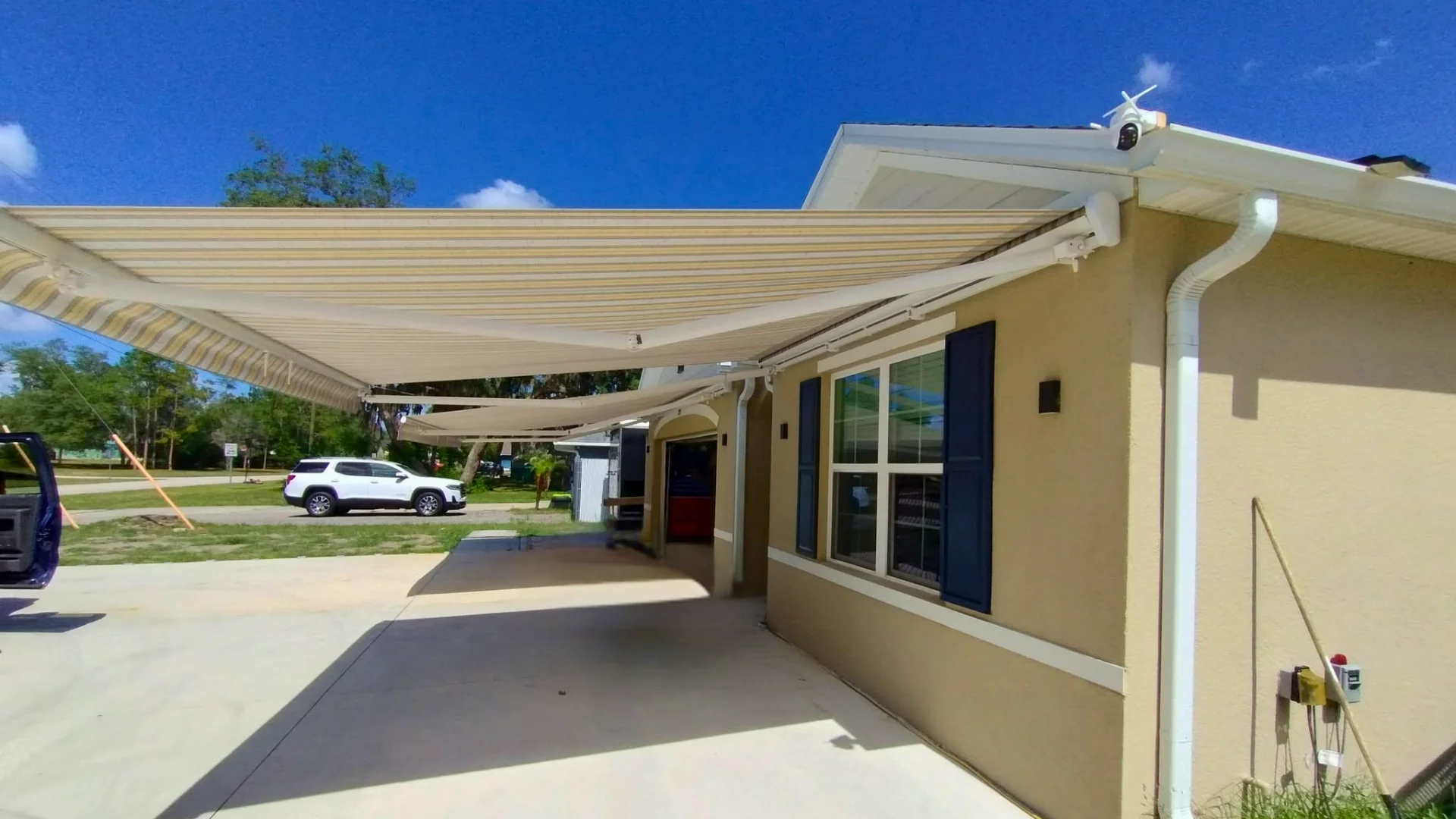
If your search is “meaning awning,” the definition is straightforward: an awning is an exterior shade structure that projects over part of a building or outdoor space. The Cambridge Dictionary defines an awning as a covering supported by a frame and used to protect part of a building from sun or rain.
The U.S. Department of Energy also describes awnings as roof-like exterior shelters used to shade windows from heat and glare and notes that they can shade outdoor living spaces. Modern residential awnings range from simple fixed coverings to custom retractable systems that can be extended when shade is needed and retracted when the space should remain open.
HS Shade Solutions installs custom retractable awnings for Florida homes across Brevard, Indian River and Volusia counties.
What does awning mean?
The word awning generally refers to a framed exterior covering that projects over part of a building or outdoor area. Its basic job is to create shade between direct sunlight and the area below it.
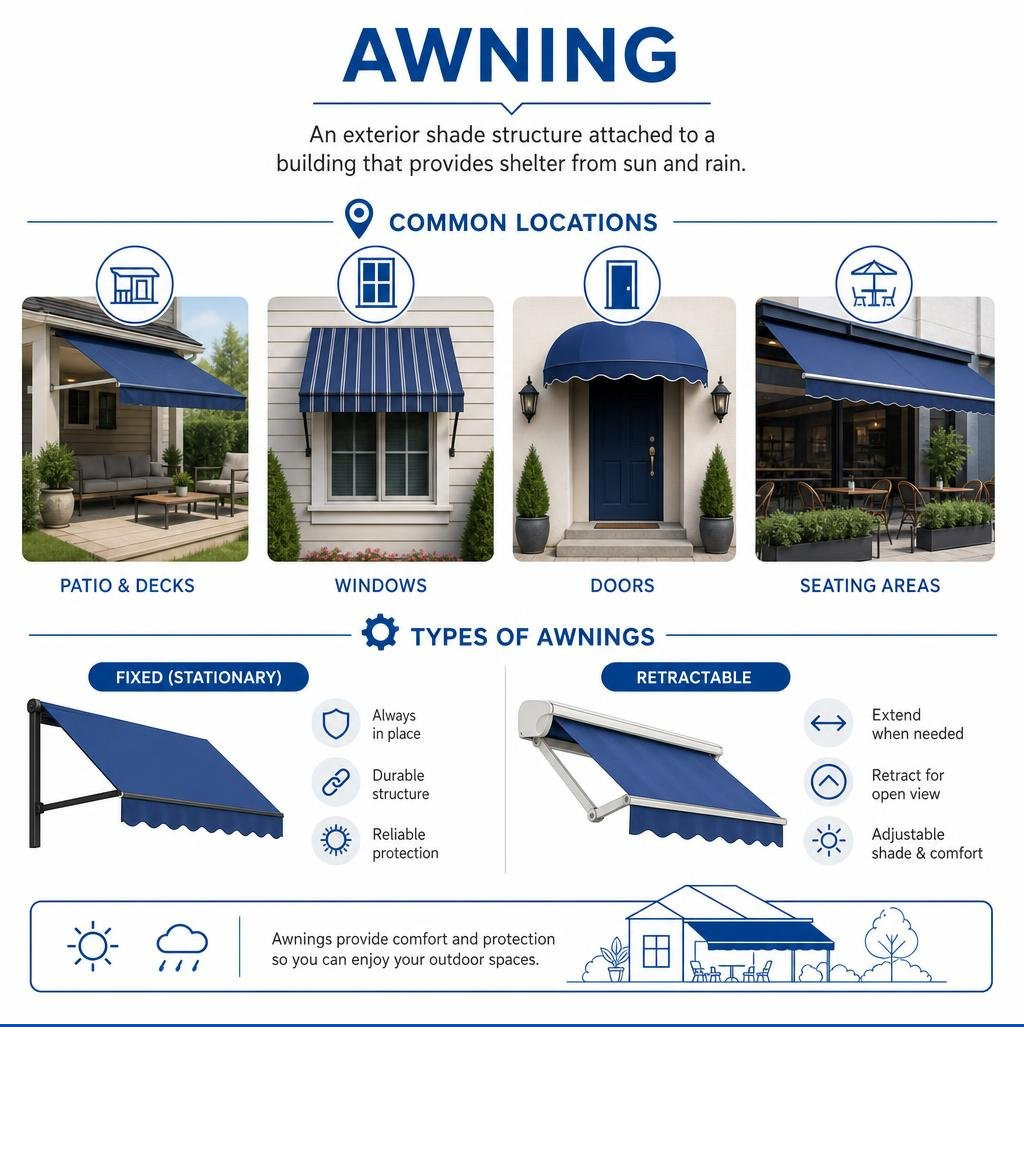
Awnings are commonly placed over patios, decks, windows, doors, entrances and outdoor seating areas. The exact design can vary considerably: some remain permanently extended, while retractable awnings can be opened and closed as outdoor conditions and shade needs change.
That distinction is important for homeowners because “awning” describes a broad category. A fixed window awning and a large motorized retractable patio awning may look and operate very differently, but both use an exterior projection to create shade.
What is the difference between an awning and a canopy?
The terms awning and canopy are sometimes used interchangeably, but they are not always the same type of structure. An awning generally projects from or is supported by a building or structure, while canopy is a broader term for an overhead covering that may use posts, its own supporting structure or a building connection depending on the design.
| Feature | Awning | Canopy |
|---|---|---|
| General purpose | Targeted exterior shade over part of a building or outdoor area | Overhead shelter or coverage for an outdoor area, entrance or walkway |
| Common applications | Patios, decks, windows, doors and seating areas | Entrances, walkways, commercial areas and larger covered spaces |
| Retractable? | May be fixed or retractable | Depends on the canopy design |
For homeowners comparing outdoor shade options, the important question is less about terminology and more about the type of coverage, structure and adjustability the space needs.
Common types of awnings
Awnings can be grouped broadly by whether the covering remains extended or can be retracted.
Fixed awnings
Fixed awnings remain in place and provide ongoing coverage over an area such as a window, entrance or smaller outdoor space. The exact frame, covering and support design varies by application.
Retractable awnings
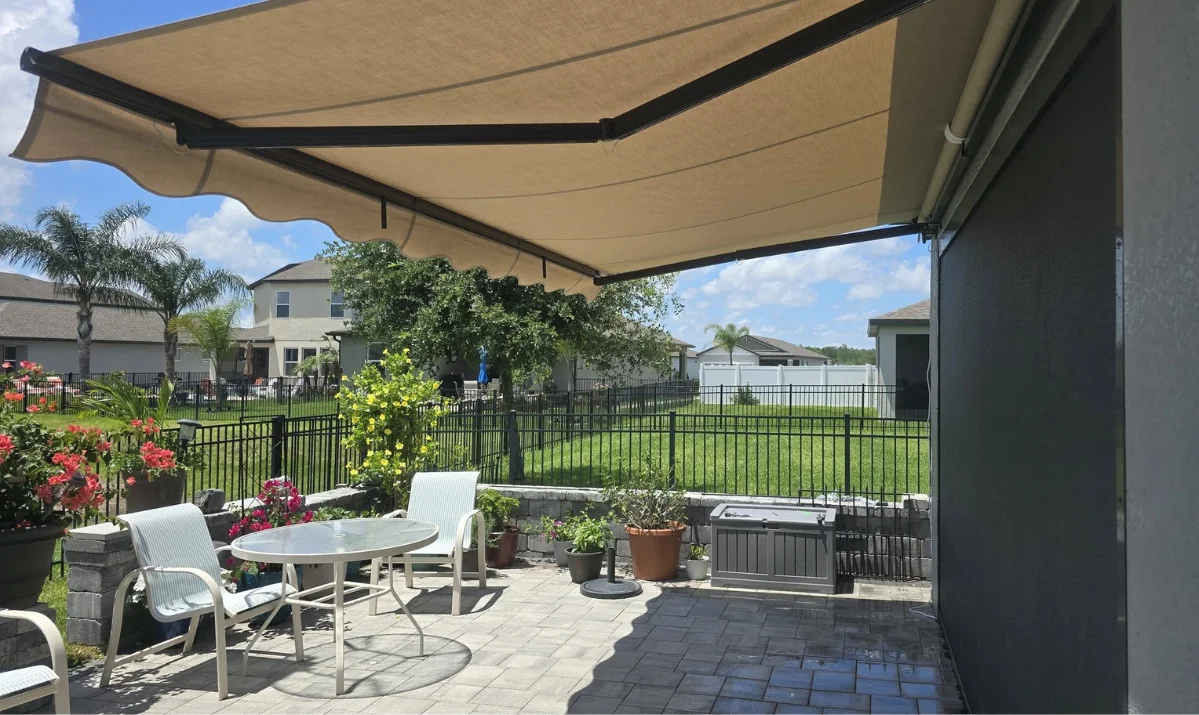
Retractable awnings can extend outward when shade is needed and retract when the homeowner wants the area open again. This makes them especially useful over patios, decks and outdoor seating areas where shade needs can change throughout the day.
HS Shade Solutions focuses on custom retractable awnings for residential outdoor spaces. For a deeper look at selection factors, see our guide to choosing the best retractable awning for a Florida home.
Manual and motorized retractable awnings
Retractable awnings may use manual or powered operation. A manual system is adjusted by hand, while a motorized system uses a compatible powered control method. The better fit depends on the selected system and how often the homeowner expects to adjust the awning.

Where are awnings commonly used?
Awnings can provide targeted exterior shade in both residential and commercial settings. The size and design depend on what needs to be covered and how the space is used.
- Patios and decks: Retractable awnings can provide adjustable overhead shade for outdoor dining, seating and entertaining areas.
- Windows and doors: Smaller awnings can shade exterior openings and help limit direct sun exposure. For homeowners focused specifically on window shade, HS Shade Solutions also explains options for window awnings near me.
- Outdoor seating areas: Awnings can extend shade over areas immediately outside a home or building.
- Entrances and storefronts: Fixed awnings may provide targeted coverage and architectural definition over doors and commercial openings.
The right application depends on the building, the area that needs shade and whether permanent or adjustable coverage makes more sense.
What should you consider when choosing an awning?
Once the meaning of an awning is clear, the next question is whether a particular awning fits the property and the way the outdoor space is used.
Important factors include:
- Shade coverage: Identify which patio, deck, window, door or seating area needs protection from direct sun.
- Mounting conditions: The building and proposed installation area need to be evaluated for the selected awning.
- Fixed or retractable operation: Decide whether permanent coverage or adjustable shade better matches the space.
- Manual or motorized operation: For retractable systems, consider how frequently the awning will be adjusted and how important convenient operation is.
- Fabric and appearance: Outdoor fabric selection affects the look of the awning and should complement the property.
- Weather use: Retractable awnings are shade products rather than hurricane-protection systems, so homeowners should follow the operating guidance for the selected system.
HS Shade Solutions offers custom retractable awnings with manual or motorized operation, including SunPro and Alutech systems. Available configurations can include Sunbrella fabrics, custom sizing and other compatible options depending on the selected system.
Frequently asked questions about awnings
What is the basic meaning of an awning?
An awning is a framed exterior covering used to provide shade over part of a building or outdoor area. Common locations include patios, decks, windows, doors and entrances.
What is the purpose of an awning?
The primary purpose of an awning is to create exterior shade over a window, door, patio, deck, entrance or outdoor seating area. Depending on the design, an awning may remain fixed in place or retract when shade is not needed.
Is an awning the same as a canopy?
Not always. An awning generally projects from or is supported by a building or structure, while a canopy is a broader type of overhead covering that may have its own supports or use a different structural design.
Are all awnings retractable?
No. Some awnings remain fixed in place, while retractable awnings can extend when shade is needed and retract when the homeowner wants the area open again.
Can retractable awnings be motorized?
Yes. Retractable awnings may use manual or motorized operation depending on the selected system and configuration.
Are retractable awnings hurricane protection?
No. Retractable awnings are shade products, not hurricane-protection systems. Homeowners should follow the selected system’s operating guidance for wind and weather conditions.
From awning definition to the right shade solution
The meaning of awning is simple: it is an exterior covering that creates shade over part of a building or outdoor area. What changes from one project to another is the type of awning, how it operates, where it is installed and how much adjustable shade the space needs.
If a retractable awning fits your outdoor-living goals, explore HS Shade Solutions’ retractable awnings and request a site-specific estimate for your property.