
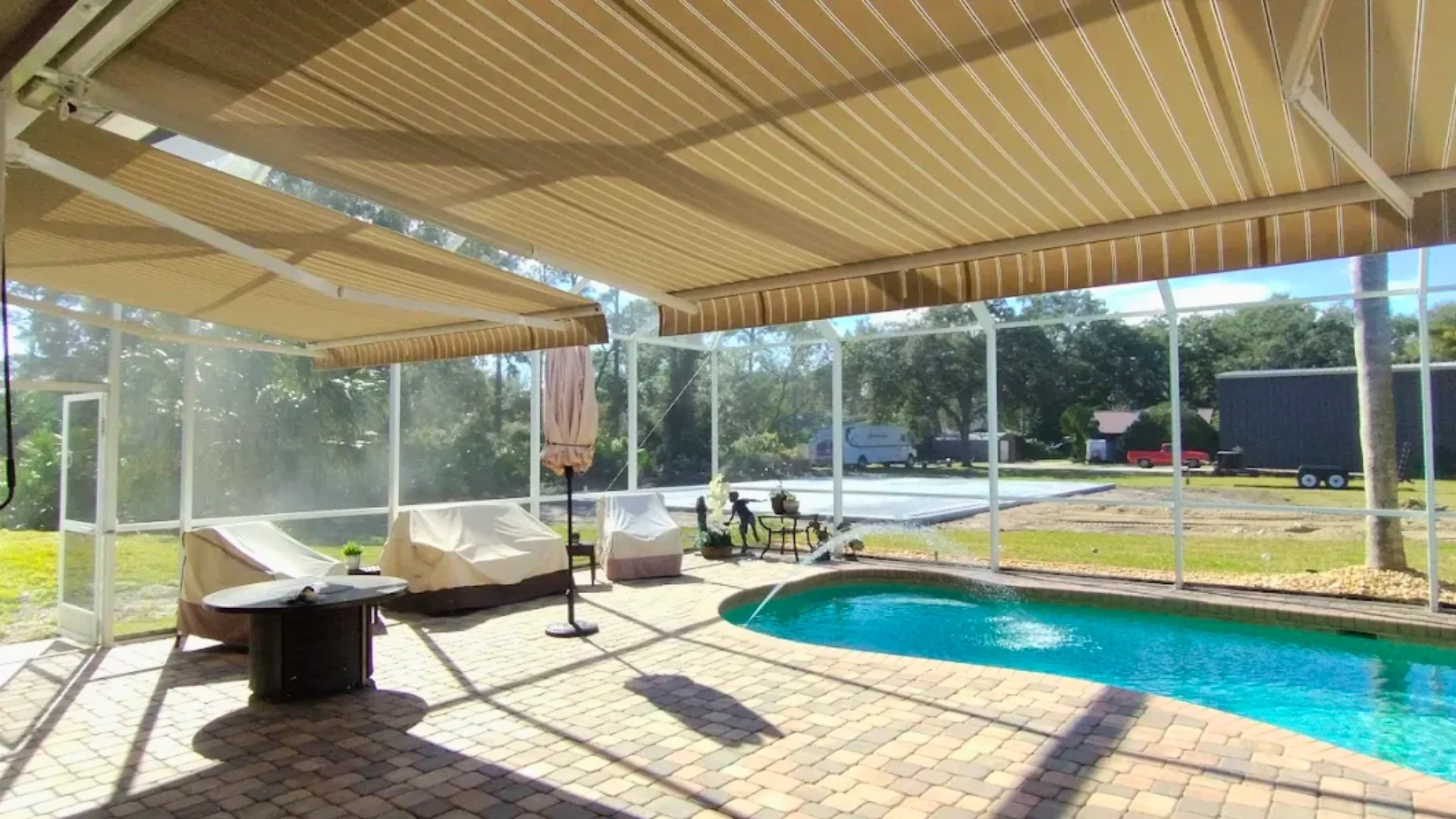
If you’re comparing the best motorized retractable awnings, the more useful question is which powered configuration best fits your property and the way you plan to use the shade.
Motorization changes how a retractable awning is operated, not the basic job of the awning itself. For some homeowners, powered operation makes frequent shade adjustments easier. For others, a manual awning may provide everything the space needs.
HS Shade Solutions installs custom manual and motorized retractable awnings across Brevard, Indian River, and Volusia counties. Choosing between manual and powered operation starts with the property, how often the shade will be adjusted, mounting conditions, access, and the selected awning system.
What is a motorized retractable awning?
A motorized retractable awning uses powered operation to extend or retract adjustable overhead shade. The basic shade function is the same as a manual retractable awning; the primary difference is how the homeowner operates it.
An electric retractable awning follows the same principle. The exact control method and compatible options depend on the selected system and configuration.
Manual versus powered operation
Choosing between manual and powered operation starts with how the shade will be used day to day.
| Factor | Manual operation | Powered operation |
|---|---|---|
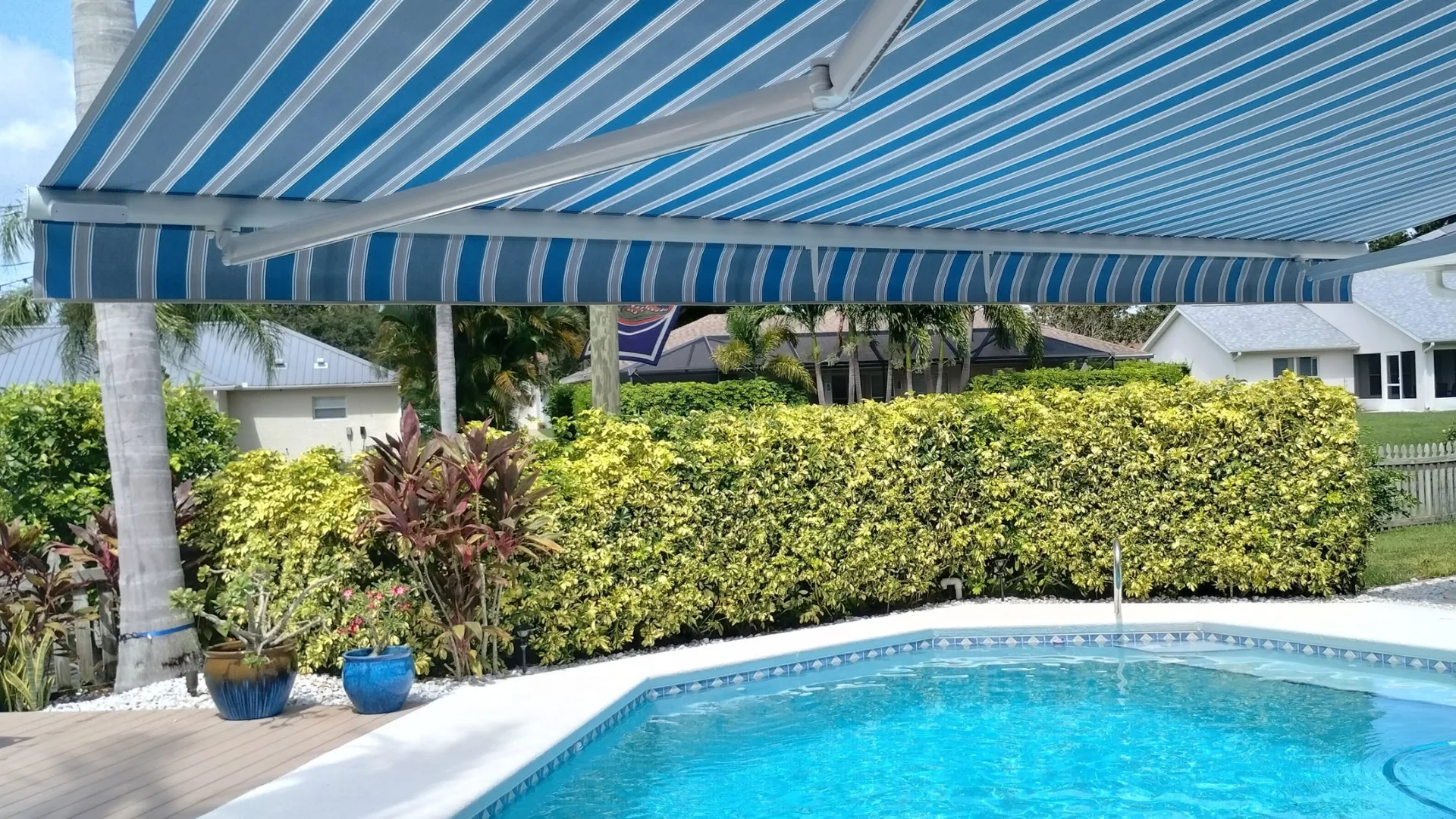
| How it is adjusted | Usually by hand crank | By the selected powered control method |
| Physical effort | Requires the homeowner to operate the crank | Reduces the effort needed for routine adjustment |
| Frequency of use | Can fit occasional adjustment | Can fit frequent adjustment |
| Access/convenience | Depends on easy access to the crank location | Can be more convenient when access is limited or frequent use is expected |
| Controls | Simple manual operation | Control options depend on the selected system and configuration |
Neither option is automatically better. Manual operation may be enough for occasional use, while powered operation can be a better fit when the awning will be adjusted frequently or easy operation is an important part of how the outdoor space is used.
When powered operation may be worth considering
Powered operation becomes more useful when adjusting the awning is expected to be part of the normal routine rather than an occasional task.
It may be worth considering when:
- The awning will be extended and retracted regularly throughout the week.
- Easy operation is important for a frequently used patio, deck, or outdoor seating area.
- Accessing and operating a hand crank would be inconvenient.
- The homeowner wants a compatible control method that makes routine adjustment simpler.
Manual operation can still be a practical choice when the awning is used less often and the crank is easy to access. The decision should come back to how the shade will actually be used.
Controls and compatible options
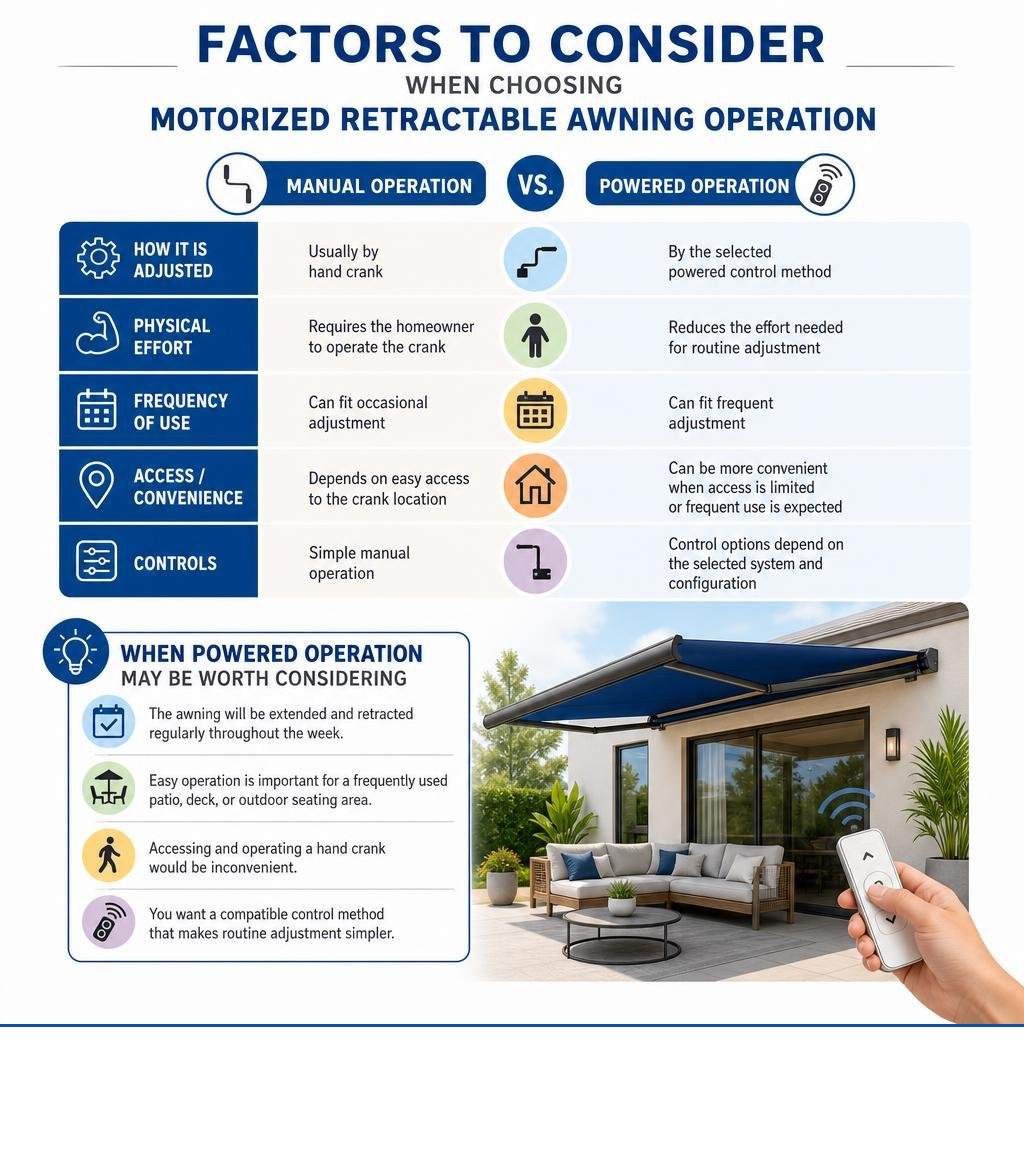
Control options vary by awning system and configuration. On compatible selected systems, wireless remote operation may be available, while some configurations may also support smart-device or voice connectivity.
Before choosing powered operation, confirm what control method is included with the proposed awning and which additional options are compatible with that exact configuration. A feature that is available on one system should not be assumed to be standard on every motorized awning.
It is also worth distinguishing between the control method that comes with the proposed system and additional connected features that may be available. A homeowner who mainly wants easier day-to-day adjustment may not need the same configuration as someone specifically interested in compatible connected controls. Clarifying that distinction early helps keep the system matched to the way the awning will actually be used.
Site and power planning
A motorized configuration should be reviewed as part of the full site evaluation. The proposed mounting location, intended shade coverage, nearby doors or openings, installation access, and existing power access can all affect the final configuration.
For an electric retractable awning, existing power access and any separate electrical coordination should be reviewed before the project is finalized. The proposal should clearly identify what is included and whether any additional coordination is needed.
A site evaluation should also connect the operation choice with the way the awning will function in the actual outdoor space. Useful items to review include:
- Where shade is needed during the times the patio or outdoor area is used most.
- Whether doors, sliding glass doors, rooflines, or other exterior features affect the proposed location.
- How easily the installation area can be accessed.
- Where existing power access is located for a powered configuration.
- Whether separate electrical coordination needs to be planned before installation.
These details help determine whether the proposed motorized configuration works as a complete system rather than treating the motor as an isolated upgrade. The operation method, awning placement, site conditions, and available access should all support the same use plan.
Coverage, mounting, and fabric still matter
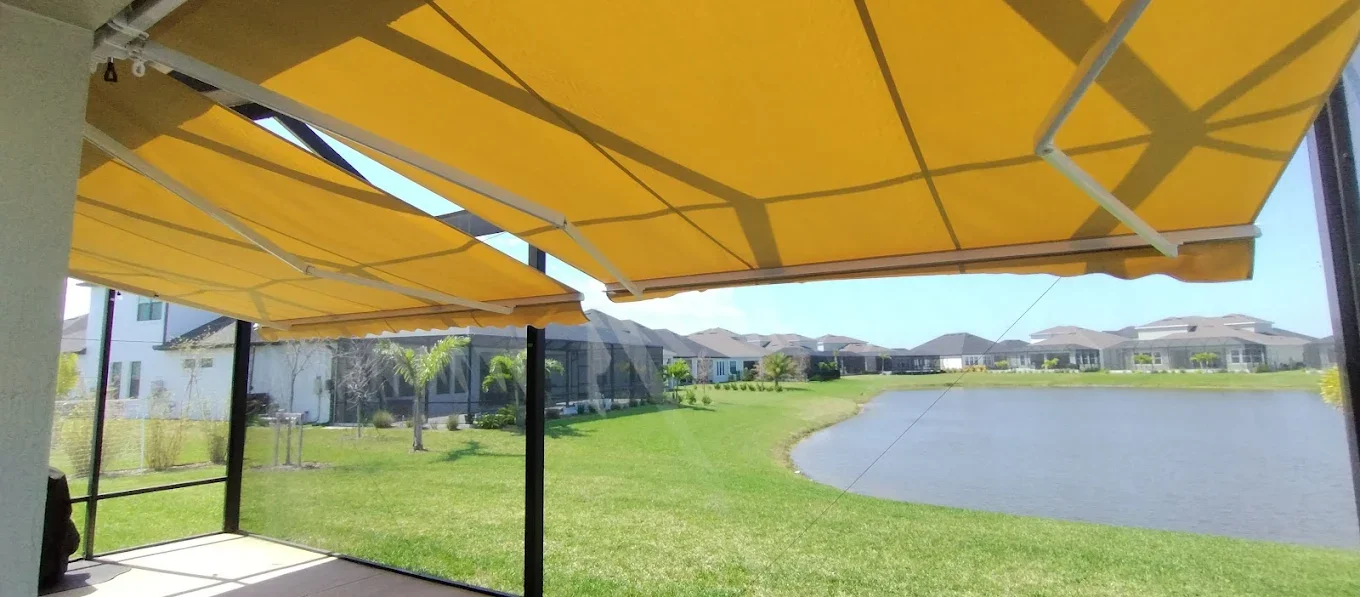
Choosing powered operation does not replace the other decisions that determine whether a retractable awning fits the home. Useful shade coverage, mounting conditions, fabric selection, and the layout of the outdoor space still need to be considered.
Motorization affects how the awning is operated, but it does not determine where shade is most useful or how the awning should relate to the patio. A homeowner may need shade over an outdoor dining area, seating space, sliding doors, or another frequently used portion of the patio. Those goals should be discussed before the final configuration is selected.
Exterior awnings can also help manage direct solar exposure before it reaches windows and outdoor living areas. The U.S. Department of Energy identifies awnings and solar screens as effective exterior shading elements, particularly in cooling-dominated climates.
Mounting conditions also remain part of the overall evaluation. The location needs to work with the home’s existing structure and with the doors, windows, rooflines, and outdoor features around the proposed awning area. These considerations are site-specific and should be evaluated as part of the project rather than assumed from one installation to another.
HS Shade Solutions offers retractable awnings with manual or motorized operation, including SunPro and Alutech systems. Available configurations can include Sunbrella fabrics, SunPro EZ Pitch adjustment, integrated LED lighting, custom sizing and compatible wind sensors. SunPro offers approximately 30 in-stock Sunbrella fabric options and more than 300 custom options. Exact feature compatibility depends on the selected system and configuration.
These options matter because motorization is only one part of the final awning. Coverage, fabric, mounting conditions and compatible features still need to work together for the property and the way the outdoor space will be used.
Fabric selection remains a separate design decision from motorization. Color, pattern, the surrounding exterior, and the homeowner’s shade goals can all help shape the final choice.
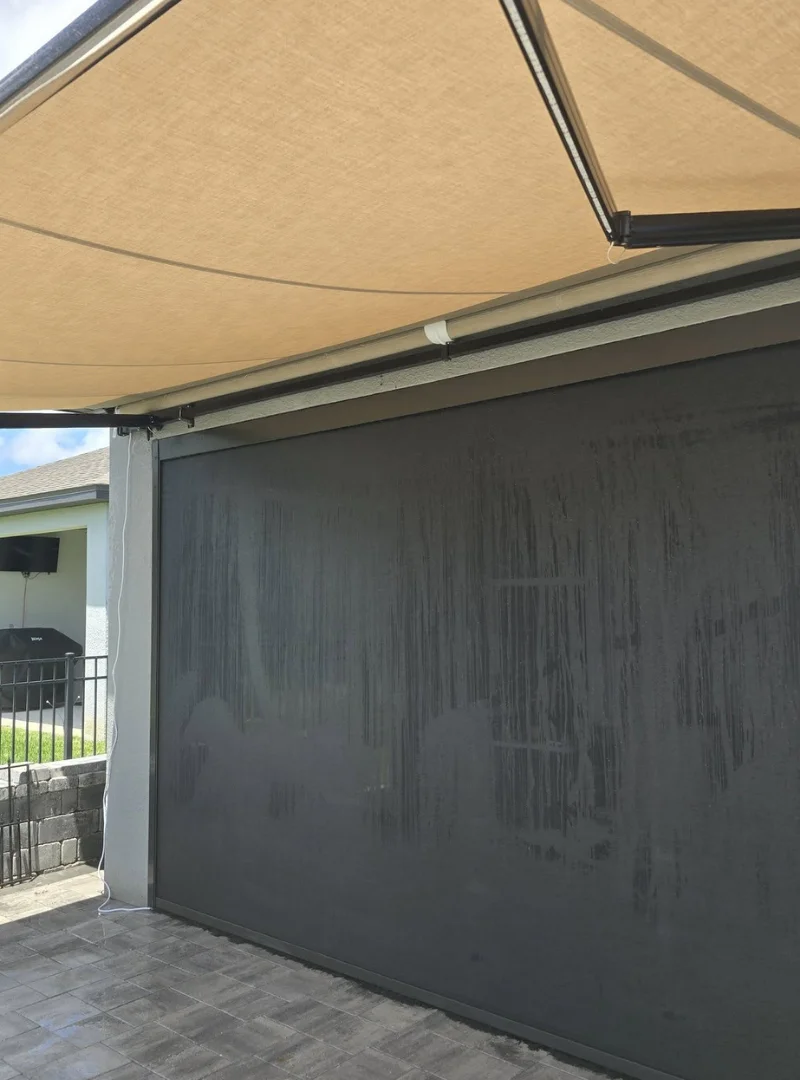
For a broader look at coverage, mounting, fabric, and other selection factors, review our guide to choosing the best retractable awning for a Florida home.
Motorization is one part of the final configuration. The strongest fit comes from considering operation, shade coverage, mounting conditions, fabric, access, and how the outdoor area will actually be used together.
What to compare when choosing the best motorized retractable awnings
A clear proposal should explain what is included in the selected retractable-awning configuration. For a motorized project, that means confirming the operation method and the practical details that affect use after installation.
A clear proposal should identify:
- The selected awning system.
- Whether the project is manual or powered.
- The included control method.
- Any compatible optional controls or features.
- Power and access items that need review.
- Mounting and site conditions that affect the configuration.
- Installation scope.
- Operating guidance for the selected system.
The word “motorized” alone does not explain which control method, compatible options, or site requirements are included. Those details should be specific to the proposed system.
A useful proposal makes it clear how the selected configuration fits the property, how the homeowner plans to operate the awning, and what additional coordination may be needed before installation.
Questions to ask during a site-specific estimate
The estimate is the right time to connect the homeowner’s expectations with the selected awning configuration. Useful questions include:
- Is manual or powered operation a better fit for how we use this patio?
- What control method is included?
- Which optional controls or features are compatible with this exact configuration?
- What existing power access needs to be reviewed?
- Is any separate electrical coordination required?
- What mounting or site conditions affect this configuration?
- What operating guidance applies to the selected system?
Clear answers make it easier to compare the proposed configuration with the way the patio or outdoor space will actually be used and to understand what is included before the project moves forward.
Florida weather: shade, not hurricane protection
Retractable awnings are shade products, not hurricane-protection systems. Motorized operation can make routine shade adjustment more convenient, but it does not turn the awning into storm protection.
Homeowners should follow the selected system’s operating guidance for wind and weather conditions. If storm protection is the goal, hurricane screens are a separate product category designed for that purpose.
Frequently asked questions about motorized retractable awnings
What is the difference between a manual and motorized retractable awning?
A manual awning is adjusted by hand, while a powered awning uses a compatible control method to extend or retract the shade. The better fit depends largely on how often the awning will be adjusted and how important easy operation is to the homeowner.
Can a motorized retractable awning use a remote control?
Some compatible systems may support wireless remote operation. Confirm whether a remote is included or available with the exact system being proposed.
Can a retractable awning connect to a smartphone or home-automation system?
Some configurations may support smart-device or voice connectivity. Availability depends on the selected system and should be confirmed before installation.
Does an electric retractable awning need power access?
A powered system requires appropriate power access. Existing access and any separate electrical coordination should be reviewed during the site evaluation.
Are motorized retractable awnings hurricane protection?
No. Retractable awnings are shade products, not hurricane-protection systems. Follow the selected system’s operating guidance for wind and weather conditions.
Choose the right operation for your retractable awning
The right motorized retractable awning is the configuration that fits the property and the homeowner’s actual shade routine. Powered operation may be a good fit when easy adjustment matters, but it should still be evaluated alongside coverage, mounting conditions, access and compatible controls.
If you are considering manual or motorized operation for your Florida home, review HS Shade Solutions’ retractable awnings and request a site-specific estimate to compare the right configuration for your space.