
Why Motorized Screens Are Worth Every Penny for Florida Homeowners

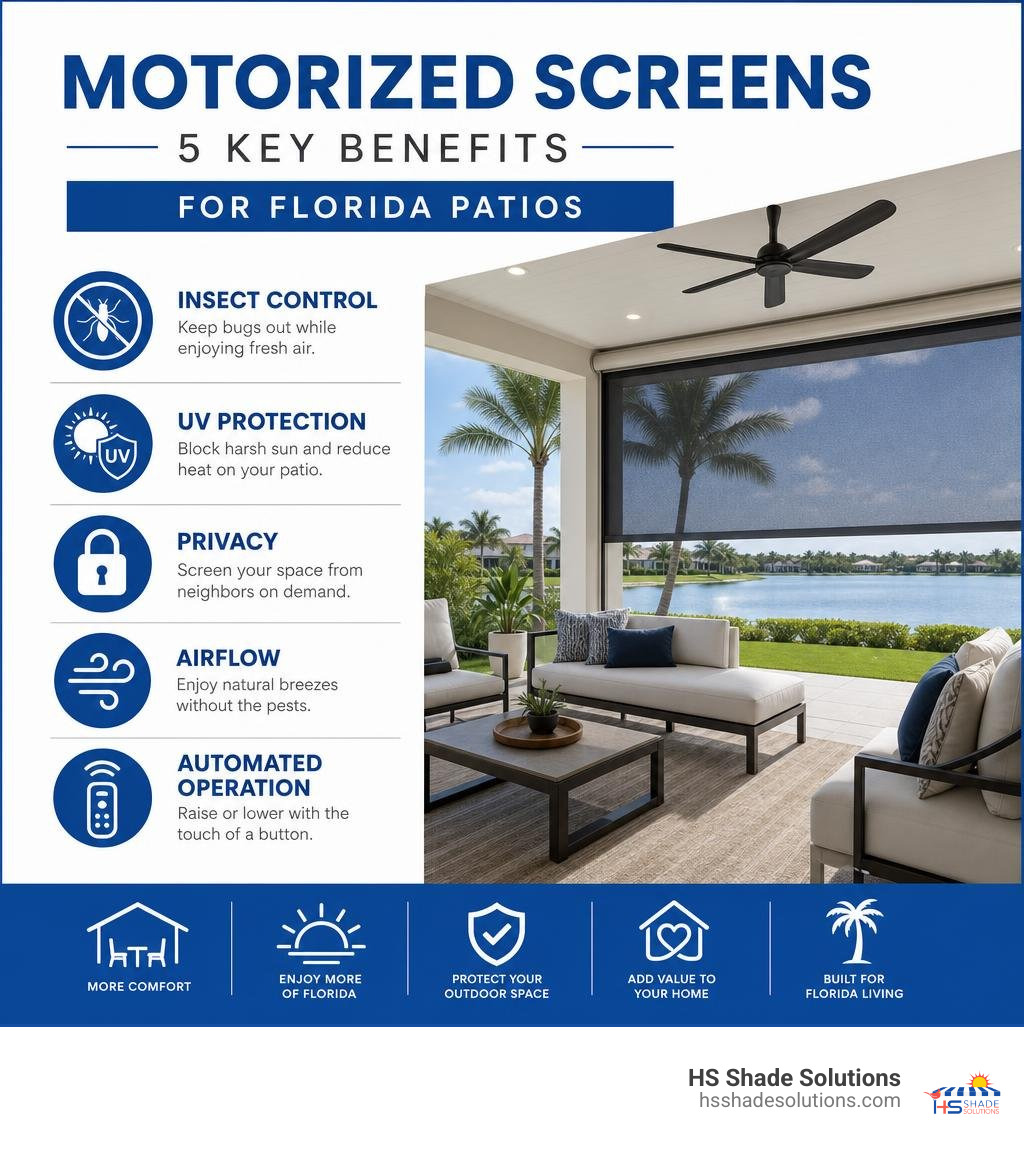
Motorized screens are automated retractable screen systems that lower and raise at the touch of a button, giving you instant control over insects, sunlight, heat, privacy, and airflow in your outdoor space.
Quick Answer: What Are Motorized Screens and What Do They Do?
| Feature | What it means for you |
|---|---|
| Automated operation | Lower or raise screens with a remote, wall switch, or smart device |
| Insect control | Keep mosquitoes, no-see-ums, and other pests out while keeping fresh air in |
| Sun and heat reduction | Make late-afternoon patios and lanais feel noticeably cooler and easier to use |
| Privacy on demand | Screen your space from neighbors without closing it off completely |
| Retractable design | Disappears into a housing when not needed — no permanent visual barrier |
| Year-round usability | Makes patios, lanais, and garages comfortable in more seasons |
If you own a home in Brevard County, Indian River County, or anywhere along Florida’s Space Coast, you already know the problem. Your patio sits empty for weeks at a time because the afternoon sun is brutal, the bugs come out at dusk, and there’s simply no comfortable way to use the space. A beautiful lanai or screened porch becomes an afterthought when the heat index climbs past 100°F and the mosquitoes are relentless.
That’s exactly the problem motorized screens solve.
One thing we regularly see is homeowners focusing on insects first. After installation, many tell us the biggest surprise was how much cooler the patio felt during late afternoons. The screen does not turn an outdoor space into an air-conditioned room, but it can make the difference between avoiding the patio and actually using it after work or before dinner.
Unlike a fixed screen enclosure or a manual shade you have to wrestle with, a motorized screen system gives you on-demand control. In the morning, it stays retracted so you get full sunlight and open views. By afternoon, you lower it with one button press to block the glare and keep the bugs out. When a storm rolls in, it can be retracted quickly to protect the system. It works quietly, looks clean, and fits the way real Florida homeowners actually use their outdoor spaces.
For patios, lanais, pergolas, pool areas, and even garages, this flexibility is what makes motorized screens one of the most practical outdoor upgrades available. The investment varies depending on the size of your opening, the type of screen system, and the level of customization — but the payoff shows up every time you actually sit outside and enjoy it.
Are Motorized Screens Right for Your Home?
Living on the Space Coast means dealing with a mix of intense sun, salt air, afternoon storms, mosquitoes, and long outdoor-living seasons. Motorized screens are not just a way to cover an opening. They are a way to decide when your patio, lanai, garage, pool deck, or outdoor kitchen feels open — and when it feels protected.
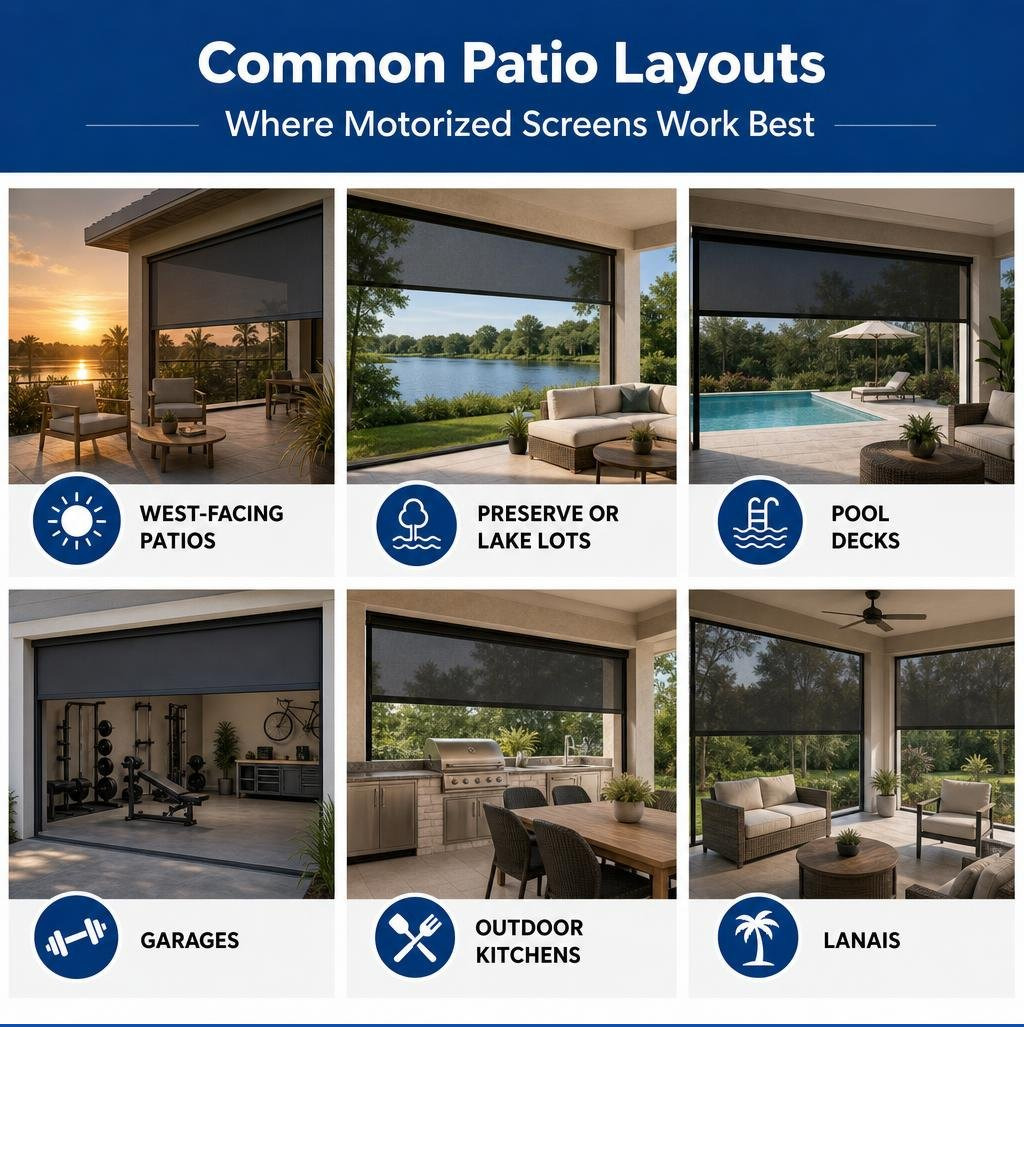
They are especially useful for homeowners who have a space they already like but do not use as often as they should. A west-facing patio may be beautiful in the morning and almost unusable by late afternoon. A lanai overlooking a lake or preserve may offer a great view but also invite glare, bugs, and heat. A garage may have enough room for a workout area or hobby space, but only if the door can stay open without letting insects inside.
That is where motorized screens make the most sense. They let you keep the view, airflow, and open feeling when conditions are comfortable, then lower the screens when the sun, bugs, privacy concerns, or glare start getting in the way. If you are comparing broader shade options in planned communities, our guide to Outdoor Shades in Viera explains how homeowners balance sun control, HOA considerations, and outdoor comfort.
Homeowners often get the best results when motorized screens are matched to the way they actually use the space:
- West-facing patios: Help reduce late-day glare and heat when the sun is most intense.
- Preserve or lake lots: Protect comfort while keeping the view that made the lot appealing in the first place.
- Pool decks: Create more usable shaded areas without permanently enclosing the entire space.
- Garages: Turn an open garage into a breezy workspace, gym, hobby area, or play area. For garage-specific options, see our guide to garage door screens.
- Outdoor kitchens: Help keep insects away from food prep and dining areas.
- Lanais: Add flexible protection without making the space feel permanently closed in.
Many homeowners start by asking, “What kind of screen should I buy?” A better first question is, “What is keeping me from using this space now?” If the answer is mosquitoes, glare, afternoon heat, privacy, or inconsistent comfort, motorized screens are often worth considering.
For a broader look at related shade options, read Why Electric Outdoor Shades Are the Coolest Upgrade for Your Home or Everything You Need to Know About Exterior Shade Systems for Patios and Windows.
Who Gets the Most Value From Motorized Screens?
Motorized screens usually deliver the most value when they solve a problem the homeowner deals with repeatedly, not just occasionally. If you already avoid using your patio at certain times of day, move furniture around to escape the sun, or rush indoors when mosquitoes come out, the system may change how often you use the space.
Motorized screens are often a strong fit if you:
- Entertain outside and want guests to stay comfortable longer
- Use your patio, lanai, or pool deck several times a week
- Hate mosquitoes, no-see-ums, and other insects
- Have afternoon sun that makes the space too hot or too bright
- Want to preserve lake, preserve, or backyard views
- Work from home and want a more comfortable outdoor work area
- Have an outdoor TV and need better glare control
- Want privacy from nearby homes without permanently blocking the opening
One thing we often see is that convenience determines usage. A manual screen or shade may work in theory, but if it takes effort to lower every afternoon, many homeowners stop using it consistently. With a motorized screen, the barrier to using the system is low. Press a button, lower the screen, and the space becomes more comfortable in seconds.
That daily convenience is one of the biggest reasons motorized systems tend to feel more valuable over time than homeowners initially expect.
Selecting the Right Screen Materials for Coastal Climates
Choosing the right screen material is one of the most important decisions in the planning process, especially for coastal communities like Satellite Beach, Indialantic, Cocoa Beach, and Cape Canaveral. The salt air, high humidity, and intense UV exposure will quickly expose the difference between a basic material and a screen fabric selected for Florida conditions.
Homeowners comparing Cape Canaveral retractable screens often prioritize salt-air resistance because properties closer to the coast experience greater exposure than homes farther inland. The same is often true for Cocoa Beach retractable screens, where ocean exposure, wind, and humidity can make material quality especially important.
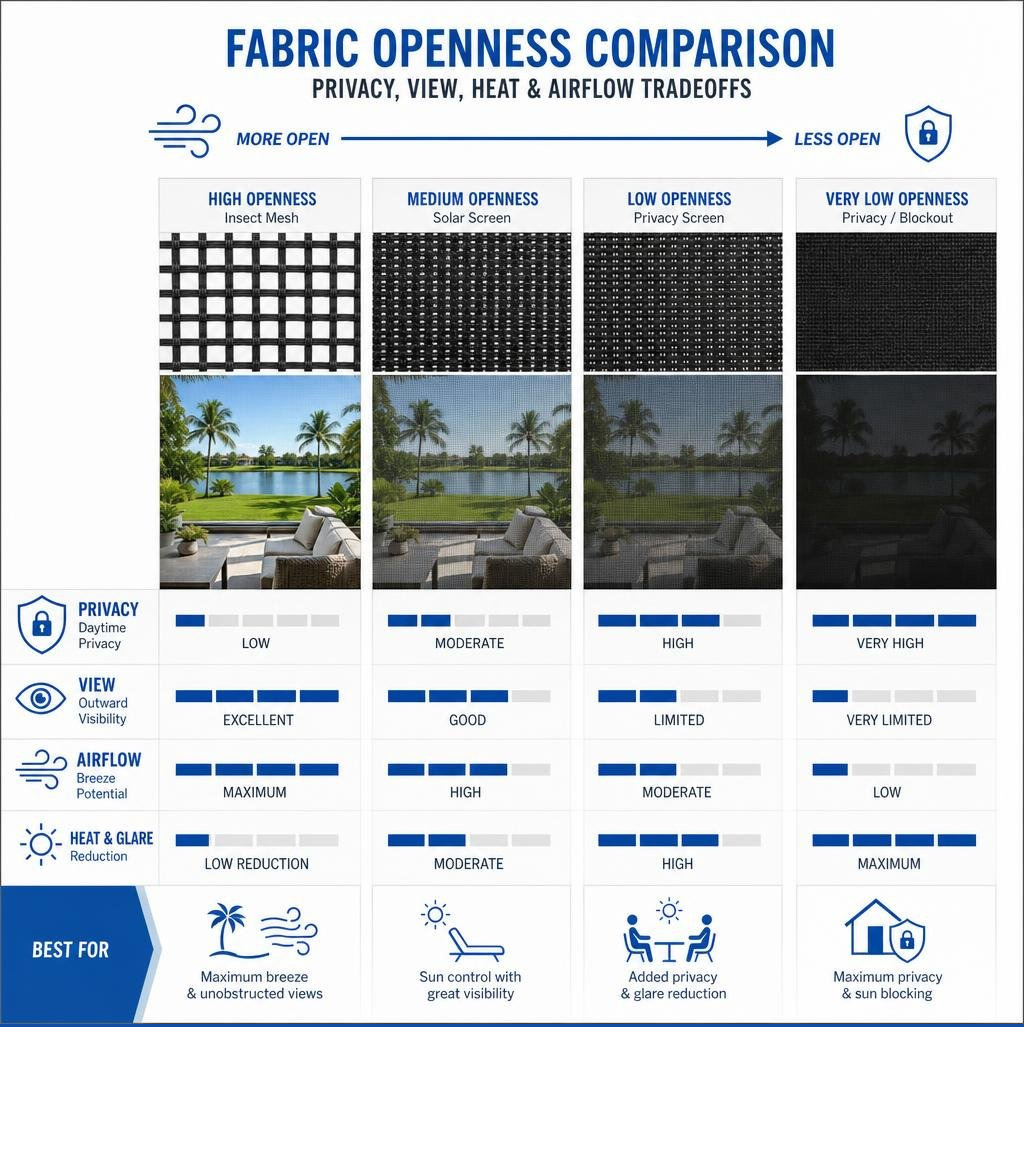
We often recommend different openness factors depending on whether the patio overlooks a preserve, pool, lake, or neighboring homes. A homeowner with a preserve view may want more openness so the screen does not make the lanai feel closed in. A pool deck with strong afternoon glare may need more sun control. A patio facing nearby homes may benefit from a tighter weave that adds privacy without making the space feel dark.
For maximum durability, high-quality, weather-resistant fabrics are the industry standards. These materials resist rotting, stretching, and color fading, even when subjected to coastal moisture and daily sun exposure. Depending on your primary goals, you can choose fabrics optimized for insect protection, solar shade, privacy, or heavier weather resistance. Standard insect screens allow maximum breeze and visibility, while solar fabrics help cut glare and heat. Clear panels can even be used when the goal is a more enclosed, climate-controlled space.
Whether you’re researching Cape Canaveral retractable screens or similar systems elsewhere along the Space Coast, the best fabric choice depends on exposure, view preferences, airflow, and how much privacy or sun control you want. For Cocoa Beach retractable screens, homeowners should also think about how close the opening is to salt spray and whether the system will be used mainly for insect control, shade, or both.
Choosing the Right Fabric: Privacy, Heat, View, and Airflow
The best motorized screen fabric is not simply the darkest option or the one that blocks the most sun. It is the fabric that matches how you use the space. During a consultation, HS Shade Solutions looks at four tradeoffs before recommending a screen material: privacy, heat, view, and airflow.
| Fabric Goal | What It Helps With | What to Consider |
|---|---|---|
| Privacy | Reduces visibility from neighbors, streets, and nearby homes | Tighter weaves may make the space feel more enclosed |
| Heat and glare control | Makes west-facing patios, pool decks, and lanais more comfortable in the afternoon | More sun control can slightly reduce openness and outward visibility |
| View preservation | Keeps lake, preserve, pool, or backyard views more open | More open fabrics may provide less privacy and less heat reduction |
| Airflow | Helps the space still feel breezy and outdoors | Maximum airflow may not deliver the strongest privacy or glare control |
A preserve-facing lanai in Melbourne may call for a more open fabric because the view is the reason the homeowner uses the space. A west-facing patio in Palm Bay may need a tighter solar fabric because glare and heat are the real problem. A pool area near neighboring homes may need a balance: enough openness to avoid a closed-in feeling, but enough density to create privacy during evening use.
This is why fabric selection should happen after the installer understands the opening, the sun direction, the view, and the homeowner’s comfort goals. Choosing only by color or price can lead to a screen that technically works but does not solve the actual problem.
Smart Home Integration for Motorized Screens
Smart home integration is useful, but most homeowners do not need complicated automation to get value from motorized screens. In real use, most homeowners rely on only two automation schedules: lowering the screens before dinner and retracting them before bed.
That simple routine solves two common Florida problems. Lowering the screens before dinner helps keep mosquitoes, glare, and late-day heat from taking over the patio just as the family wants to use it. Retracting them before bed helps protect the screens overnight and keeps the system ready for the next day.
At HS Shade Solutions, we emphasize smart operation because it makes the screens easier to use consistently. For example, automated systems can support everyday comfort and protection:
- Afternoon Comfort: Screens can lower automatically during the hottest hours of the day on a west-facing patio in Merritt Island, helping the space feel cooler before the heat builds up.
- Weather Awareness: If a sudden summer storm rolls through with high winds, smart controls can make it easier to retract the screens quickly into their protective housings.
- Simple Daily Routines: You can program your screens to lower near dusk when mosquitoes become active and retract later in the evening, making outdoor comfort easier without turning the system into a complicated smart-home project.
Motorized Screens vs. Manual Screens
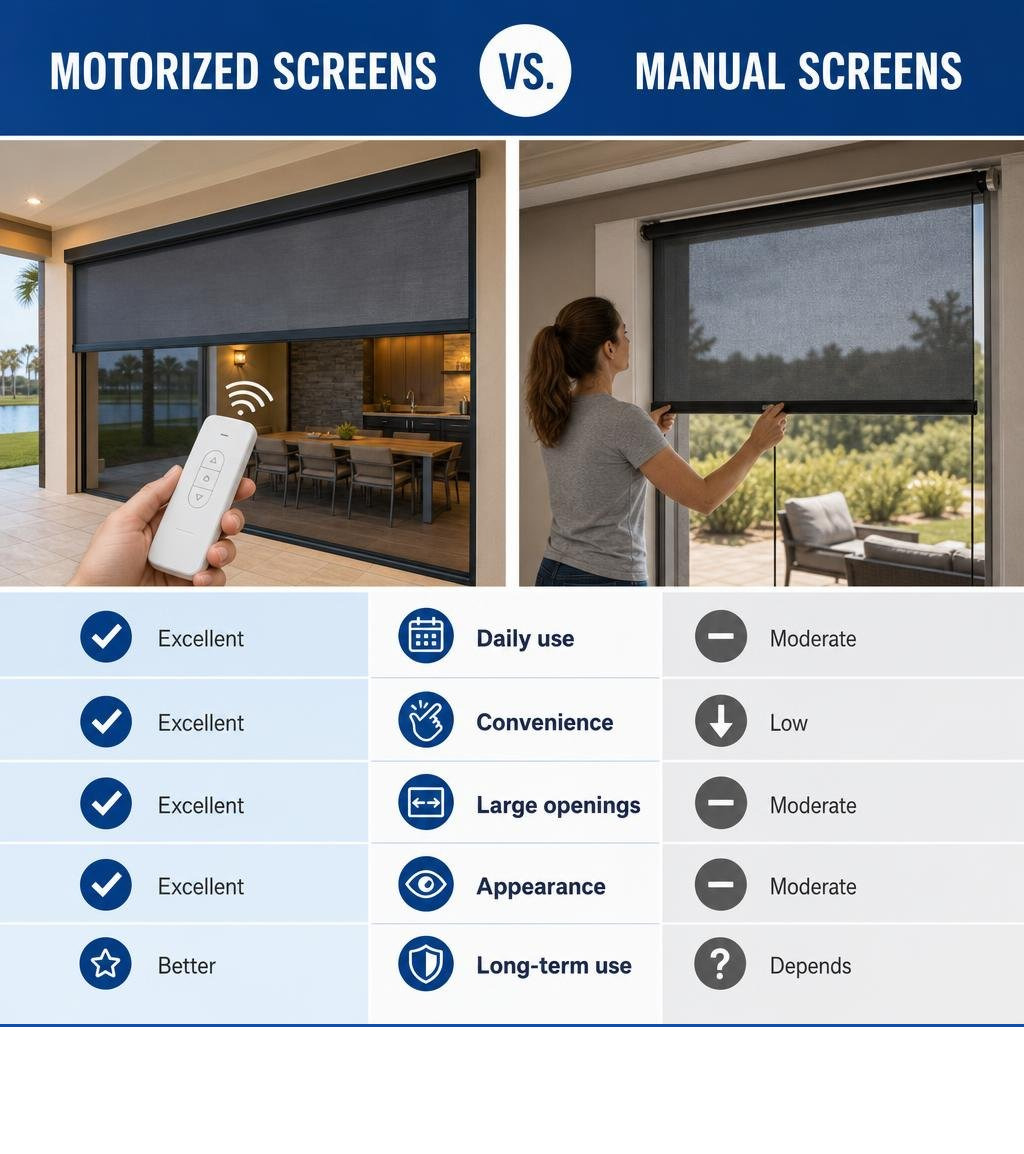
Manual screens can be a good option for smaller openings or spaces that are used only occasionally. However, for larger patios, wide lanai openings, garages, and outdoor kitchens, motorized screens usually offer a better long-term experience because they are easier to use every day.
If you are comparing motorized screens vs manual screens, the real question is usually how often you expect to use the space. A manual screen may be fine for occasional bug control, but a motorized system is more practical when you want to adjust the space daily for sun, insects, privacy, or changing weather.
| Feature | Motorized Screens | Manual Screens |
|---|---|---|
| Daily use | Excellent | Moderate |
| Convenience | Excellent | Low |
| Large openings | Excellent | Moderate |
| Appearance | Excellent | Moderate |
| Long-term use | Better | Depends |
Many homeowners assume they will use a manual screen every day because the idea seems simple. In reality, if the screen is heavy, awkward, or inconvenient, it often stays up when it should be down — or down when the homeowner would rather have the view open.
Motorized screens solve that problem by making comfort automatic. They are especially helpful for large openings where a manual system can feel cumbersome or look less polished. They also fit better with smart-home routines, remote controls, and weather-responsive operation.
That does not mean every home needs a motorized screen. If you only need occasional insect protection on a small opening, a manual option may be enough. But if the goal is to make an outdoor space easier to use every day, motorized screens are usually the stronger choice.
Motorized Screens vs. Manual: Which Option Makes More Sense?
When homeowners ask about motorized screens vs manual options, we usually start with the opening size, how often the space is used, and what problem the screen is expected to solve. A small garage opening used once in a while may not need automation. A wide lanai, outdoor kitchen, or west-facing patio used several times a week usually benefits from the convenience of a motorized system.
The biggest difference is consistency. Homeowners are more likely to lower a motorized screen when mosquitoes come out, glare hits the seating area, or privacy becomes an issue because it takes almost no effort. Manual screens can work well, but they depend on someone being willing to operate them every time conditions change.
Another factor is appearance. Motorized systems can often be designed with cleaner housings, guide tracks, and controls that look more finished on larger openings. For homeowners investing in a polished outdoor living area, that difference can matter as much as the convenience.
Outdoor Motorized Screens vs. Indoor Projection Screens
Some homeowners come across indoor projector screen information while researching motorized screens, but those products are built for a completely different purpose. An indoor projection screen is made for a home theater or conference room. It is not designed to handle Florida sun, moisture, salt air, wind, insects, or outdoor installation conditions.
Outdoor motorized screens are exterior-grade shade and insect-control systems. They typically use weather-resistant screen fabrics, protective housings, side tracks or guide systems, and components selected for outdoor exposure. When planning a patio, lanai, garage, or pool-area project, focus on outdoor-rated systems instead of indoor media-room products.
For energy-efficiency context around windows and exterior heat gain, ENERGY STAR provides guidance on residential windows, doors, and skylights. For structural requirements, permitting, and code-related planning, Florida homeowners should also rely on the Florida Building Code rather than projector-screen product pages.
What Affects Motorized Screen Pricing?
Motorized screen pricing depends on the project details, which is why a one-size-fits-all price rarely tells homeowners much. A small garage screen, a recessed lanai installation, and a wide outdoor kitchen opening can all require different materials, motors, mounting methods, and labor.
The biggest factors that affect cost include:
- Opening Width: Wider spans usually require stronger components, heavier bottom bars, and more precise installation.
- Opening Height: Taller openings require more fabric, more travel distance, and careful alignment so the screen operates smoothly.
- Recessed vs. Surface Mount: A recessed installation can look cleaner because the housing is hidden, but it usually requires more planning and labor than a surface-mounted system.
- Fabric Selection: Insect mesh, solar screen fabrics, privacy fabrics, and heavier-duty materials all perform differently and affect the overall investment.
- Motors: Larger screens may require stronger motors, and some homeowners choose upgraded motor options for quieter or smarter operation.
- Controls: Wall switches, remotes, multi-channel controls, timers, and smart-home integration can change the final project scope.
- Electrical Needs: Some installations need electrical work or planning before the screen system can be installed properly.
- Installation Conditions: Stucco columns, rooflines, framing, existing enclosures, and available mounting surfaces all influence how the system is designed.
One contractor insight that surprises homeowners is that two openings with similar dimensions can still require different installation approaches. The construction of the home, the available mounting surface, the surrounding trim, and the way the space is used all matter.
Because of these variables, HS Shade Solutions treats each motorized screen project as a custom comfort upgrade rather than an off-the-shelf product. For more budgeting guidance, see our motorized screen cost guide. If your main goal is overhead shade instead of screening an open side, our guide to retractable awnings can help you compare the better fit.
Professional motorized screen installation is strongly recommended. If the system is even slightly out of alignment, the fabric can bind, wrinkle, or wear unevenly over time. A professional installer makes sure the screen is level, safely powered, securely mounted, and matched to local conditions in areas such as Melbourne, Cocoa Beach, Indian Harbour Beach, and surrounding Space Coast communities.
What We Evaluate During a Motorized Screen Consultation
A good consultation should do more than measure the opening and quote a screen size. The goal is to understand why the space is uncomfortable now, how the homeowner wants to use it, and what design choices will make the system work long term.
At HS Shade Solutions, a motorized screen consultation typically evaluates:
| Consultation Factor | Why It Matters |
|---|---|
| Sun direction | Determines whether the priority is glare reduction, heat control, or general shade |
| Opening size and shape | Affects motor strength, track design, housing size, and installation complexity |
| Mounting surface | Stucco, framing, columns, soffits, and trim can all change the installation approach |
| Wind exposure | Helps determine whether the screen location, track style, and homeowner habits are appropriate |
| Fabric openness | Balances privacy, view, heat reduction, and airflow |
| Electrical access | Determines whether wiring, controls, or smart-home planning are needed before installation |
| HOA or community rules | Helps avoid surprises with visible housings, colors, or exterior modifications |
| How the space is used | Outdoor dining, pool seating, garage workouts, and evening entertaining may need different solutions |
This consultation step is especially important in Florida because the same product can perform differently depending on exposure. A protected lanai in Viera, a breezy pool opening in Satellite Beach, and a garage screen in Cocoa may all need different recommendations.
The best result usually comes from matching the screen system to the real-world use pattern: where people sit, when the sun hits, where mosquitoes enter, how much privacy is needed, and how quickly the homeowner needs to retract the screen when weather changes.
Common Mistakes Homeowners Make When Buying Motorized Screens
Motorized screens are a major comfort upgrade, but the wrong assumptions can lead to disappointment. These are the mistakes homeowners should avoid before choosing a system:
- Choosing fabric based only on color. Color matters for appearance, but openness, privacy, airflow, glare control, and durability matter more for daily comfort.
- Ignoring the direction of the sun. A screen that works beautifully on one side of the patio may not solve late-afternoon glare on a west-facing opening.
- Assuming all screens provide hurricane protection. Standard motorized screens are not a substitute for rated hurricane screens or shutters.
- Underestimating wind exposure. Open pool decks, coastal lots, and wide openings need careful planning so homeowners understand when screens should be retracted.
- Forgetting about electrical planning. Motorized systems may need wiring, controls, or smart-home coordination before installation.
- Trying to solve every outdoor problem with one product. Screens help with insects, privacy, airflow, and side sun, but they do not replace a roof, patio cover, awning, or storm-rated protection.
- Buying without thinking about daily use. The right system should match when and how the family actually uses the patio, lanai, garage, or pool area.
The safest approach is to start with the problem, not the product. If the main issue is mosquitoes, the recommendation may be different than if the issue is western sun, lakefront privacy, or a garage that needs airflow without insects.
To view related options, visit our screen solutions, shade solutions, and outdoor living pages.
When Motorized Screens May Not Be the Best Choice
Motorized screens are a strong fit for many Florida homes, but they are not the answer for every outdoor-living problem. A trustworthy recommendation should also explain when another solution may be better.
Motorized screens may not be the best choice if:
- You actually need hurricane protection. Standard motorized screens are not a substitute for rated hurricane products. If storm protection is the primary goal, ask about dedicated hurricane screens or shutters, and review hurricane-preparedness guidance from the Florida Division of Emergency Management.
- You need permanent roof coverage. Screens help with sun, insects, privacy, and airflow, but they do not replace a roof, patio cover, or structural enclosure.
- Your patio already stays shaded. If heat and glare are not real problems, you may get more value from insect-focused solutions or another outdoor upgrade.
- Your HOA restricts exterior installations. Some communities have rules about visible housings, frame colors, or exterior modifications.
- A retractable awning would solve the problem better. If your biggest issue is overhead sun rather than open sides, a retractable awning may be the more direct solution.
This is why the consultation matters. The right recommendation depends on whether the homeowner needs shade, insect control, privacy, storm protection, rain coverage, or a combination of those goals. If you are still comparing ways to make the space more usable, these backyard shade ideas can help you think through the full outdoor living plan before choosing one product.
Frequently Asked Questions About Motorized Patio Screens
How Do Motorized Screens Perform in High Winds?
Standard motorized screens are designed to handle typical daily breezes and moderate winds. Many premium systems are built for enhanced durability, but they are not meant to stay deployed during tropical storms or hurricanes.
To prevent damage, homeowners should retract their screens when high winds are expected. Smart controls can help protect the system by retracting screens automatically or making operation easier when weather changes quickly. For broader storm-readiness planning, the Florida Division of Emergency Management is a better authority than generic product pages.
Can Motorized Screens Help Reduce Home Energy Bills?
Yes. By blocking solar heat before it reaches windows and sliding glass doors, motorized screens can help reduce heat buildup near indoor living areas. This may reduce the workload on the air conditioning system during hot Florida afternoons. ENERGY STAR’s guidance on residential windows, doors, and skylights is a useful authority reference for understanding why window and opening performance matters.
What Routine Care Do Motorized Screens Require?
Motorized screens are designed for low-maintenance use. Occasional gentle cleaning with water and mild soap helps keep the fabric and frame looking fresh. It is also important to keep the bottom seal and tracks clear of debris so the screen can close properly.
Conclusion
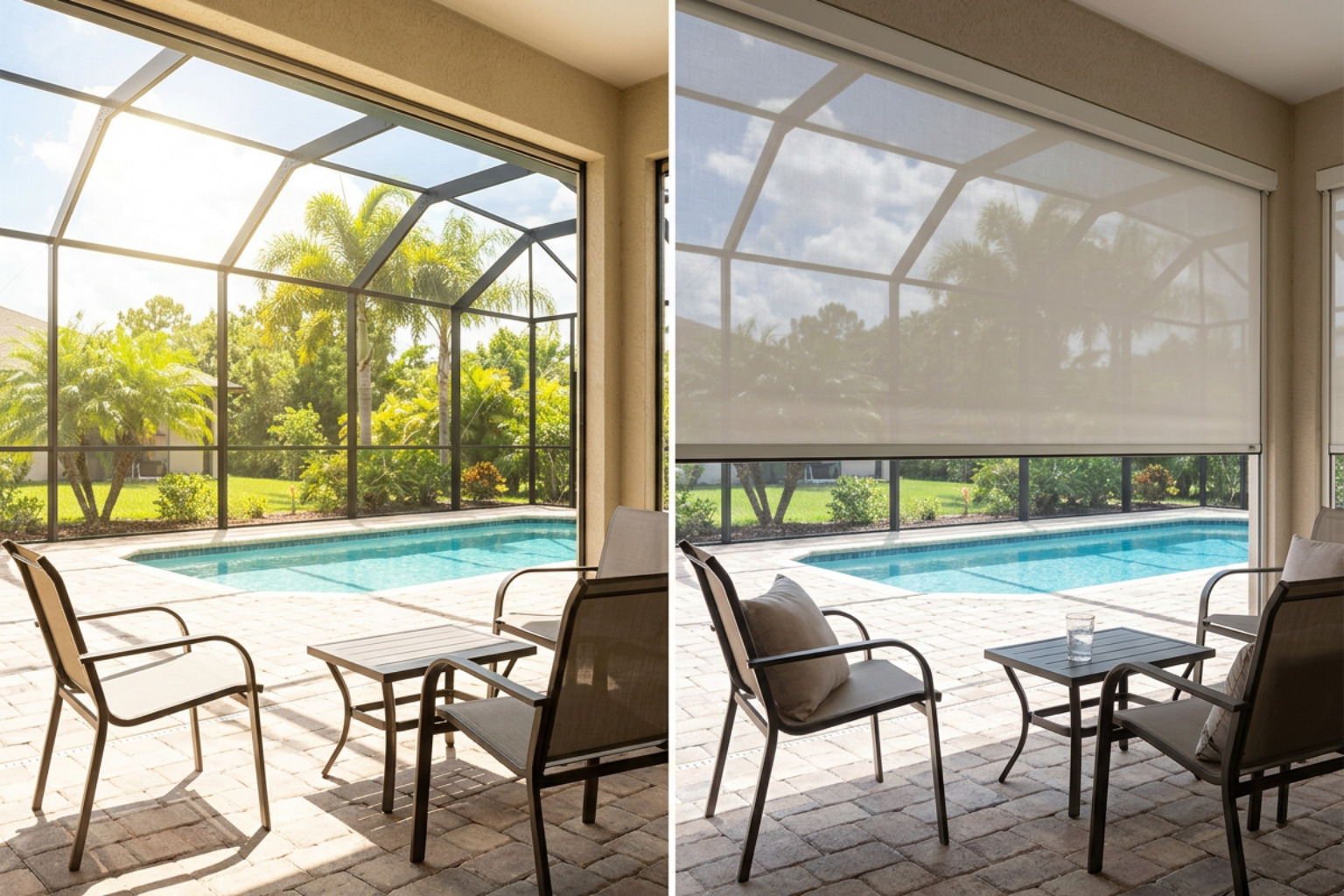
Investing in motorized screens is one of the most effective ways to reclaim your outdoor living space on the Space Coast. Whether you want to block the blinding afternoon sun in Titusville, keep the mosquitoes away in Micco, or enjoy a breezy, bug-free garage in Cape Canaveral, these systems provide comfort, privacy, and convenience at the touch of a button.
At HS Shade Solutions, we specialize in designing and installing custom, high-quality shade and protection systems tailored specifically for Florida’s demanding coastal climate. We do not believe in generic, one-size-fits-all products. Instead, our team works with you to select the perfect fabrics, frame colors, and smart automation features to match your home’s architecture and your lifestyle.
Ready to transform your patio, lanai, or garage into a comfortable year-round retreat? Schedule a Professional Consultation with HS Shade Solutions today, and let us help you design the perfect custom screen system for your home.
About the Author
Scott Stanchfield, Owner of HS Shade Solutions, helps Florida homeowners choose custom shade, screen, and hurricane protection systems that fit the way they actually use their homes. His team focuses on practical recommendations, quality materials, and professional installation for patios, lanais, windows, garages, and outdoor living spaces across Florida’s demanding coastal climate.
About HS Shade Solutions
HS Shade Solutions is a trusted Florida contractor specializing in custom shade, sun control, and hurricane protection solutions for residential properties. The company designs and installs retractable awnings, exterior and interior shades, hurricane shutters, and motorized screens built for Florida heat, sun, salt air, storms, and year-round outdoor living. HS Shade Solutions focuses on high-quality materials, in-house installation, clear communication, and practical solutions that help homeowners reduce heat, protect their property, and make outdoor spaces more comfortable and usable.