
Why Outdoor Shades Are the Smartest Upgrade for Your Viera Patio This Summer

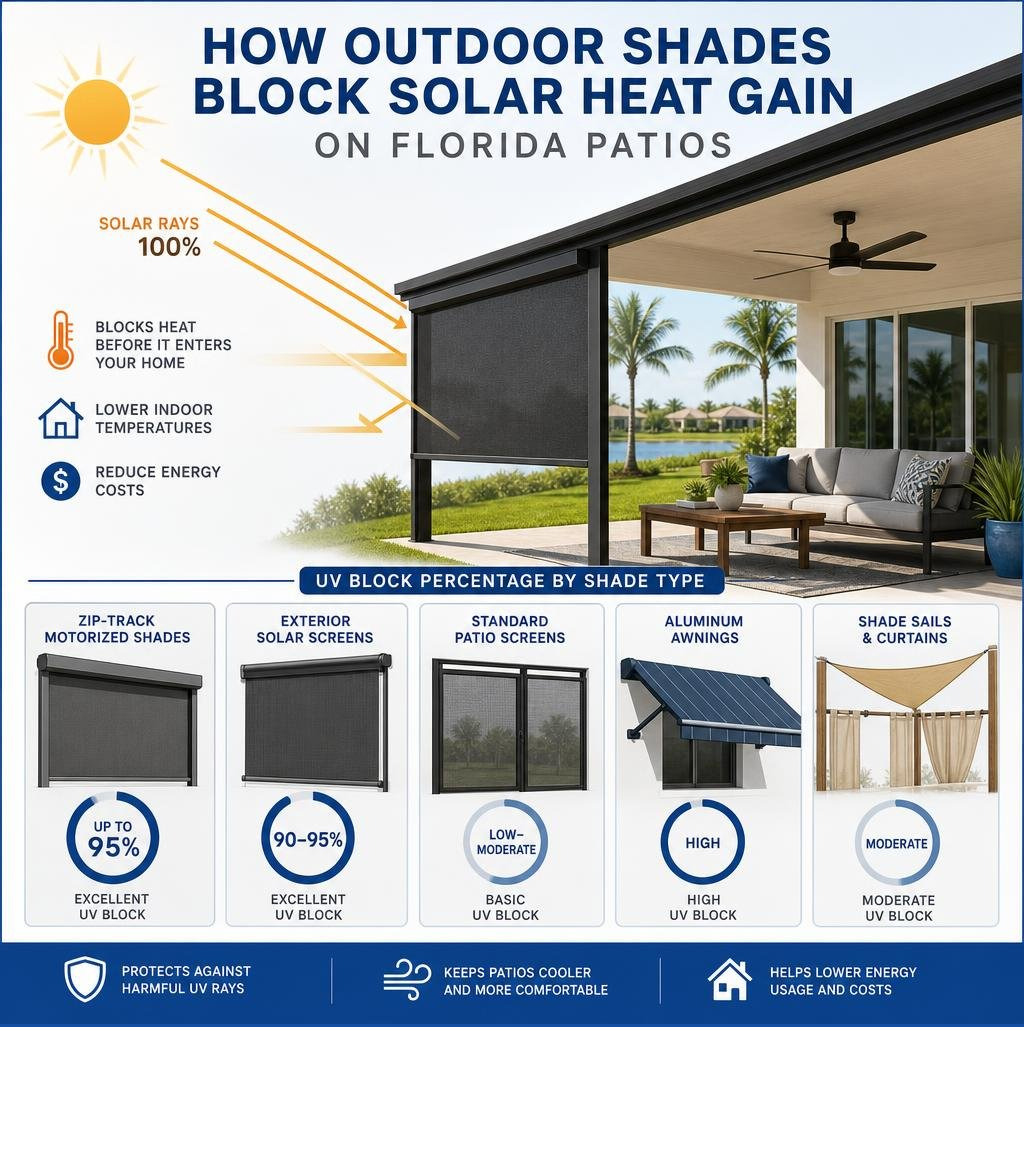
If you’re exploring outdoor shades in Viera, here’s a quick look at your options and what they offer:
| Shade Type | Best For | Protection Level |
|---|---|---|
| Motorized shades | Full enclosure, convenience, heat, bugs, and privacy | High |
| Exterior solar screens | Heat and glare reduction over windows, patios, and lanais | High |
| Standard patio screens | Insect protection and basic enclosure | Moderate |
| Retractable awnings | Shade over patios, pool decks, and outdoor dining areas | High |
| Shade sails & curtains | Aesthetic privacy or light seasonal shade | Moderate |
Viera is built for outdoor living — the walking trails, golf courses, preserve lots, lake views, and lanai-friendly floor plans are proof of that. But anyone who’s tried to actually use their patio between May and September knows the reality: by mid-morning, the sun can turn a comfortable outdoor space into a hot, bright area nobody wants to sit in for long. The right outdoor patio shades can make that space feel usable again without forcing you to give up the open-air feel that makes Florida patios so appealing.
It’s not just uncomfortable. That same heat pouring through a lanai opening or west-facing slider can make the rooms inside your home feel warmer, forcing your air conditioning to work harder during the hottest part of the day. For many homeowners in Viera’s master-planned communities, the outdoor space they paid for sits empty for much of the year — not because the design is wrong, but because nothing is managing the sun, glare, insects, and changing Florida weather.
The best outdoor shade isn’t the one with the most features—it’s the one that solves the specific problems your patio has. A west-facing lanai, a pool deck, a preserve-facing backyard, and a covered outdoor kitchen often require completely different solutions.
That’s exactly where custom outdoor shades make a difference. The right system can reduce glare, block UV exposure, cut afternoon heat before it reaches your patio doors, improve privacy, and turn your patio back into a space you actually want to use. Whether you’re comparing motorized outdoor shades, patio screens, exterior solar shades, or a retractable awning for a larger open area, the right choice starts with your home — not a generic product list.
This guide walks you through how to choose, configure, and install outdoor shades that hold up in Viera’s heat, humidity, HOA communities, afternoon storms, and everyday outdoor-living needs.
Who This Guide Is For
This guide is designed for Viera homeowners who:
- Want to use their patio, lanai, or outdoor living space more often
- Are comparing motorized shades, patio screens, solar shades, and awnings
- Have a west-facing lanai that becomes uncomfortable in the afternoon
- Want to reduce heat and glare through large sliding glass doors
- Need HOA-friendly shade options that look clean from the outside
- Want better insect protection during mosquito season
- Are planning a custom outdoor living upgrade around a pool, preserve view, or lake lot
- Prefer a contractor’s practical guidance over a technical product manual
Why Some Viera Patios Stay Comfortable While Others Become Unusable
Living on the Space Coast means enjoying beautiful coastal breezes and abundant sunshine. However, Viera homeowners also deal with long afternoons, hot patio surfaces, bright glare through large sliders, and outdoor furniture that becomes too warm to use comfortably.
What homeowners usually notice first is simple: the patio looks inviting from inside the house, but it does not feel usable once the sun hits it. Concrete, pavers, tile, and pool decks hold heat. Sliding glass doors let glare into the home. A covered lanai may still feel hot if the rear opening faces the afternoon sun.
One of the biggest surprises for homeowners is how much patio orientation affects comfort. Two neighboring homes can require completely different outdoor shade solutions simply because one faces west while the other faces north. A north-facing lanai may only need light glare control, while a west-facing patio often needs a stronger vertical shade system to make late afternoons usable.
By implementing strategic backyard shade ideas for Florida homes, you stop much of that heat before it reaches your patio doors and windows. Unlike interior blinds, which only help after heat and glare have already entered the glass, exterior shades work from the outside. That makes the patio more comfortable, helps preserve the backyard view, and can reduce the heat felt in adjacent rooms.
Comparing Your Options: Which Outdoor Shade Is Right for You?
When evaluating outdoor shades in Viera, homeowners generally choose between motorized shades, exterior solar screens, standard patio screens, and awnings. The right answer depends on what problem you are trying to solve: heat, insects, privacy, glare, rain, convenience, or shade over a larger uncovered area. Some outdoor shades for patios are designed to enclose a lanai opening, while others are better for shading a pool deck, outdoor kitchen, or exposed seating area.
| If You Want To… | Consider… | Why It Helps |
|---|---|---|
| Create the most comfortable enclosed lanai | Motorized shades | They provide strong heat, glare, insect, and privacy control with easy daily use |
| Keep mosquitoes and lovebugs out | Patio screens | They are best for basic insect protection and airflow |
| Reduce glare while preserving a view | Exterior solar shades | They cut sun exposure while still allowing visibility through the fabric |
| Shade a pool deck or outdoor dining area | Retractable awning | It creates overhead shade where there is no existing roof or lanai cover |
| Improve privacy from nearby homes | Denser solar shade fabric | It limits visibility from outside while still allowing daylight |
| Keep flexibility throughout the year | Motorized outdoor shade system | It can be raised or lowered depending on sun, weather, and how the patio is being used |
Standard Patio Screens
Standard patio screens are designed primarily for insect control. They keep mosquitoes, lovebugs, and debris out of the lanai, but they offer limited protection from heat and glare. They can be a good fit when the main goal is airflow and bug protection rather than cooling a hot west-facing patio.
Exterior Solar Screens
Exterior solar screens use woven shade fabrics designed to reduce sun exposure and glare. They are especially useful over windows, sliders, and patio openings where homeowners want relief from brightness without fully closing off the view. For many homes, exterior patio shades are a practical middle ground because they improve comfort while still preserving the backyard view. We often recommend different screen fabrics depending on whether the homeowner’s priority is privacy, preserving a lake or preserve view, or maximizing airflow.
Motorized Shades
Motorized outdoor shades are often the best fit for homeowners who want comfort and convenience from the same system. Because they can be lowered in seconds, homeowners with motorized systems typically use their patios more often than they expected. The easier the shade is to operate, the more likely it is to become part of everyday outdoor living.
Many homeowners initially ask about blocking heat, but after installation they often tell us the biggest improvement was being able to enjoy the patio during mosquito season, dinner time, or late afternoon without constantly adjusting furniture or moving back inside.
| Feature | Standard Patio Screens | Exterior Solar Screens | Motorized Shades |
|---|---|---|---|
| Best For | Bug control and basic enclosure | Glare, privacy, and sun control | Maximum comfort and daily flexibility |
| Primary Purpose | Insect exclusion | Sun and glare control | Heat, privacy, bugs, and weather flexibility |
| Wind Stability | Low to moderate | Moderate | High when properly specified and installed |
| Edge Gaps | None when fixed | Small gaps on sides | Sealed side tracks on many systems |
| Heat Reduction | Minimal to moderate | High | Very high |
| Daily Convenience | Always in place | Manual or motorized options | Push-button or smart-home operation |
For a deeper dive into how these systems operate, you can read about exterior shade systems for patios and windows to determine which configuration suits your architectural layout. If you are also comparing exterior patio shades with other shade upgrades, related resources on motorized patio screens, patio shade ideas, and outdoor living projects can help you narrow the options.
Choosing the Right Outdoor Shades Viera Homeowners Trust
Selecting the right outdoor shades in Viera starts with how your home is actually used. Homes near open golf course areas, preserve lots, and lakefront neighborhoods can experience different sun and wind patterns than homes with more tree cover or neighboring structures nearby.
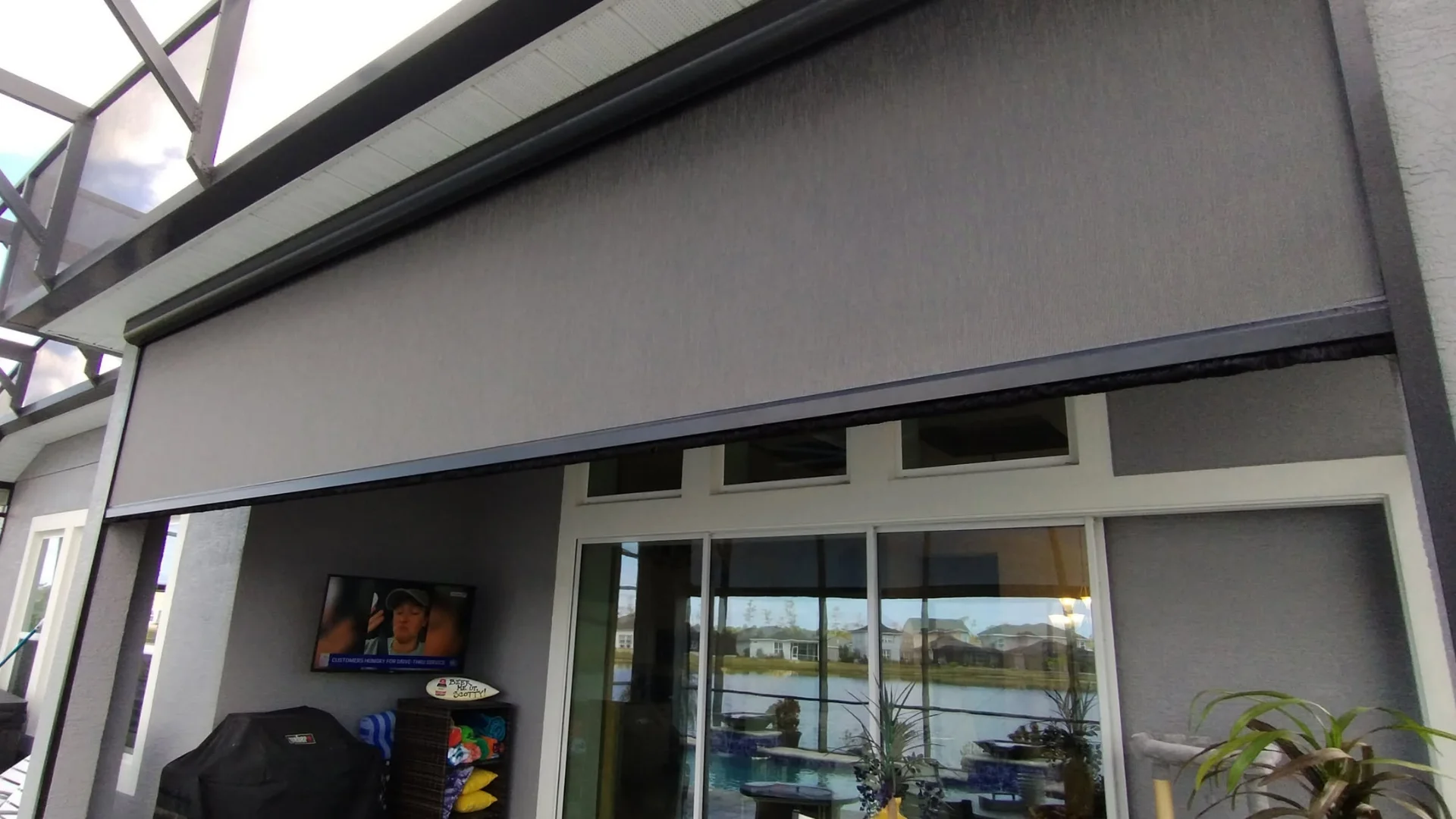
Many homes throughout Viera feature large covered lanais with wide rear openings overlooking lakes, preserves, or pool areas. In those situations, homeowners often prioritize reducing late-afternoon sun while maintaining airflow and the backyard view. We often find that homeowners initially focus on blocking the sun, but after installation they appreciate the additional privacy and insect protection just as much. That is very different from a patio where the main concern is privacy from a neighboring home or keeping insects out during evening use.
When planning your outdoor shades, map how the sun hits your patio throughout the day. West-facing patios bear the brunt of late afternoon sun, which can create glare through sliders and make outdoor seating uncomfortable. East-facing patios may only need morning sun control, while north-facing lanais may need lighter shading or privacy-focused fabric.
According to guidance from the U.S. Department of Energy on energy-efficient window coverings, exterior shades, awnings, and solar screens can help reduce unwanted solar heat gain, improve comfort, and control glare when used correctly. By stopping sunlight before it reaches the glass, outdoor shades can reduce the cooling burden on nearby rooms.
What We Evaluate Before Recommending Outdoor Shades
During a consultation, the most important details are rarely just the width and height of the opening. A good recommendation considers:
- Patio or lanai orientation
- Afternoon sun exposure
- Existing roof overhangs
- Furniture layout and seating areas
- Pool, outdoor kitchen, or dining use
- Pets and children moving in and out
- HOA color and visibility requirements
- Nearby trees, lakes, preserves, and open wind exposure
- Whether preserving the view is more important than maximum privacy
- Electrical access for motorized outdoor shades
- Future plans for enclosing or upgrading the outdoor living space
- How often the homeowner realistically wants to raise and lower the system
One thing professionals frequently see is that homeowners focus on the product first when the layout matters just as much. A shade that looks perfect on paper may not solve the problem if it does not cover the seating area, block the low-angle sun, or fit the way the family actually uses the patio. We’ve seen homeowners invest in premium shade fabrics only to discover the afternoon sun still reaches their primary seating area because the system wasn’t positioned around how the patio is actually used.
Customizing Your Outdoor Shades Viera Patio Setup
To maximize performance, choose fabric based on the outcome you want, not just the color that looks best on a sample card:
- Dense weave: Best when privacy, glare control, and heat reduction are the top priorities. This is often the better fit for homes close to neighboring patios or streets.
- Standard weave: Better when airflow and the view matter most. This can be a strong choice for lakefront or preserve-facing patios where homeowners do not want the shade to feel too enclosed.
- Darker fabrics: Often improve outward visibility and reduce glare, which can make the patio feel more comfortable during bright afternoon sun.
- Lighter fabrics: Can reflect heat well, but may create more visual haze when looking through the shade in direct sunlight.
We often recommend different screen fabrics depending on whether the homeowner’s priority is privacy, preserving a view, or maximizing airflow. For example, a preserve-facing lanai may call for a fabric that protects comfort without making the space feel closed off, while a side patio near a neighboring home may benefit from stronger privacy.
Benefits of Motorized Outdoor Shades Viera Homeowners Appreciate
While manual shades using a crank or spring-loaded system can be reliable and cost-effective, motorization offers unmatched convenience. Motorized outdoor shades in Viera can be operated with a remote, wall switch, smartphone app, or smart-home schedule.
That convenience matters more than many homeowners expect. Homeowners with motorized systems typically use their patios more often simply because operating the shades only takes a few seconds. Instead of walking outside to adjust a crank in the heat, they can lower the shades before dinner, during afternoon sun, or when bugs start to become active. For outdoor shades for patios that get used every day, that convenience often matters as much as the fabric or hardware.
Integrating your shades with smart technology also allows you to establish automated schedules. For example, you can program shades to lower in the afternoon when the sun begins to hit your lanai, helping protect outdoor furniture from fading even when you are not home. Some motorized systems can also be paired with sensors that retract the shades when wind conditions become unsafe.
To understand why this technology is a practical upgrade for local homeowners, explore why electric outdoor shades are a great upgrade for your home.
Wind, Rain, and HOA Rules: Practical Considerations for Brevard County
Installing outdoor shade systems in coastal Florida requires careful attention to wind exposure, neighborhood guidelines, and long-term durability. Viera is located in a region that sees afternoon thunderstorms, seasonal tropical weather, high humidity, and strong sun.
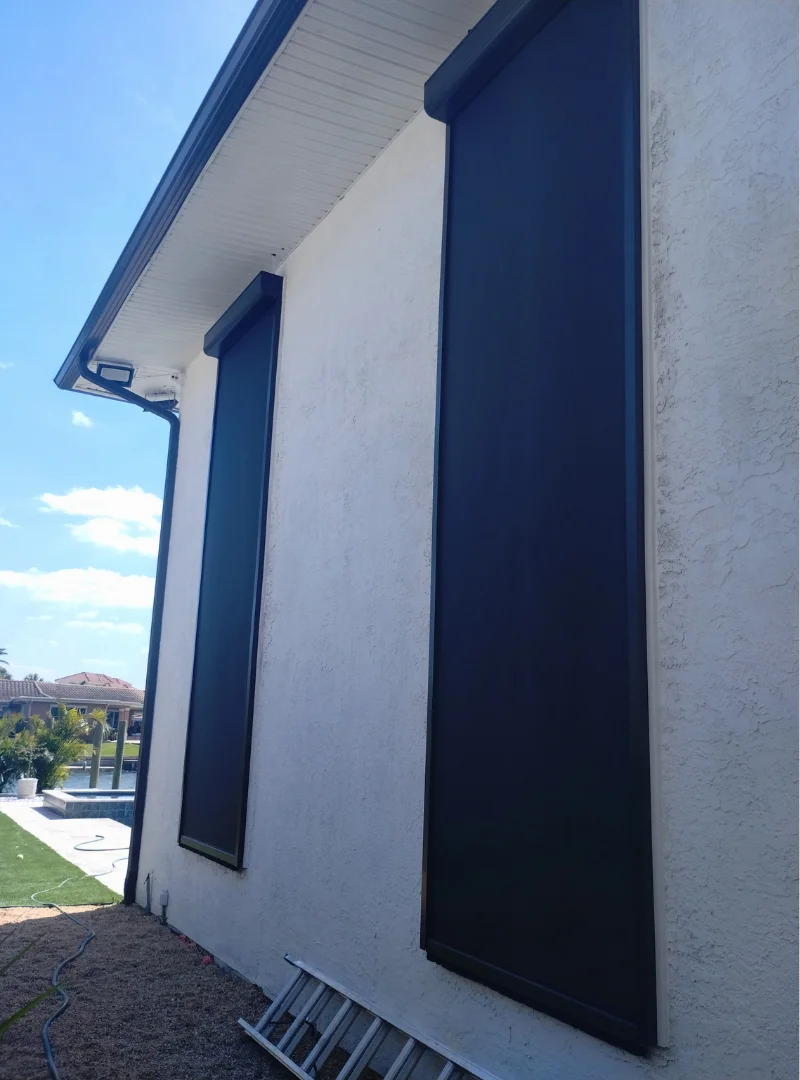
Professional-grade systems are built with stronger frames, hardware, and mounting methods than temporary DIY shades. That matters in Florida, where a shade may see intense sun one hour and a fast-moving storm the next. Outdoor shades are not hurricane shutters, though, and should be retracted during severe weather, tropical storms, or hurricanes.
Additionally, most master-planned neighborhoods in Viera — including communities such as Addison Village, Trasona Cove, and Heritage Isle — are governed by Homeowners Associations. These associations may review more than just the shade itself. Many HOAs also look at housing color, exposed hardware, fabric color, placement, and whether the system is visible from the street or neighboring lots.
Before ordering outdoor shades, it is smart to submit an application to the HOA or architectural review committee. Neutral fabric colors and clean housing profiles often make approval easier because they blend with stucco, trim, and existing patio architecture.
For projects involving fixed awnings or structural components, check the official Florida Building Code website and local Brevard County requirements to verify that permitting, engineering, and product-approval requirements are fully met. Working with an experienced local contractor helps ensure paperwork, wind-load requirements, product details, and inspections are handled correctly.
When Outdoor Shades May Not Be the Best Solution
Outdoor shades are highly useful, but they are not the right answer for every patio problem. You may need a different solution if:
- You need hurricane protection rather than sun, privacy, or insect control
- You want permanent roof coverage for year-round rain protection
- Existing trees or roof overhangs already provide adequate shade
- Your main goal is protecting the home from windborne debris
- The patio structure does not provide a suitable mounting location without modifications
- You need overhead shade for an open pool deck, where a retractable awning may be more appropriate
This is where a consultation helps. A good contractor should be willing to explain when outdoor shades are the right fit and when another shade or hurricane protection system would serve the homeowner better.
Maximizing Energy Efficiency and Lowering Cooling Costs
The primary reason Viera homeowners install outdoor shades is usually comfort, but energy efficiency is often an added benefit. Air conditioning accounts for a large share of many Florida utility bills, especially when direct afternoon sun hits large sliding glass doors and warms the rooms connected to the patio.
A common example is a west-facing slider that makes the living room or kitchen feel warmer late in the day. Lowering exterior patio shades during those peak hours can reduce glare, keep the patio surface cooler, and limit how much heat reaches the glass in the first place.
Over time, this can help your home maintain a more stable indoor temperature during hot afternoons. It also makes the outdoor area more enjoyable, which is often the benefit homeowners notice first. Instead of avoiding the patio until sunset, they can use the space for dinner, entertaining, pets, or relaxing after work.
Outdoor shades work best when they’re part of an overall comfort strategy that may also include efficient windows, insulation, ventilation, and thoughtful landscaping.
For homeowners comparing broader energy-efficiency upgrades, ENERGY STAR offers guidance on residential windows, doors, and skylights and how shading can affect heat gain. Outdoor shades are not a replacement for efficient windows, insulation, or HVAC improvements, but they can be a practical comfort upgrade when direct sun is the problem.
If you are looking for alternative ways to shade wider expanses or open pool decks, you might also consider retractable awnings in Florida or compare options with awning companies in Florida to decide whether overhead shade or vertical outdoor shades are the better fit for your home. For a more local comparison, homeowners considering retractable awnings in Viera can use that option when they need overhead coverage rather than vertical shade at the edge of a lanai.
Frequently Asked Questions About Viera Patio Shades
Navigating the purchase of custom outdoor shades can bring up several practical questions. Here are the answers to the most common inquiries from local residents.
Do I Need a Permit or HOA Approval for Outdoor Shades in Viera?
Yes, in most master-planned communities in Viera, you should expect to need approval from your neighborhood’s HOA or architectural review committee before installing exterior shades. The approval process may require product specifications, color samples, placement details, and a plot plan showing where the shades will be installed. Simple roll-down shades may not always require a county building permit, but motorized shade systems, structural awnings, and certain exterior installations may. A licensed contractor can help determine what applies to your project.
How Do Outdoor Shades Perform in High Winds and Storms?
High-quality outdoor shades are designed for everyday Florida conditions, but they are not storm shutters. During severe weather, tropical storms, or hurricanes, outdoor shades should be fully retracted into their protective housing to reduce the risk of damage from extreme wind or flying debris.
How Should You Clean and Maintain Outdoor Shades in Florida?
High humidity, pollen, salt air, and seasonal debris can create buildup on shade fabric and frames. Periodically rinse the shades with clean water, use mild soap when needed, and let the fabric dry completely before retracting. Homeowners who keep fabric and hardware clean usually see fewer cosmetic issues over time than those who let debris sit on the system for months.
How Long Do Outdoor Shades Typically Last?
The lifespan of outdoor shades depends on the quality of the fabric, hardware, installation, exposure, and maintenance. In Florida, shades that face harsh afternoon sun, salt air, heavy humidity, or frequent wind exposure may age faster than systems installed in more protected areas. Professionally installed outdoor shades with durable fabrics, clean mounting, and regular rinsing typically perform better over time than temporary or poorly fitted systems.
What Is the Best Outdoor Shade for a West-Facing Lanai?
For many west-facing lanais in Viera, motorized outdoor shades or exterior solar shades are the strongest options because they address low-angle afternoon sun, glare, heat, and insects. The best fabric depends on whether you care most about privacy, airflow, view preservation, or maximum heat reduction.
Are Outdoor Shades Better Than Patio Screens?
They solve different problems. Patio screens are mainly for insect protection and basic enclosure. Outdoor solar shades and motorized shades are better when heat, glare, privacy, and comfort are the main concerns. Many homeowners choose a combination depending on how the patio is used.
Are Outdoor Shades for Patios Worth It in Viera?
Outdoor shades for patios are often worth it when the space is too hot, bright, buggy, or exposed to use comfortably. In Viera, they are especially helpful for west-facing lanais, pool-adjacent seating areas, and homes where large sliders allow afternoon heat into nearby living spaces.
Which Fabric Openness Should I Choose?
Fabric openness controls how tightly the shade fabric is woven. A more open fabric usually preserves more airflow and visibility, which can be helpful for lakefront or preserve-facing lanais. A tighter fabric usually provides stronger heat, glare, and privacy control, which is often better for west-facing patios or homes close to neighboring properties.
For many Viera homeowners, the right choice comes down to what you value most: keeping the view, reducing afternoon heat, improving privacy, or balancing all three. During a consultation, we usually compare fabric samples in the actual patio opening so you can see how each option affects brightness, visibility, and comfort before choosing.
Conclusion
Summer-proofing your Viera home does not mean retreating indoors and closing the drapes for five months out of the year. The right outdoor shade solution can help you reclaim your patio, reduce afternoon heat, protect outdoor furniture, improve privacy, and make your outdoor living space feel usable again. Whether you are comparing outdoor patio shades, motorized outdoor shades, exterior patio shades, or a retractable awning, the best choice is the one that matches how your family actually uses the space, how your patio is oriented to the sun, and the level of comfort, privacy, and flexibility you want throughout the year.
What We Evaluate During Your Consultation
A good outdoor shade recommendation starts with the patio itself, not a generic product list. During a consultation, HS Shade Solutions looks at how the sun hits your lanai or outdoor living area, how you use the space, and what problems you are actually trying to solve.
That usually includes details such as patio orientation, afternoon sun exposure, existing roof overhangs, wind exposure, mounting surfaces, electrical access, HOA requirements, furniture layout, privacy needs, insect concerns, future plans for enclosing or upgrading the outdoor living space, and whether preserving a lake, pool, or preserve view matters more than maximum coverage.
This helps narrow the recommendation to the right shade system, fabric openness, control option, and installation approach for your home. Two Viera patios can look similar in size but need very different solutions depending on the roofline, rear exposure, surrounding homes, and how the family plans to use the space.
About the Author
Scott Stanchfield is the co-owner of HS Shade Solutions, a family-owned company specializing in custom shade, sun control, and hurricane protection systems for Florida homes. With hands-on experience helping homeowners choose retractable awnings, outdoor shades, patio screens, hurricane shutters, and custom shade systems, Scott focuses on practical recommendations built around Florida’s heat, humidity, coastal exposure, seasonal storms, and everyday outdoor living needs. His goal is to help homeowners evaluate options and choose custom shade systems built for long-term performance rather than one-size-fits-all products.
About HS Shade Solutions
HS Shade Solutions designs and professionally installs custom shade, sun control, and hurricane protection systems specifically engineered for Florida’s heat, humidity, coastal conditions, and seasonal storms. The company specializes in retractable awnings, exterior shades, motorized patio screens, patio enclosures, interior shades, and hurricane shutters built for Florida homeowners who want more comfortable, usable, and protected spaces.
Serving Melbourne, Viera, Palm Bay, Rockledge, the beaches, and surrounding Brevard County communities, HS Shade Solutions focuses on practical recommendations, professional installation, and shade systems that make outdoor living spaces more comfortable, usable, and protected.
Ready to transform your hot patio into a cooler, more usable outdoor retreat? Contact HS Shade Solutions today to schedule a consultation with our local shade experts and get a custom quote for your home.