
Why Storm Protection Starts With the Right Shutters

What are storm shutters? They are protective systems installed over windows, doors, and other openings on a home or building — designed to shield those openings from high winds, heavy rainfall, and the flying debris that causes most storm damage. In Florida, many homeowners use the terms storm shutters and hurricane shutters interchangeably because both refer to opening protection designed for severe weather. If you have ever watched a storm roll in and wondered whether your windows could handle it, storm shutters are the answer to that question.
One question we hear frequently is, “Which shutter is actually right for my home?” The answer depends less on the product name and more on how the homeowner lives, who will deploy the system, how quickly the house needs to be secured, and which openings are most exposed to wind and debris. One of the biggest misconceptions we see is that every storm shutter offers the same level of convenience and protection. In reality, the best choice depends on your home’s layout, your budget, and how quickly you need to prepare before a storm.
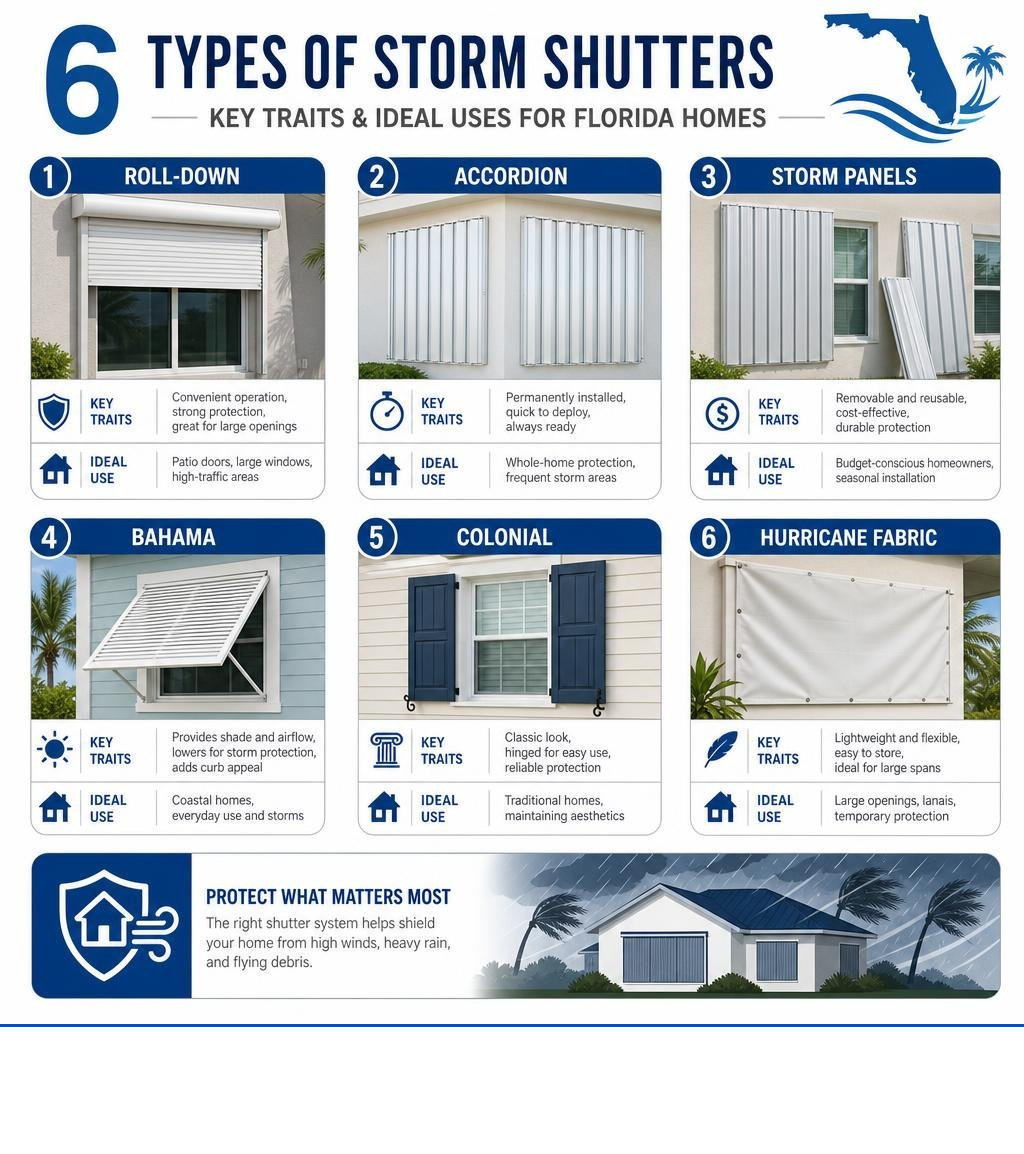
Here’s a quick breakdown of the main storm shutter types and what makes each one different:
| Shutter Type | How It Works | Best For |
|---|---|---|
| Roll-Down | Rolls up into a housing box above the window; manual or motorized | Convenience, security, large openings |
| Accordion | Permanently installed, folds out from the sides | Quick deployment, full-time readiness |
| Storm Panels | Removable panels stored off-season, installed before storms | Budget-conscious homeowners |
| Bahama | Hinged at the top, propped open for shade, lowered for protection | Curb appeal and everyday functionality |
| Colonial | Two-panel hinged shutters mounted on each side of a window | Traditional aesthetics with storm protection |
| Hurricane Fabric | Lightweight durable material deployed before storms | Large spans, easy storage |
How We Help Homeowners Choose
During consultations, we don’t start by recommending a specific shutter. We first look at how the home is used. A full-time resident preparing for every hurricane season has different needs than someone who owns a vacation property or rental. We also evaluate window sizes, second-story access, coastal exposure, architectural style, and how much preparation homeowners are comfortable doing before a storm. Those practical factors often narrow the best options much faster than price alone.
For homeowners along the Space Coast — in communities like Melbourne, Vero Beach, and Cocoa Beach — storm season is less of an abstract concern and more of an annual reality. Windows and doors are vulnerable points on any structure during a storm. When an opening fails, wind pressure rushes inside and can lift a roof from the inside out. This is a documented pattern that plays out after major storms.
Recent storm seasons have shown how vulnerable unprotected openings can be. When wind and water enter a home through a broken window, the resulting damage can be devastating. Installing quality storm shutters helps shield these vulnerable areas, significantly reducing the risk of window failure and helping to protect the home’s overall structure.
Choosing the right system comes down to more than just picking the most affordable option. The type of shutter, how it is installed, and whether it suits your home’s architecture all factor into how well it actually protects you. In our experience, the best choice is usually the system a homeowner can realistically close every time a storm approaches — not just the strongest-looking product on paper. This guide walks through everything you need to know to make a confident decision.
What Are Storm Shutters and How Do They Protect Your Home?
To understand how storm shutters protect a home, it helps to look at what happens during a severe coastal storm. High winds are dangerous on their own, but the real threat comes from windborne debris. Tree branches, roof tiles, patio furniture, and loose gravel become high-velocity projectiles in a hurricane.
When one of these objects strikes an unprotected window, the glass shatters instantly. Once a window or sliding glass door is breached, the storm is no longer just outside your home. It is inside, and that is where the real structural danger begins.
When wind enters a sealed home through a broken window, it creates a rapid buildup of internal pressure. This positive internal pressure pushes upward against the ceiling and roof, while the storm’s external winds create a negative pressure (suction) pulling upward from the outside. This combination of forces can lift the roof entirely off the home’s walls. Once the roof fails, the structural integrity of the entire building is compromised, often leading to severe damage.
Storm shutters are designed to protect openings — not stop hurricanes. Their purpose is to prevent windows and doors from becoming the point where the home’s protective envelope fails.
This is why the primary job of a storm shutter is impact resistance. By absorbing the blow from flying debris, the shutter helps keep the glass intact. This barrier helps prevent water from ruining your interiors and, more importantly, helps keep the wind out, preserving the pressure balance of the home and keeping the roof secure.
Florida emergency-management guidance on hurricane preparedness consistently emphasizes protecting vulnerable openings before severe weather arrives. The Florida Division of Emergency Management is a stronger reference for Florida homeowners than a general encyclopedia source because it connects storm preparation to the specific risks residents face during hurricane season.
The Main Types of Hurricane Shutters and How They Differ
Choosing the right storm protection for your home in Melbourne, Palm Bay, or Cocoa Beach involves balancing several factors: how quickly you can deploy the system, whether you want permanent fixtures on your exterior walls, and how the shutters will affect your home’s architectural style.
Some homeowners prefer systems that remain completely out of sight until a storm is named, while others want a permanent solution that can be closed in minutes. Understanding the differences between these styles is the first step in finding the right fit for your property.
Understanding Roll-Down and Accordion Systems
Roll-down and accordion shutters represent excellent options for convenience and rapid deployment.
Roll-down shutters are permanently mounted above your windows or doors in a small, unobtrusive housing box. When a storm approaches, they roll down along heavy-duty tracks. These systems can be operated manually with a hand crank, but many homeowners prefer motorized operation. With the push of a button or a smart-home command, an entire home can be secured in a matter of minutes. Beyond storm protection, roll-down shutters offer excellent everyday benefits, including light control, noise reduction, and a physical security barrier against potential intruders when you are away.
We often recommend roll-down shutters for homeowners who travel frequently, own vacation homes, or simply want the fastest possible deployment before a storm. They are also a strong choice for large openings where convenience matters as much as protection.
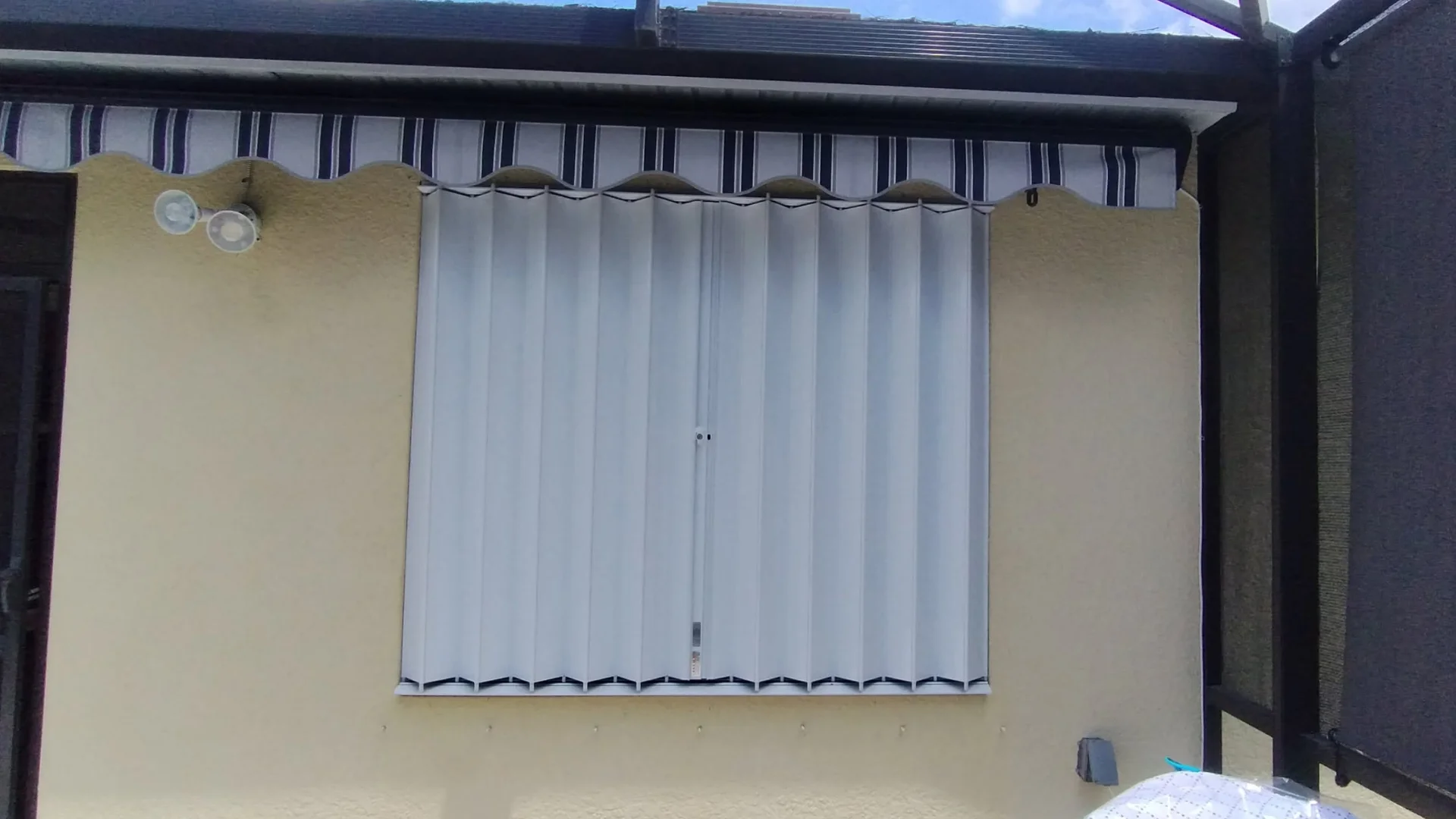
Accordion shutters are also permanently installed but are mounted to the sides of the window or door frame. They slide horizontally on top and bottom tracks, folding neatly like an accordion when open. To deploy them, you simply pull the two sides together and lock them in the center. Because they are permanently attached, there is no heavy lifting or storage required. This makes them highly practical for large sliding glass doors, balconies, and upper-story windows where accessing the exterior of the glass would otherwise require a ladder.
Accordion shutters are often a practical choice for homeowners who want permanent protection without the cost of motorization. We also recommend them for retirees, seasonal residents, and homeowners who want reliable protection without lifting and fastening individual panels before every storm. One mistake homeowners often make is underestimating the physical effort required to install removable panels when the weather is already deteriorating.
Traditional Aesthetics with Bahama and Colonial Styles
If you want to protect your home without sacrificing its architectural charm, Bahama and Colonial shutters offer a classic look paired with modern engineering.
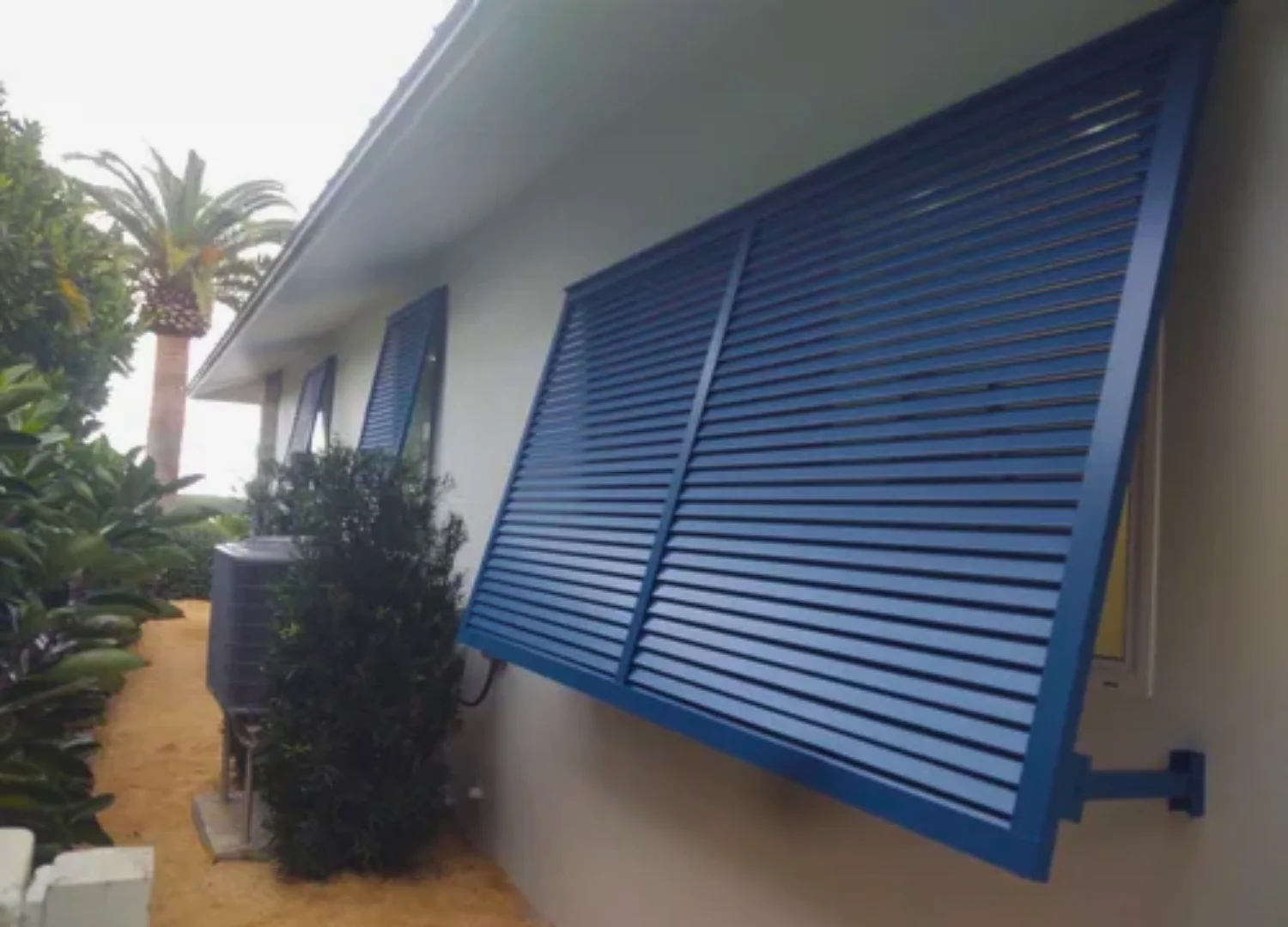
Bahama shutters are single-piece units mounted above the window. They are hinged at the top and prop open at an angle, mimicking the relaxed, tropical aesthetic of coastal homes. In their open position, they provide shade from the intense afternoon sun while still allowing fresh air to circulate. When a storm threatens, you simply remove the support props and secure the shutter flat against the window frame. For more details on these and other shade-friendly storm solutions, explore our guide to hurricane screens.
Many coastal homeowners choose Bahama shutters because they provide everyday shade in addition to hurricane protection. What usually surprises homeowners is that Bahama shutters are not just decorative. For the right home, they can provide daily shade, coastal curb appeal, and storm protection in one system.
Colonial shutters feature a two-piece design, with panels mounted on hinges on either side of the window. On typical days, they frame the window, offering a traditional, timeless look. Before a storm, the panels swing shut and lock securely in the center. Both Bahama and Colonial shutters offer reliable impact resistance while enhancing your home’s curb appeal year-round.
Cost-Effective Protection with Storm Panels and Fabrics
For homeowners looking for reliable protection on a budget, temporary systems like storm panels and specialized fabrics are highly effective alternatives.
Storm panels are corrugated sheets designed for temporary use, meaning they are only put up when a storm is actively threatening the area. Homeowners mount them to permanently installed tracks or direct-mount bolts surrounding the window. While they are highly durable and represent a lower initial investment, they do require manual labor to install before every storm and must be taken down and stored afterward. Clear panels are particularly popular because they allow natural light into the home during a power outage, preventing that closed-in feeling.
Storm panels can be a smart choice when budget is the main concern, but we always talk through deployment first. If a homeowner cannot safely lift, carry, and install the panels under storm-prep pressure, a lower-cost product may become a higher-risk choice.
Hurricane fabric is another modern, lightweight alternative to rigid panels. Made from high-strength, flexible materials, these systems are designed to absorb and deflect the energy of flying debris. They are incredibly lightweight, making them much easier to handle and store than heavy metal panels. They can be quickly clipped into place over large openings like lanais, porches, and garage doors, offering a versatile shield without the bulk of traditional shutters. You can learn more about how these flexible barrier systems compare to rigid protection by visiting our page on protective hurricane screens.
Materials and Performance: What to Look For
When evaluating storm shutters, the material and construction quality are just as important as the style. The coastal environment is demanding, with salt air, high humidity, and intense sun exposure constantly working to degrade exterior building materials.
What Are Storm Shutters Made Of and How Do Materials Differ?
Modern storm shutters are engineered using durable, weather-resistant materials designed to withstand harsh coastal environments. These systems are built to resist rust, corrosion, and the degrading effects of salt air and high humidity. Unlike temporary plywood solutions, which can warp and degrade over time, professionally manufactured shutters offer reliable protection without requiring extensive upkeep.
| Material | Pros | Cons | Best Use |
|---|---|---|---|
| Aluminum | Strong, lightweight, corrosion-resistant, and common for roll-down, accordion, Bahama, Colonial, and panel systems | Higher-quality systems cost more than basic temporary protection | Permanent shutters and coastal homes where durability matters |
| Steel | Very strong and impact-resistant | Heavier and more vulnerable to corrosion if the finish is damaged | Select storm panels or commercial-style applications where weight is manageable |
| Polycarbonate or Clear Panels | Allows natural light in during power outages and avoids a completely enclosed feeling | Requires storage and manual installation before storms | Homeowners who want temporary protection without making the home dark |
| Hurricane Fabric | Lightweight, flexible, easier to store, and useful for wide spans | Usually requires planned attachment points and may not block light or water like a solid shutter | Lanais, patios, garage openings, and large areas where rigid panels are impractical |
| Plywood | Readily available as a temporary emergency option | Not a professionally engineered long-term system; can warp, require drilling, and may not meet product approval requirements | Last-resort short-term preparation, not a preferred permanent solution |
Evaluating Wind Resistance and Debris Protection Standards
To help ensure a shutter will actually protect your home, look for products that have been tested and certified to meet recognized wind-load and impact standards.
The standard for testing involves impact testing, where the shutter must withstand the impact of flying debris without allowing it to penetrate the barrier.
Additionally, quality systems must pass cyclic wind pressure testing, which simulates the rapid, repeated pushing and pulling forces that occur during a prolonged storm. When selecting a system, it is vital to work with an experienced local contractor who understands these engineering standards and helps ensure that the system is properly anchored to your home.
Storm Shutters vs. Hurricane Screens: Choosing the Right Protection
As you plan your home’s defense system, you may find yourself deciding between traditional storm shutters, hurricane shutters, and high-strength hurricane screens. These options can all play a role in protecting a Florida home, but they serve different lifestyles and architectural needs.
Roll-down shutters are completely solid, non-porous barriers. They are designed to block wind, rain, light, and debris. This makes them ideal for windows and glass doors where absolute security and complete weather protection are the top priorities. When they are closed, no one can see inside, and no water can touch the glass.
Hurricane screens, on the other hand, are engineered from high-strength materials. Because of their design, they help absorb and dissipate the energy of wind and debris while still allowing filtered light and airflow to pass through. This makes them incredibly popular for enclosing large outdoor living spaces, such as covered patios, lanais, and pool areas.
When Do We Recommend Hurricane Screens Instead?
We usually recommend hurricane screens when the goal is to protect a larger outdoor living area rather than only an individual window or door. Covered patios, lanais, balconies, outdoor kitchens, poolside seating areas, and wide garage-style openings often benefit from a screen system because it can span a large space while preserving light, airflow, and everyday usability.
By installing a motorized hurricane screen, you can protect your entire outdoor living space — including your patio furniture — without having to move everything indoors before a storm. After the storm passes, the screens can remain down to provide shade and insect control while you wait for power to be restored.
For professional guidance on how to integrate these systems into your home, you can refer to the state retrofit guide for professionally installed shutters, which outlines best practices for home protection upgrades.
Key Factors to Consider When Choosing Storm Protection
Securing your home is a long-term investment, and the right choice depends on your daily routine, physical capabilities, and budget.
Which Storm Shutter Is Right for You?
A professional consultation should not start with a product pitch. It should start with how the home is used, which openings are most vulnerable, who will be responsible for closing the system, and how quickly everything needs to be secured when a storm is approaching.
| If Your Priority Is… | System to Consider | Why It May Fit |
|---|---|---|
| Lowest maintenance | Roll-down or accordion shutters | Permanently installed systems reduce lifting, storage, and storm-prep labor |
| Fast deployment | Motorized roll-down shutters | They can secure many openings quickly, even for second homes or frequent travelers |
| Best appearance | Bahama or Colonial shutters | They add everyday curb appeal while still providing storm protection |
| Lowest upfront cost | Storm panels | They offer reliable protection with more manual installation effort |
| Maximum everyday security | Roll-down shutters | Solid barriers can also improve privacy, light control, and security |
| Large openings | Accordion shutters, roll-down shutters, or hurricane fabric | These systems are often better suited for sliding doors, lanais, patios, and wide spans |
Many homeowners assume the strongest system is automatically the best system. In practice, the best protection is the one that matches the home, the homeowner, and the amount of time available before a storm.
What Do Storm Shutters Cost?
Storm shutter costs vary because every home has different openings, exposure, access needs, and installation requirements. Rather than giving a one-size-fits-all price, a professional quote should account for the full scope of the project and the way the system will actually be used.
The main factors that affect storm shutter cost include:
- Opening size: Larger windows, sliding glass doors, lanais, and wide spans require more material and stronger support.
- Motorization: Motorized roll-down shutters and screens add convenience but also require motors, controls, electrical planning, and setup.
- Shutter style: Temporary panels, accordion shutters, roll-down shutters, Bahama shutters, Colonial shutters, and hurricane fabrics all have different material and installation requirements.
- Number of windows and doors: Protecting every opening on the home increases the project scope, but it may also be important for insurance and whole-home protection.
- Custom colors and finishes: Decorative or HOA-friendly finishes can affect the final investment.
- Installation complexity: Second-story openings, unusual shapes, concrete block construction, tight access areas, and large patio spans can all change the labor and engineering needs.
We do not recommend choosing storm protection based on price alone. A lower-cost system may still be appropriate, but only if the homeowner can safely deploy it before every storm and it is properly approved, sized, and installed for the opening.
Understanding Storm Shutter Installation Timelines
The overall investment for storm shutters varies widely depending on the style you choose, the size of your windows, and whether you opt for manual or motorized operation. Because every home has a unique footprint, custom sizing and professional installation are essential to help ensure the system fits perfectly and functions under extreme wind loads.
When planning your budget, consider the prep time required for each system:
- Roll-Downs & Accordions: These permanent systems require the lowest prep time. They can be fully deployed in minutes, making them ideal for those who travel frequently or may find it difficult to lift heavy panels.
- Bahama & Colonial: These offer a mid-range prep time. They require walking around the exterior of the home to unlock and secure the panels, which typically takes under an hour for an entire house.
- Storm Panels: These require the most prep time and physical effort. Installing heavy metal or clear panels on a two-story home can take several hours of strenuous labor and requires a safe, dry place to store the panels during the off-season.
We’ve also found that homeowners tend to underestimate how much longer storm preparation takes when they own a two-story home or have multiple large patio openings. What seems manageable with one or two windows becomes much more demanding when dozens of panels need to be installed before deteriorating weather arrives.
One mistake homeowners often make is comparing storm shutters only by purchase price. A cheaper system may still be code-compliant, but if it takes several hours to install, requires two people, or depends on climbing ladders, it may not be the right fit for every household.
Local Building Codes and Insurance Savings in Florida
In coastal areas, building codes are among the strictest in the nation. Homes built in designated windborne debris regions are required to have approved opening protection, which means any new shutter installation must carry valid product approvals from the Florida Building Code or Miami-Dade County.
Investing in professionally installed, code-compliant storm protection can also offer financial benefits. In many cases, insurance companies offer discounts (known as wind mitigation credits) to homeowners who secure all of their home’s openings with approved hurricane shutters or impact-rated glass. For more information on wind mitigation and Florida insurance considerations, homeowners can review resources from the Florida Office of Insurance Regulation.
Over time, these insurance premium savings can help offset a portion of the initial installation cost, but the exact impact depends on the home, carrier, policy, inspection findings, and the protection installed.
Common Misconceptions About Storm Shutters
Many homeowners assume impact windows eliminate the need for shutters. Impact glass is an excellent upgrade, but some homeowners still choose shutters for additional protection, privacy, shade, and security.
Another misconception is that every shutter offers the same protection. In reality, performance depends on product approval, proper sizing, anchoring, installation quality, and whether the system is appropriate for the opening.
Others focus entirely on price instead of deployment time. That is understandable, but storm protection only works when it is closed before the storm arrives. During a consultation, we help homeowners think through who will deploy the system, how long it will take, and whether the choice still makes sense five or ten years from now.
Frequently Asked Questions About Storm Shutters
Do storm shutters really prevent window breakage?
Yes. Properly rated and professionally installed storm shutters are specifically engineered to absorb the impact of flying objects, such as tree branches and roof tiles, helping prevent them from shattering the glass behind the shutter.
Are storm shutters the same as hurricane shutters?
In most homeowner conversations, storm shutters and hurricane shutters refer to the same general category of protective systems for windows, doors, and other openings. The important difference is not the name, but whether the product is properly rated, approved, sized, and installed for your home.
How long do storm shutters last in coastal environments?
High-quality shutters are designed for durability in coastal environments. To help maximize their performance in coastal areas like Indialantic and Vero Beach, simple routine care is recommended to keep the system operating smoothly.
Are storm shutters required by law in Florida?
While they are not universally mandated for older homes, the Florida Building Code requires approved opening protection (either impact-rated glass or certified shutters) for all new residential construction and major renovations in windborne debris zones.
Why Professional Installation Matters
Even the right shutter can underperform if it is not installed correctly. Storm shutters are only as strong as the way they are anchored to the home, which is why professional installation matters in coastal Florida. The fasteners, tracks, mounting surfaces, and attachment points all need to be selected for the opening, the wall construction, and the wind loads the system is expected to face.
Code compliance is also a major part of the decision. Professionally installed systems should use appropriate product approvals and be matched to the home’s specific openings, not treated as one-size-fits-all accessories. A shutter that looks sturdy on the outside still needs the right approval, sizing, and anchoring behind it to perform during severe weather.
Installation quality affects more than storm protection. It can influence how smoothly the shutter opens and closes, how well it locks, how it handles repeated use, and whether homeowners feel confident deploying it when a storm is approaching. That is why we focus on the full system: product selection, wind-load considerations, code requirements, installation details, and long-term usability.
Conclusion
Protecting your home from coastal storms is about more than just preserving glass — it is about securing your peace of mind and protecting your family. Whether you prefer the effortless convenience of motorized roll-down shutters, the classic tropical style of Bahama shutters, traditional hurricane shutters, or the versatile protection of motorized hurricane screens, investing in a professionally installed system is a great decision you can make for your property.
The best storm protection isn’t simply the system with the highest wind rating — it’s the one homeowners can confidently deploy every time severe weather approaches. In our experience, homeowners make better decisions when they consider deployment time, physical effort, appearance, large openings, budget, and how they actually use the home throughout the year.
At HS Shade Solutions, we specialize in designing and installing custom hurricane protection and shade systems tailored specifically to the unique demands of the local climate. If you are ready to evaluate reliable storm protection options for your home, schedule a consultation with HS Shade Solutions today to speak with one of our local experts.
About the Author – Scott Stanchfield
Scott Stanchfield is the owner of HS Shade Solutions and works directly with Florida homeowners to design shade, storm protection, and outdoor living solutions for the Space Coast climate. His experience includes hurricane shutters, hurricane screens, retractable awnings, motorized shade systems, patio enclosures, and custom exterior upgrades built around real Florida conditions like heat, salt air, wind exposure, and hurricane preparation.
About HS Shade Solutions
HS Shade Solutions is a Florida-based contractor serving Melbourne, Melbourne Beach, Palm Bay, West Melbourne, Indialantic, Indian Harbour Beach, Satellite Beach, Cocoa, and nearby Space Coast communities. The company specializes in custom hurricane protection, shade, sun control, and outdoor living systems for residential properties, including hurricane shutters, hurricane screens, retractable awnings, motorized screens, patio enclosures, and related exterior solutions designed for Florida homes.